A monster made from the forgotten dead
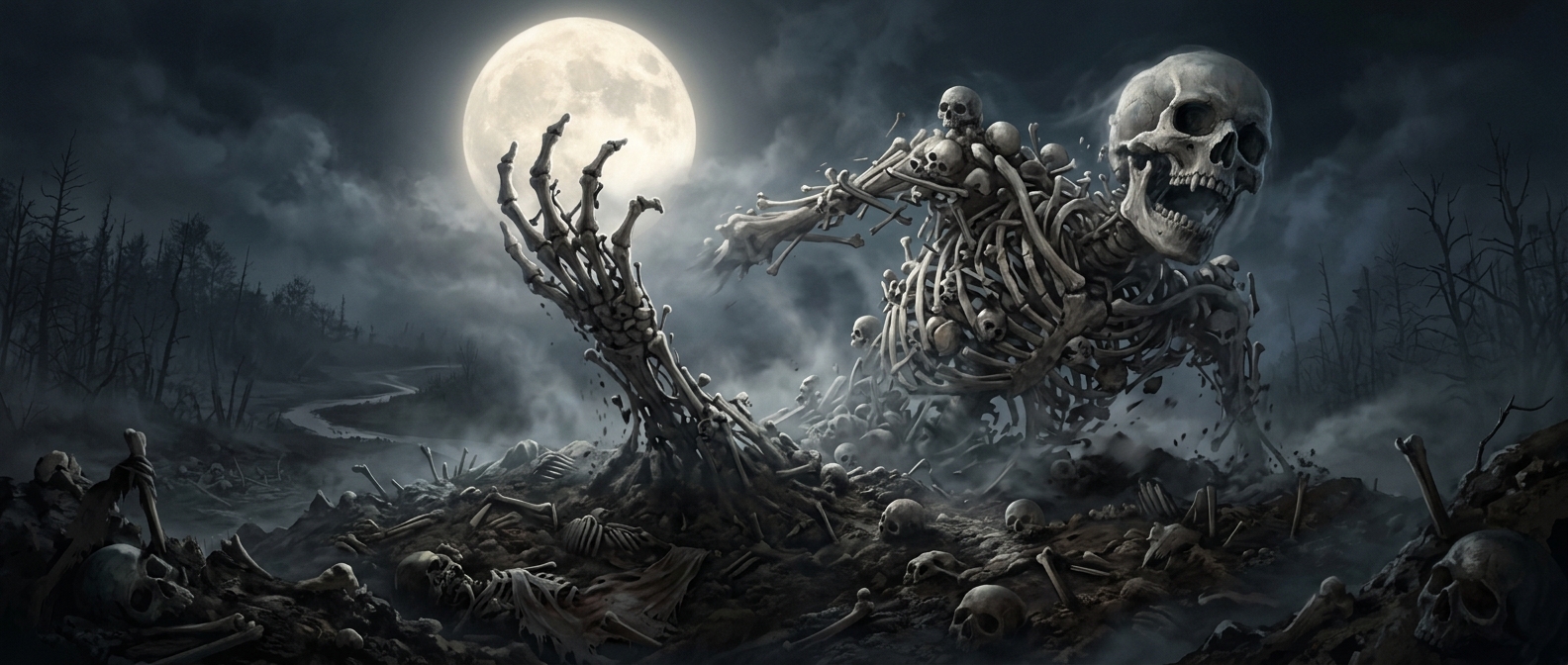
The gashadokuro is a giant skeleton in Japanese folklore, imagined as a body assembled from the bones of people who died in great numbers—often in war or famine and without proper burial. The image turns scattered human remains into a single, towering figure: a way of giving shape to death on a scale too large to picture one person at a time.
That origin gives the creature a darker meaning than a simple frightening apparition. Its bones stand for lives lost and left unrecognized. In the story, the dead are no longer separate or silent; together, they become a force that can reach back into the world of the living.
Why the skeleton matters
A skeleton strips away identity: no face, clothing, or possessions remain. Making it enormous magnifies that anonymity into something impossible to ignore. The gashadokuro therefore works as folklore’s image of accumulated loss—especially the fear that people who were denied care in life may not rest quietly after death.
The tale is not a claim about what happens to actual remains. It is a supernatural story that gives mass death a memorable shape. A single skeleton is a reminder of mortality; a giant assembled from many bones suggests how unattended suffering can become a haunting presence.