A Centaur Has Two Bodies—but One Unclear Middle
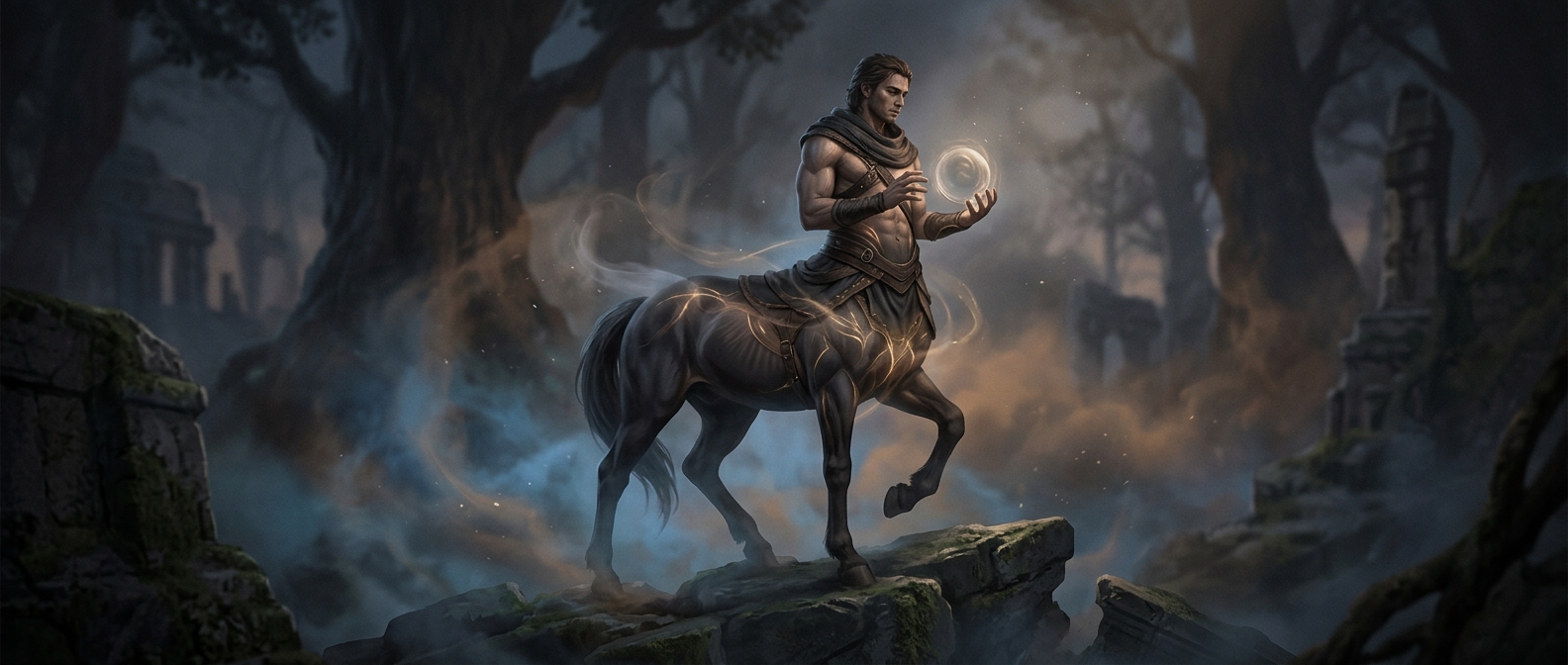
In the familiar image of a centaur, a human torso rises from the front of a horse’s body. That silhouette is easy to recognize, but it does not specify how the creature’s organs fit together. A horse’s digestive system occupies its trunk; a human torso, if treated as a complete human body, would need room for its own stomach and intestines. Simply joining the two outlines leaves the connection—and the available space—unexplained.
Mythic Anatomy Was Not an Engineering Plan
There is no single anatomical solution built into the centaur figure. Artists and storytellers could treat the human half as an upper body attached to a horse-shaped body, without deciding whether the human abdomen had separate organs, shared organs, or none at all. Those are modern attempts to make a visual hybrid work as biology, not fixed rules of centaur mythology.
That difference matters: mythic creatures are often assembled to communicate an idea or create a memorable form, not to satisfy the constraints of real anatomy. The centaur’s unresolved digestive tract is a small reminder that a compelling silhouette can be much clearer than the body it seems to describe.