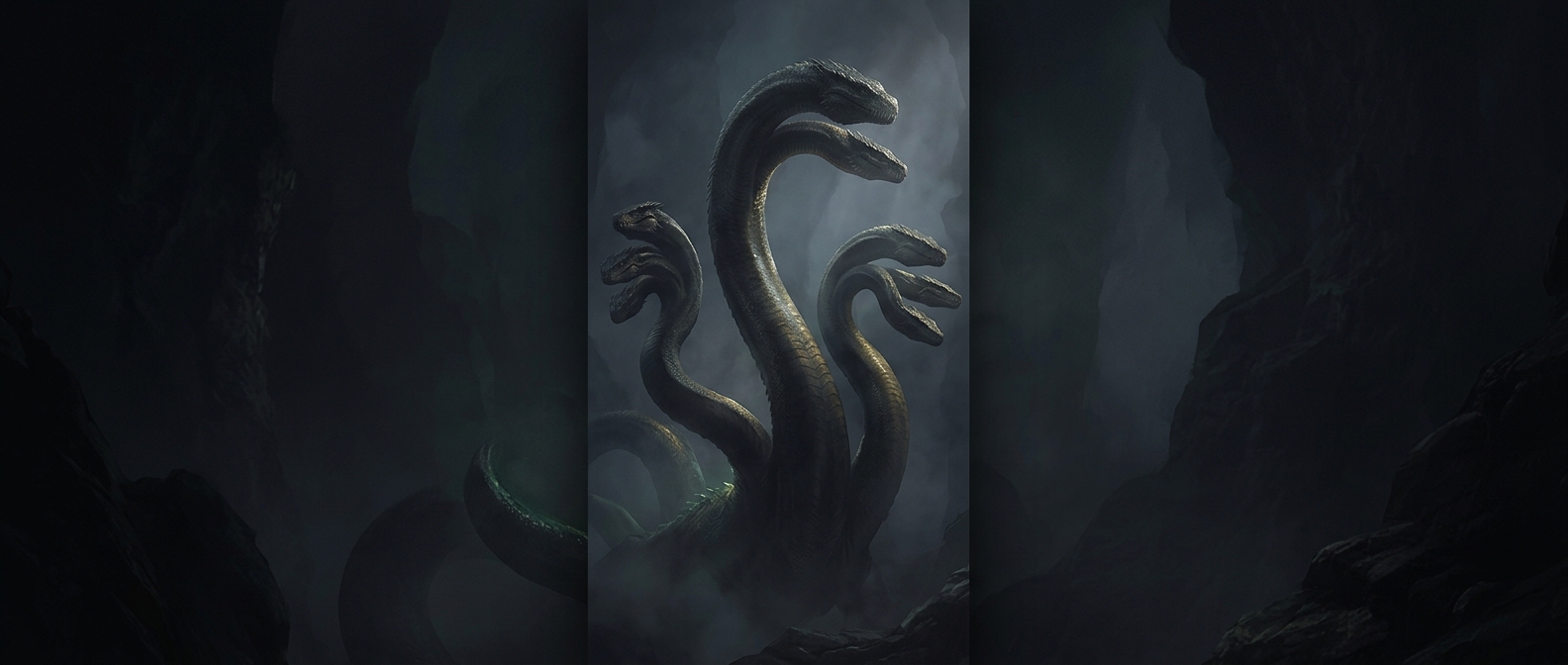
Why the Hydra’s Heads Changed the Fight
The Hydra was not simply a many-headed monster; its defining trick made ordinary combat counterproductive. In the familiar Greek myth, Heracles discovers that cutting off a head does not reduce the danger. The wound produces two new heads, turning each successful strike into a worse problem.
That rule transforms the encounter from a contest of strength into a problem of control. Heracles cannot win by attacking faster or harder: he must stop the necks from regenerating. His nephew Iolaus helps by scorching each cut stump with fire, preventing another pair of heads from growing there. The story’s practical logic is blunt: the way to defeat a renewing threat is to interrupt the process that renews it.
A Monster Built to Resist a Hero
The Hydra’s regeneration also gives the labor its shape. A hero famed for physical power faces an opponent whose body turns force against him, so success depends on recognizing the mechanism and changing tactics. In many versions, one head is immortal, adding a final obstacle even after the others are dealt with.
That is why the episode remains more than a spectacle of multiplying heads. The monster makes persistence alone useless; Heracles needs help and a different method. Its most memorable feature is also its warning: when every blow makes a problem grow, the next move must target the source of the growth—not just another visible head.