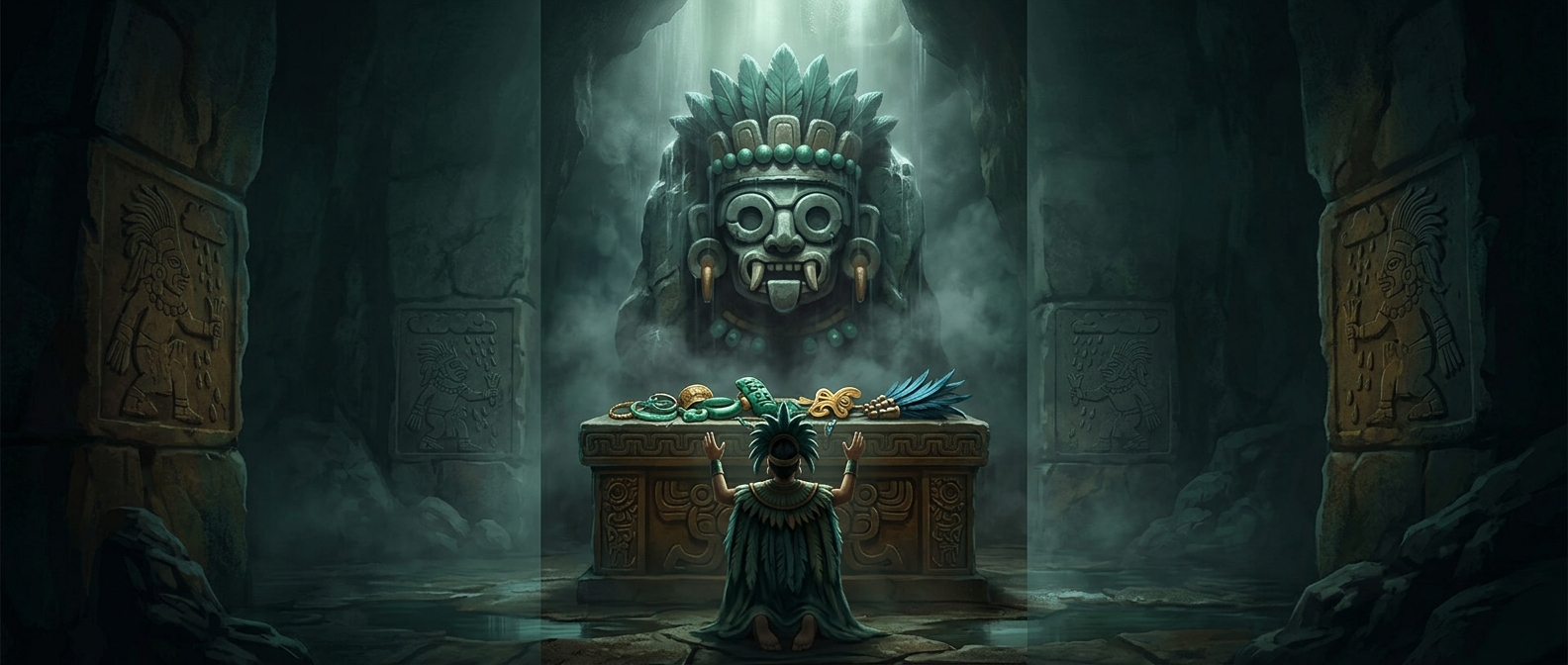
Why Tlaloc’s Rain Was Worth Appeasing
For Aztec farmers, rain was not simply good weather. A timely downpour could sustain maize through the growing season; too little rain threatened the harvest, while violent storms could damage crops. Tlaloc, associated with rain and storms, therefore governed forces that could nourish a community or put its food supply at risk.
Offerings to Tlaloc made that dependence part of religious life. Valuable sacrifices expressed respect and sought the conditions needed for crops to grow. They were not merely payment for a predictable service: the weather remained uncertain, and the ritual reflected a relationship between people and powers believed to shape the world.
A Gift Tied to the Harvest
The value of an offering makes more sense against the stakes of farming. Giving up something precious was a public acknowledgment that human effort alone could not guarantee rain or a successful crop. Fields could be planted and tended, but the harvest still depended on forces people could not control.
That connection gives Tlaloc’s worship its practical weight. The offerings linked spiritual obligation to the everyday question of whether a community would have food. The sacrifice’s significance lay not only in what was given, but in the harvest people hoped it would help protect.