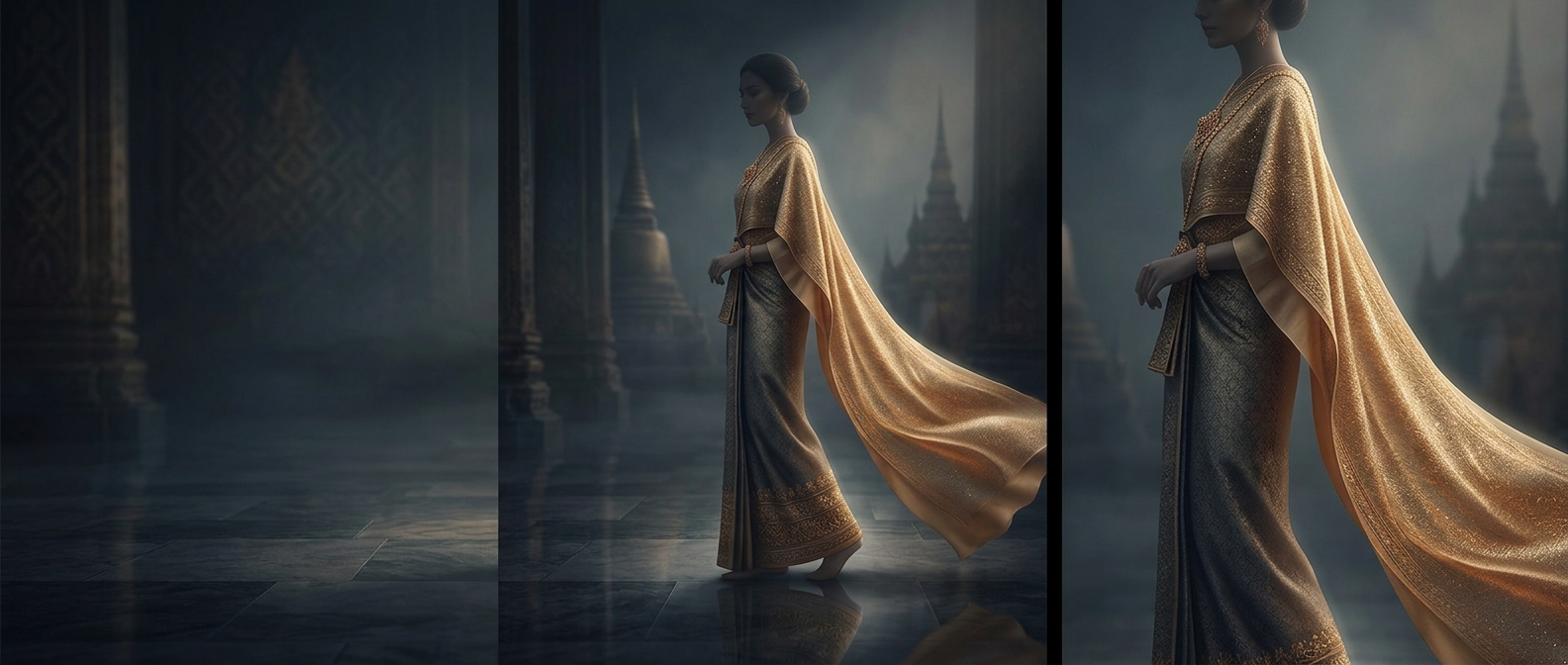
How a Rectangular Cloth Becomes Chut Thai
Chut Thai, the name for Thai dress, can turn a single rectangular silk cloth into a structured, graceful silhouette. In one familiar formal style, the cloth is laid over a shoulder and brought around the body as a long wrap. Its shape comes not from a tailored sleeve or a sewn-on bodice, but from how the fabric is arranged and secured.
The Folds Do the Work
Silk drapes readily, which lets it follow the body, but that softness also means the wrap can shift. The wearer or dresser must position the cloth so it covers the torso, forms deliberate folds, and stays balanced across the shoulder. Tucking and fastening the layers holds the arrangement in place; careful dressing matters as much as the cloth itself.
The result is both textile and technique. A change in the angle of the drape or the depth of a fold can alter the outline, while the continuous length of fabric creates a flowing line from shoulder to body. The elegance depends on making a flexible piece of silk behave like a fitted garment.
A Garment Made by Arrangement
That construction gives the style a distinctive visual effect: the fabric remains visible as fabric rather than disappearing into seams and cut panels. The wearer’s movement puts the arrangement to a practical test, so secure folds are essential—not merely decorative. What looks effortless in a finished outfit is the product of deliberate wrapping, shaping, and fastening.