Why Work Pants Needed Reinforcement
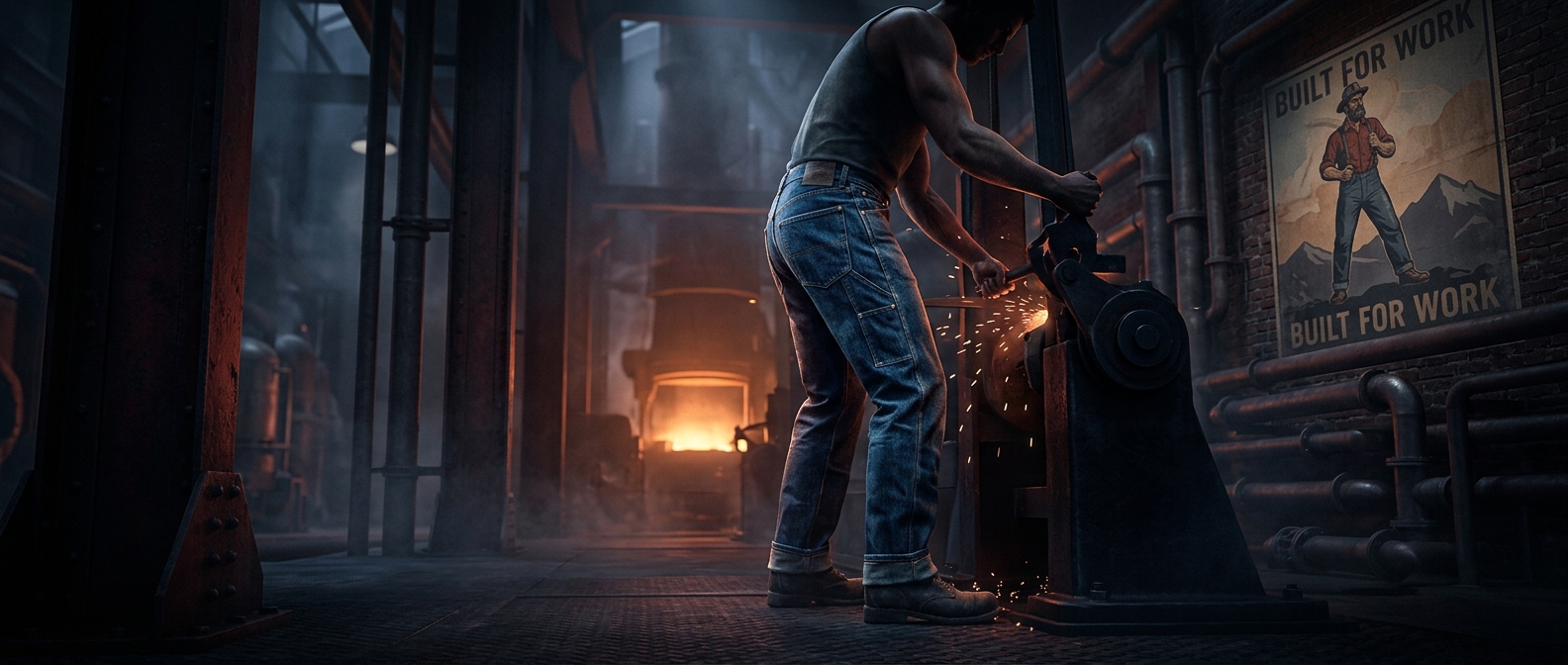
For miners and other laborers, trousers were not a style statement so much as equipment. Repeated squatting, lifting, and carrying pulled hard on pocket corners and other seams. Thick denim could withstand rough use, but fabric alone could not stop a stressed seam from splitting.
Small metal rivets helped solve that weak point. Pressed through layers of cloth at high-stress spots, they held the fabric together where stitching was most likely to give way. The idea was practical: reinforce the places that took the strain rather than make every part of the garment equally heavy.
Durability Became the Sales Pitch
That construction gave makers a concrete story to tell. Instead of asking customers to trust a vague claim of quality, they could point to thick cloth and visible metal fasteners as evidence that the pants were built for demanding work. The rugged image was part of the product’s appeal—and a way to distinguish work trousers from more delicate everyday clothing.
But usefulness did not automatically make jeans fashionable. As the caption suggests, high society initially paid little attention to garments associated with hard labor. The qualities that made jeans valuable on a worksite—sturdy material, reinforced seams, and a plainly functional look—did not match the signals of refinement that fashionable dress was expected to convey.
A Practical Feature Outlives Its Original Job
Rivets remain recognizable details even when jeans are worn far from a mine or workshop. Their lasting appeal comes partly from their visible, mechanical look: they make the garment’s construction seem honest and purposeful. A tiny fastener designed to keep a pocket from tearing can therefore carry a larger meaning, linking a modern pair of jeans to its origins as equipment for hard work.