A riding tradition became circus shorthand
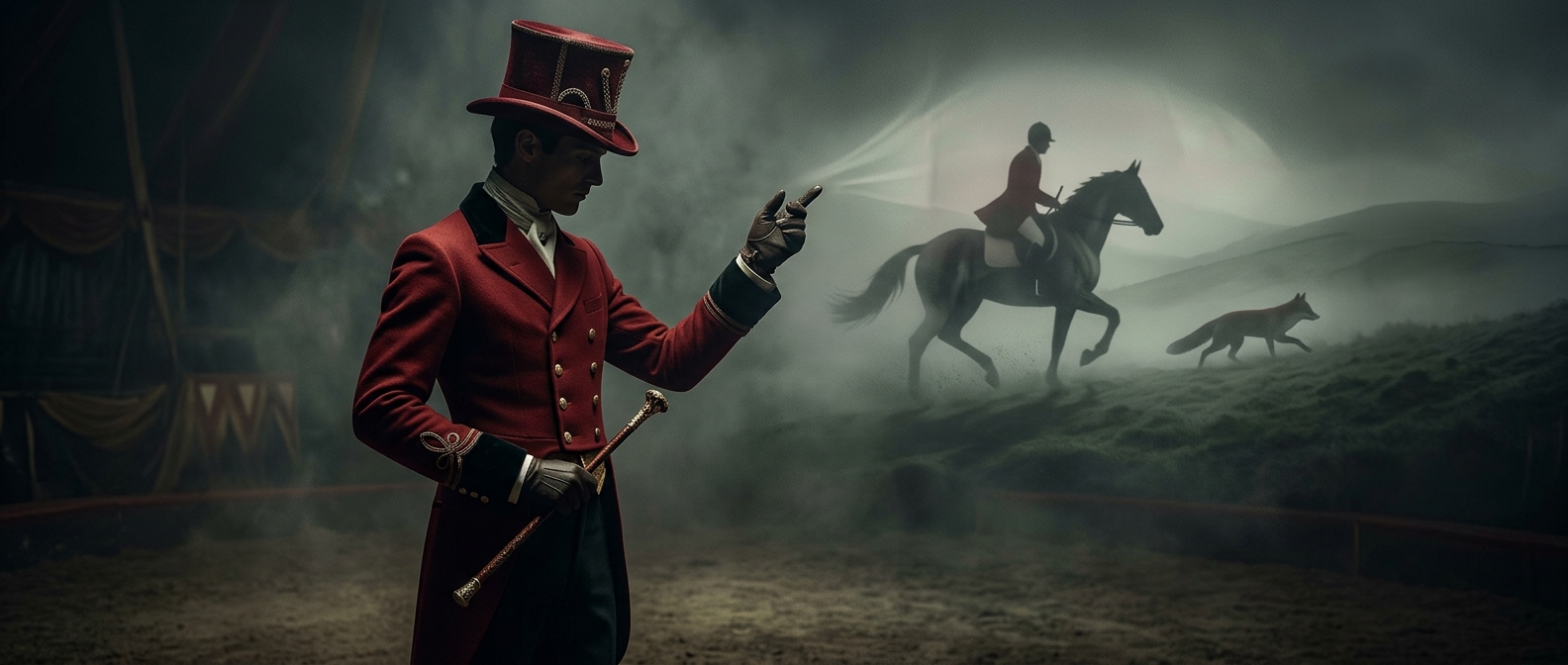
The ringmaster’s coat points back to the circus’s roots in horsemanship. Early circuses were built around riders performing feats on horseback, so the person introducing the acts was dressed in a world familiar to the audience: that of the mounted horseman. British fox hunters’ scarlet coats offered a ready-made model. Their bright color and formal cut suggested authority, polish, and command around horses.
The costume also made practical sense as stage language. A ringmaster has to be easy to pick out while action unfolds around the ring. A vivid coat distinguishes the announcer from performers and helps the audience follow who is presenting the next act. Its theatrical effect grew from a real social costume, then became useful in its own right.
Why the coat outlasted the horse acts
Circuses broadened beyond equestrian performances, but the ringmaster’s look remained. By then, the coat no longer needed to signal that its wearer belonged to fox-hunting society; it signaled “ringmaster.” Keeping the traditional silhouette helped audiences recognize the role before a word was spoken.
That is why the red tailcoat can appear even when the show has little to do with horses. It carries the memory of the circus’s riding-centered beginnings while serving as a bright visual cue in the present.