Two kinds of damage, happening at once
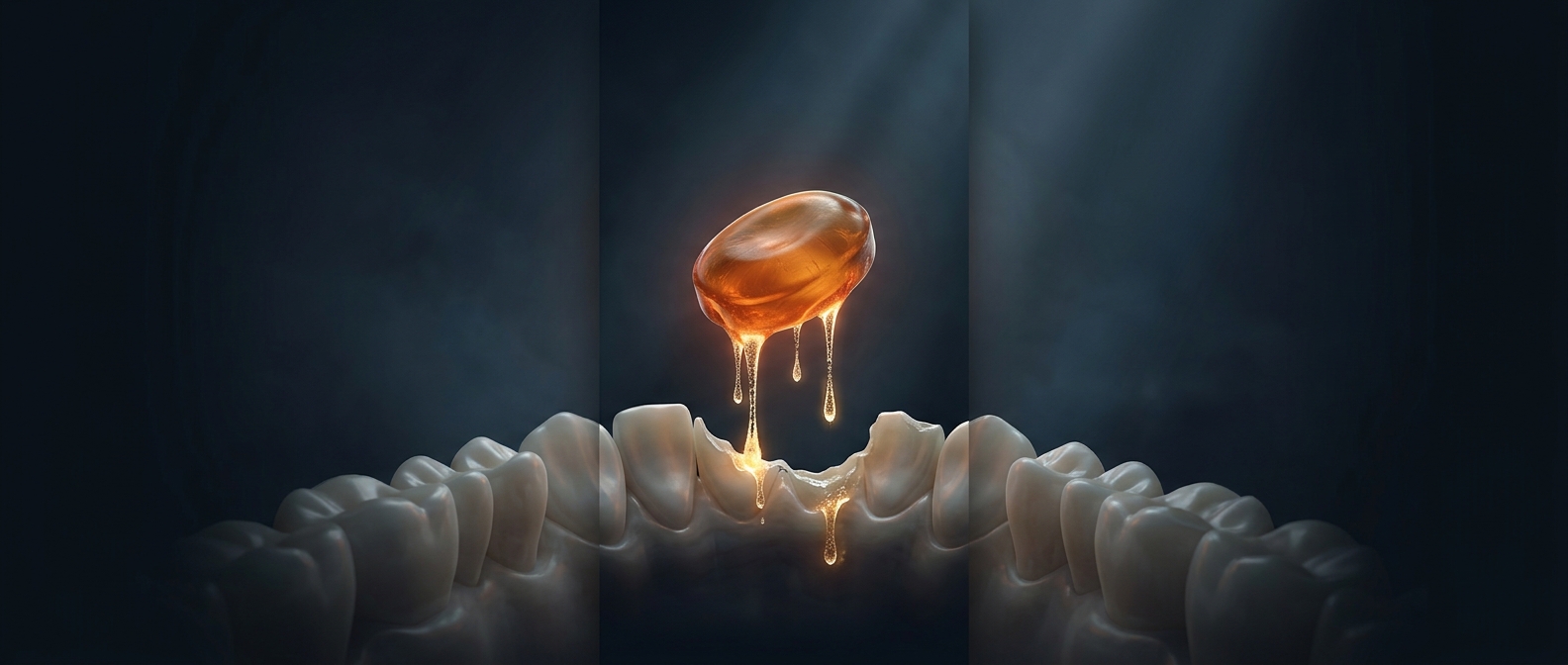
The two threats affect teeth through different routes. Acid in a drink can pull minerals from enamel—the hard outer coating—without bacteria being involved. This chemical wear is called erosion. Sugar, by contrast, feeds bacteria in dental plaque, the sticky film on teeth. As those bacteria digest sugar, they release acid that can start a cavity by removing minerals from a particular spot.
That distinction matters: erosion tends to wear away exposed surfaces, while decay develops where plaque repeatedly delivers acid, often in a localized area. When a drink is both acidic and sugary, it can contribute to both processes.
Why repeated sips matter
A mouth is not defenseless. Saliva helps dilute and neutralize acids, and it supplies minerals that can replace some of those lost from enamel. But recovery takes time. Sipping a drink over a long stretch keeps bringing in fresh acid and sugar, so the mouth gets fewer uninterrupted chances to restore its balance.
Once enamel has been worn away, the body cannot grow it back. Early mineral loss from decay may be repairable, but continued acid exposure can turn it into lasting damage. That is why the pattern of drinking matters as well as the drink itself: finishing it in one sitting generally gives teeth a shorter exposure than carrying it around and taking frequent sips.