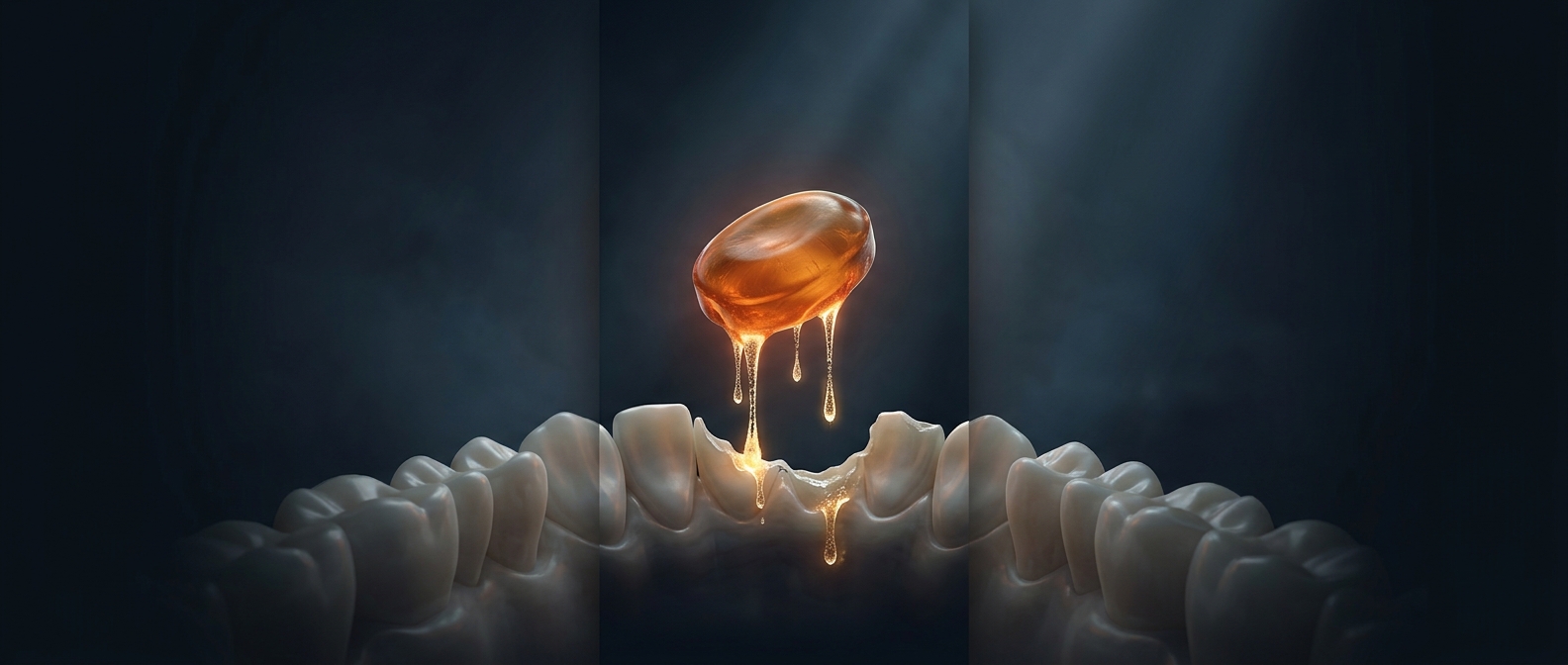
Why a Long-Lived Sweet Can Mean a Longer Acid Episode
The key issue is not just how much sugar is in a hard candy, but how long it takes to finish it. As the candy dissolves, small amounts of sugar repeatedly mix with saliva and reach the sticky layer of bacteria on tooth surfaces, called plaque. Those bacteria ferment the sugar and release acids.
The acids temporarily lower the pH—the measure of how acidic the mouth is. When conditions become acidic enough, minerals begin to leave the enamel, the hard outer coating of a tooth. This early mineral loss can be repaired: saliva helps neutralize acids and supplies minerals that can move back into enamel. But that repair takes time, so frequent or prolonged sugar exposure can keep interrupting the recovery period.
Time and Frequency Shape the Exposure
A candy eaten over many minutes can keep feeding plaque bacteria throughout that stretch. Sipping or snacking on sugary things repeatedly can have a similar effect: each new exposure can restart acid production before the mouth has fully returned to its usual balance. That is why the pattern of eating matters alongside the amount.
This does not mean one hard candy inevitably causes a cavity. Tooth decay develops when mineral loss repeatedly outweighs repair over time, and factors such as saliva, fluoride, and oral hygiene also affect that balance. Still, letting a sweet dissolve for a long time gives bacteria a longer opportunity to produce acid—and leaves enamel with less uninterrupted time to recover.