Why cabbage mattered after the harvest
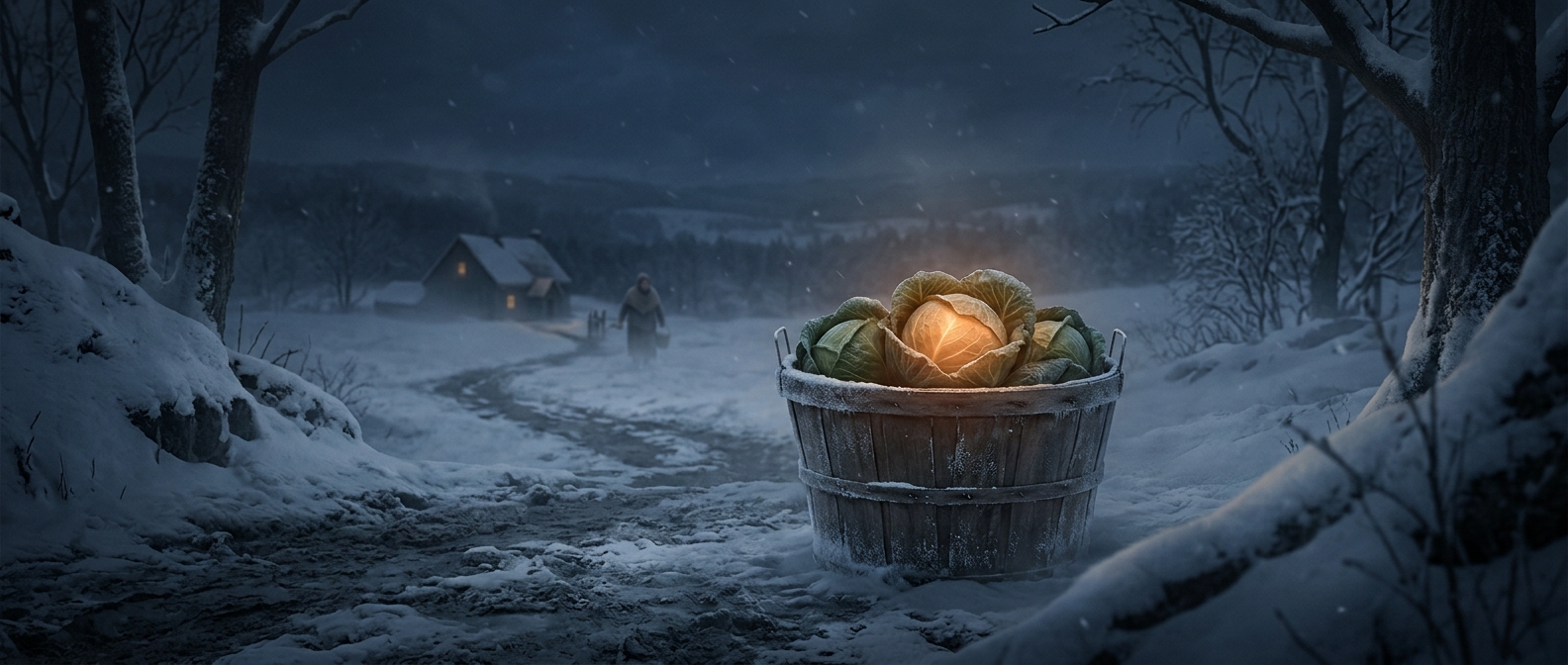
In much of rural Europe, winter was a storage problem as much as a weather problem. Fresh vegetables became scarce once the ground froze, and families had to stretch food gathered during the growing season until spring. Cabbage helped on both ends of that challenge: it could keep growing through cool, frosty weather, and a large harvest could be preserved rather than eaten at once.
Fermentation made the crop last
To make sauerkraut, people shredded cabbage, salted it, and packed it tightly so the released liquid covered the leaves. Naturally occurring bacteria then converted some of the cabbage’s sugars into lactic acid. That acidity made conditions hostile to many spoilage microbes, allowing the cabbage to keep for months when stored cool and submerged in its brine.
This was not simply a way to save leftovers. Fermentation turned a seasonal surplus into a dependable winter food without requiring a freezer or a steady supply of fuel. Families could prepare a large batch after harvest and draw on it gradually, while the salt and acidity helped protect it from spoiling.
A buffer against the hungry season
Cabbage could not replace every food lost in winter, and sauerkraut alone was not a complete diet. But it offered something valuable when gardens and fields were dormant: a stored vegetable that could accompany staples such as grains and potatoes. Its durability made the harvest less vulnerable to frost arriving early, and its preserved form carried food beyond the months when fresh produce was available.
The practical advantage began in the field: a crop that tolerated cold could keep producing late into the season, then remain useful after harvest. In a winter household, that meant the last cabbage did not have to be eaten before the first hard freeze.