A fasting rule shaped the ingredient list
In parts of medieval Christian Europe, fasting meant more than eating less. On designated days or seasons, people were expected to avoid certain animal-derived foods, commonly including meat, eggs, and dairy. The exact rules varied by place and time, but they made ordinary rich breads—often enriched with milk, butter, or eggs—unsuitable for some fast days.
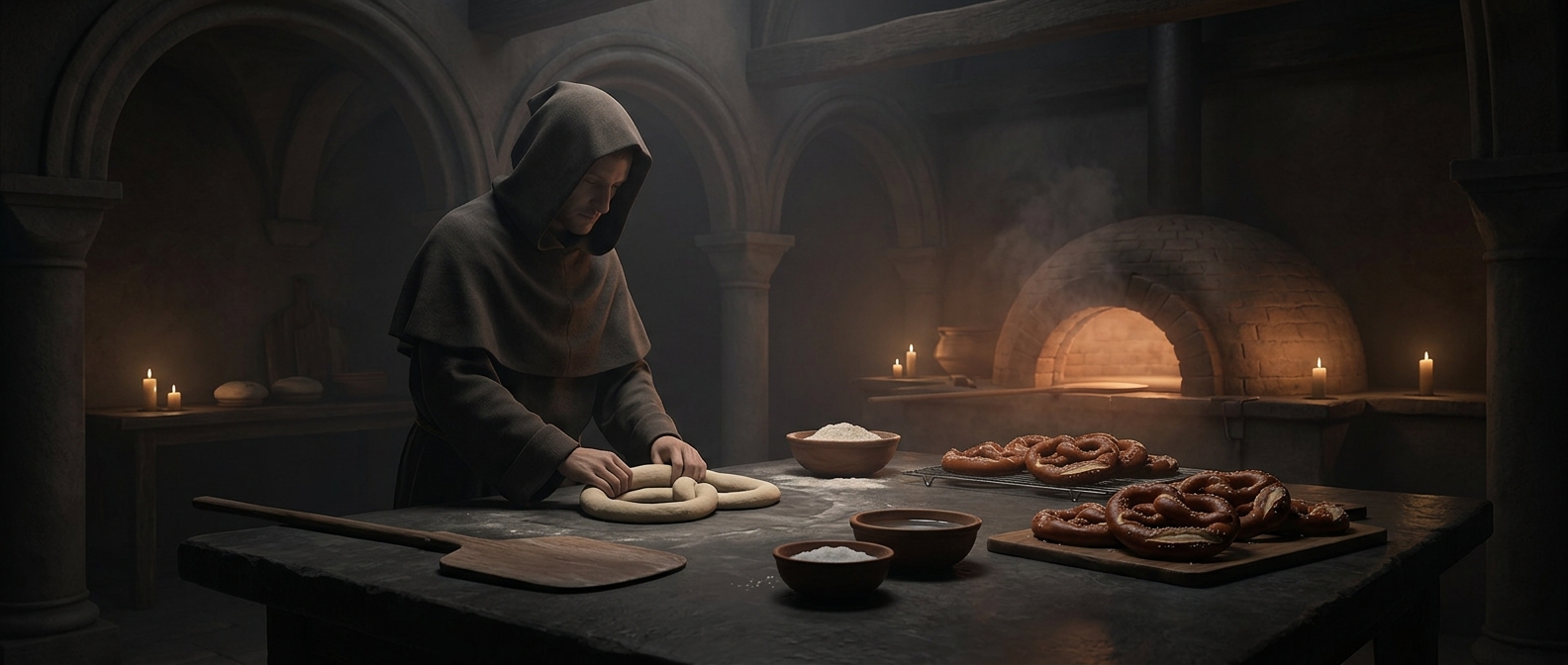
A plain pretzel offered a practical alternative. Flour, water, and salt could be turned into a filling baked food without the ingredients that fasting rules restricted. Its value was not that it imitated a rich loaf, but that it gave people a simple, portable bread that fit the day’s requirements.
Flour and water can do the work
Eggs and dairy can add tenderness, flavor, color, or richness to dough, but they are not essential to making bread. When flour is mixed with water, its proteins form gluten—a stretchy network that helps hold the dough together. Salt seasons the result and affects the dough’s structure. The pretzel’s distinctive form comes from shaping the dough, not from adding animal products.
That simplicity connected religious practice to everyday baking: a rule about what people could eat changed what bakers put into the dough. A basic pretzel could therefore serve as both food and a visible example of how a fasting menu was built from permitted ingredients.