A sticky material, softened by teeth
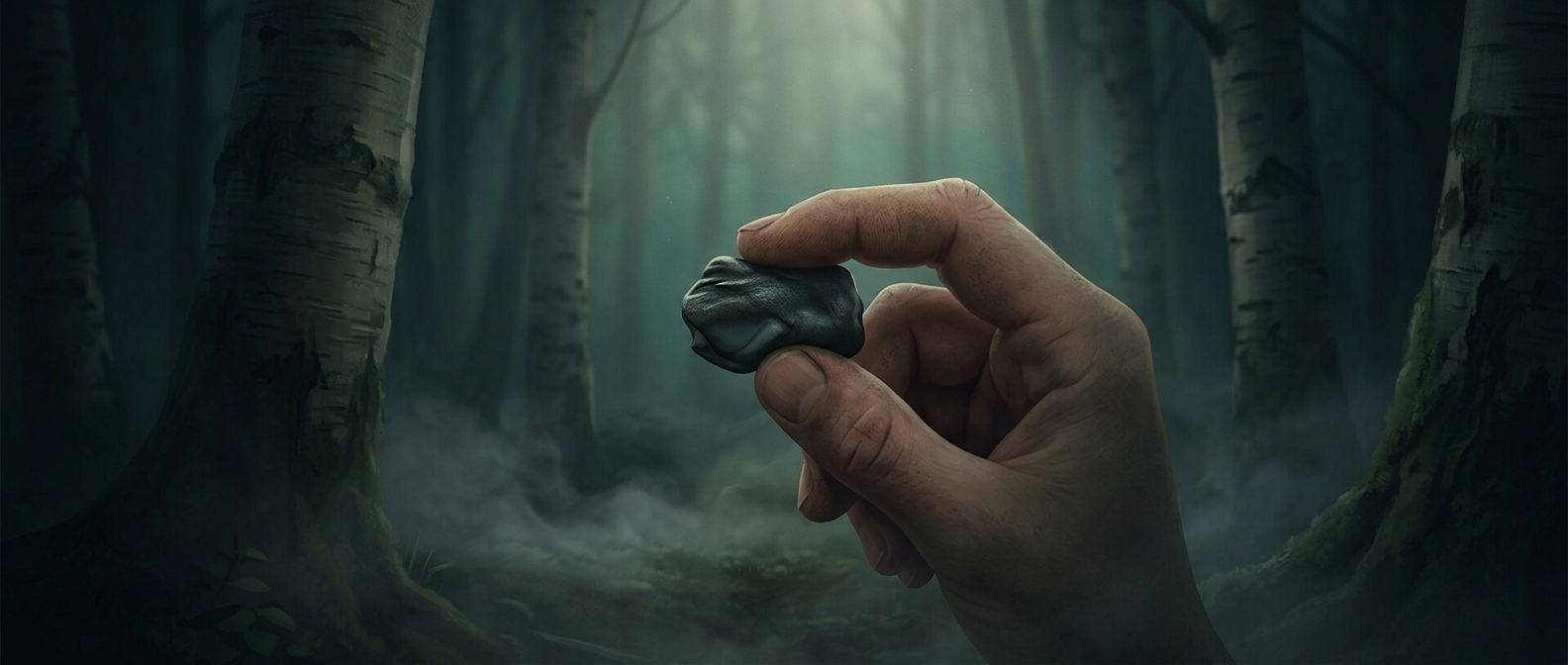
Birch-bark tar is a dark, tacky material made by heating birch bark. Long before modern plastics, people could use substances like it as an adhesive, including for fastening parts of tools. When cool, tar can be stiff and difficult to work; warming or chewing it makes it more pliable.
Tooth marks in surviving lumps are physical evidence that people put the material in their mouths and chewed it. The marks establish the behavior, but not a single reason for it: chewing may have softened the tar for later use, or served another purpose that the traces cannot reveal.
Not gum as we know it
Modern chewing gum is made to stay pleasant and chewable. Birch tar was a practical material, with a strong taste and none of the minty flavor associated with breath fresheners. Its appeal was likely less about a treat than about what a person could do with a softened lump.
That distinction is what makes the tooth marks so revealing: a common, messy material preserved a small act of everyday life that written records rarely capture.