A Philosopher’s Uneasy Nights
Thomas Hobbes is remembered for arguing that people seek safety in a world of danger and uncertainty. His reported fear of sleeping in darkness gives that concern an unexpectedly domestic setting: at night, even a powerful thinker depended on other people to keep his surroundings reassuringly visible.
What Candlelight Could—and Couldn’t—Do
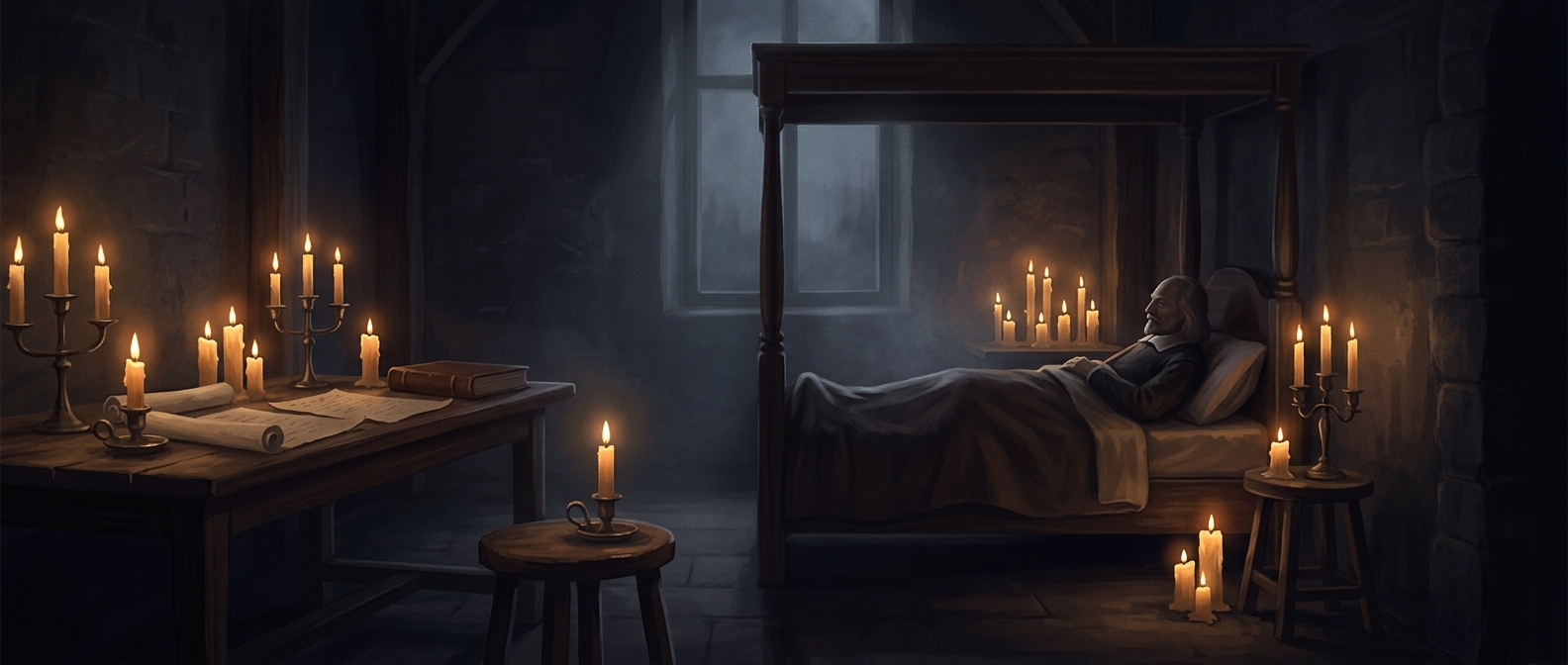
In seventeenth-century England, a candle offered only a small pool of light, not the even illumination of a modern room. Its flame could make nearby furniture and faces visible while leaving corners and the rest of the room in shadow. Keeping candles lit through the night therefore meant arranging for servants to tend a fragile, finite source of light rather than simply switching on a lamp.
That detail also shows how comfort depended on household labor. Hobbes did not need to manage the candles himself; someone else had to remain responsible for maintaining the light until morning. The striking contrast is between his public reputation as a thinker who analyzed fear and the simple, practical measure that helped him face the dark: a bedroom kept alight by other hands.