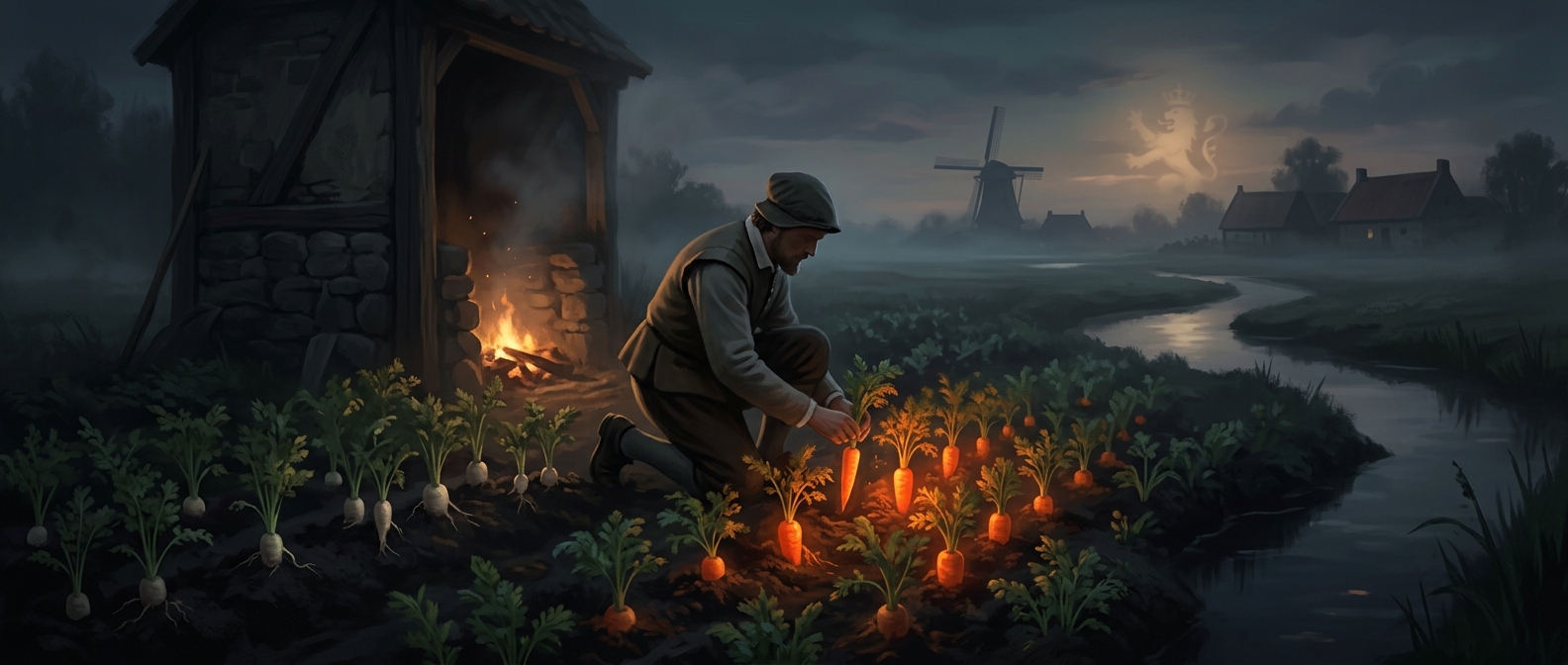
A political color took root in the garden
The orange carrot is often traced to Dutch growers who, in the era of the struggle for independence from Spain, cultivated carrots in a color associated with William of Orange, the movement’s leading figure. Orange already carried political meaning through his name and the House of Orange. In this account, choosing the color made an everyday crop a quiet tribute.
The change was also practical. Carrots came in several colors, including purple, yellow, and pale shades. Growers selected plants with traits people valued at the table: a sweeter taste and a thicker, fleshier root. Repeatedly saving seed from those plants made the preferred qualities more common in later crops. The orange pigment comes from carotenoids, the same broad group of natural pigments that gives some other fruits and vegetables their color.
From local preference to global default
Once orange varieties were productive and appealing, they could spread through ordinary farming and trade. As seeds and cultivation practices traveled, the color became familiar far beyond the Netherlands. Other colors did not disappear, but orange became the image many people now think of when they hear “carrot.”
The striking legacy is that a political association could outlast the political moment that gave it meaning. A color chosen in a period of national struggle became, through generations of planting and eating, an everyday expectation at the market.