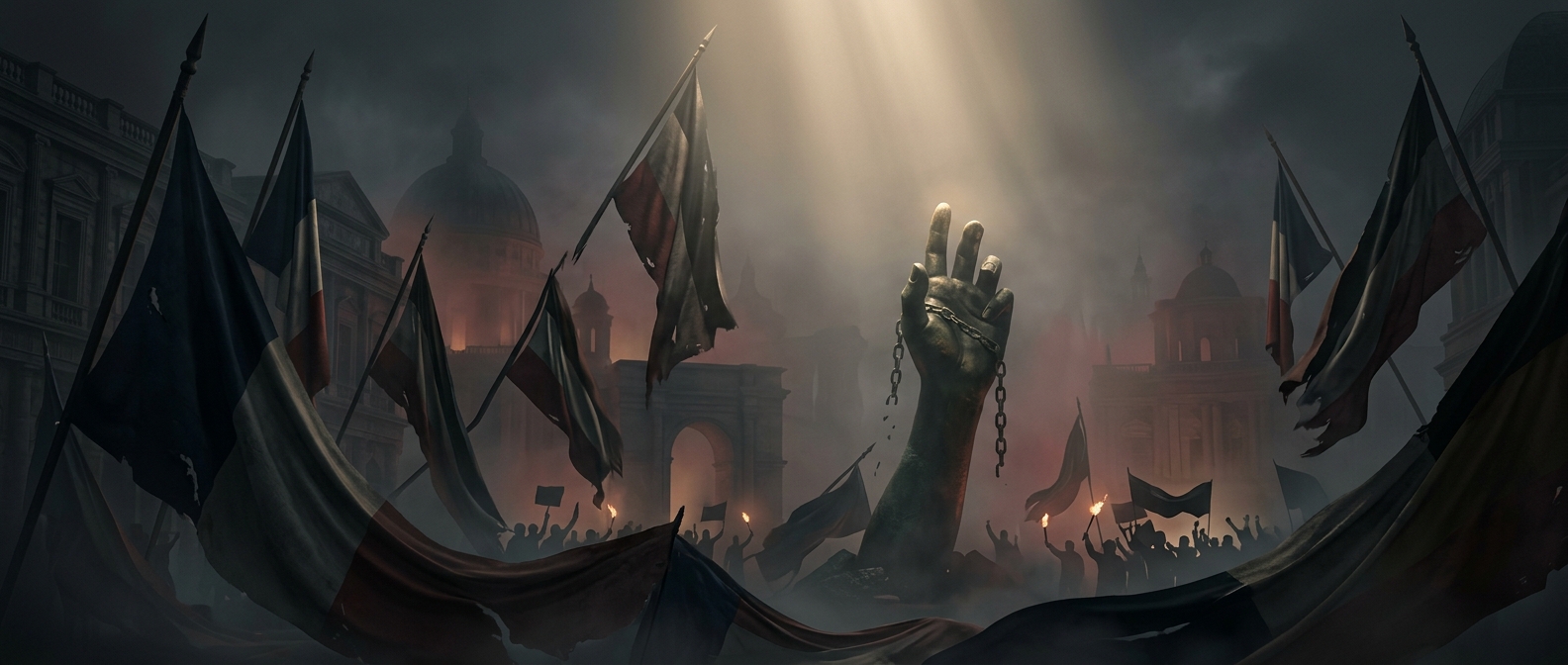
How the 1848 revolutions crossed borders
The upheavals of 1848 did not spread because Europe had become one unified political arena. They spread through a dense web of newspapers, pamphlets, letters, and travelers linking cities. When revolution toppled France’s monarchy in February, reports of the change—and of crowds forcing political concessions—reached other capitals quickly enough to shape local expectations. People could see that a ruler who had seemed immovable might be challenged.
A crisis with shared causes
The news found societies already under strain. Poor harvests and rising food prices hit working families hard, while economic distress left many workers and craftspeople without secure livelihoods. Their immediate demands often centered on jobs, bread, and a voice in government. Liberal reformers pressed for constitutions, civil liberties, and representative institutions; in parts of central and eastern Europe, national groups also sought greater autonomy or independence.
These aims did not always align. Workers might want relief from poverty while middle-class reformers prioritized political rights, and different national movements could compete over territory and authority. Yet crowds could unite temporarily around opposition to censorship and unaccountable rule.
Why censorship failed
Governments could restrict printing within their borders, but they could not reliably stop every paper, traveler, or rumor crossing them. Once demonstrations began, each new concession or crackdown became another story for neighboring cities. The result was not one centrally directed revolution but a chain of local uprisings, each adapted to its own rulers and grievances. Information helped make revolt seem possible; the hardships and political conflicts gave people reasons to act.