Why electricity seemed to promise renewed life
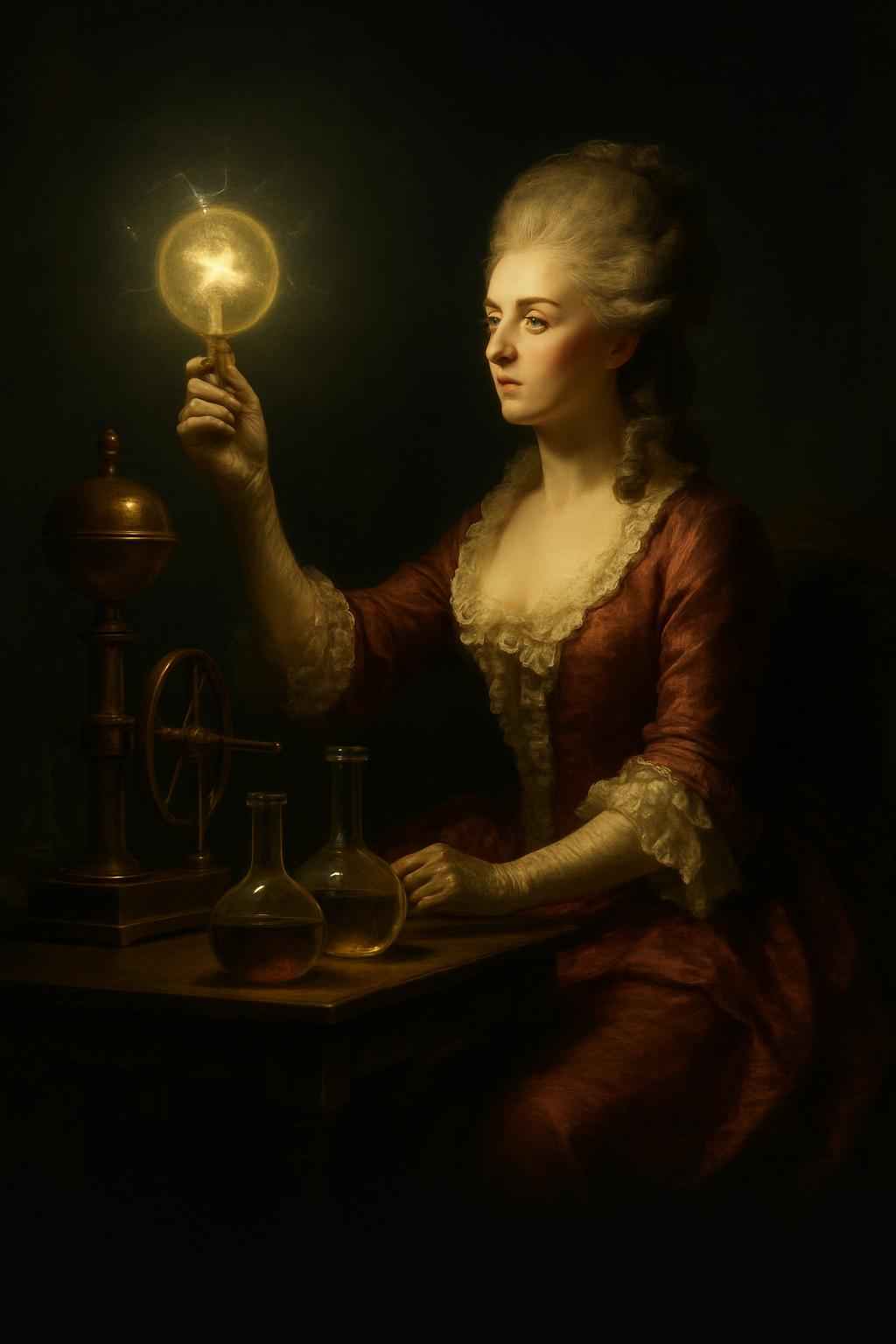
In late-18th-century Paris, electricity was both a subject of experiment and a spectacle. People could see sparks leap, feel a shock, and watch electrical machines produce effects that seemed startlingly powerful. The force was real, but its effects on the body were poorly understood. That gap left room for a persuasive idea: if electricity could animate or stimulate the body, perhaps it could restore youthful vigor too.
From salon demonstration to paid treatment
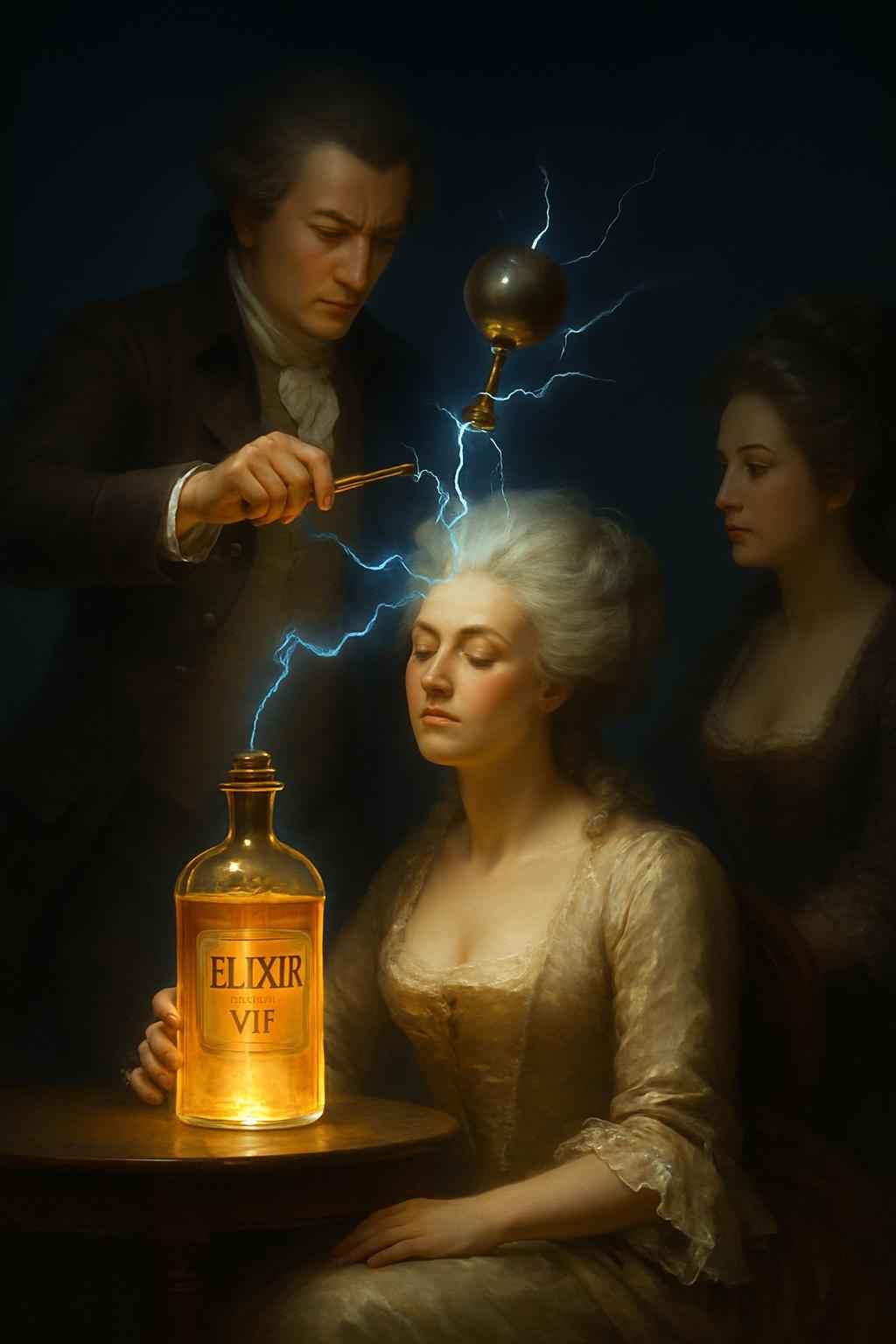
Salons brought together conversation, entertainment, and displays of new ideas. Electricity fit the setting: it was dramatic enough to hold an audience and mysterious enough to invite speculation. Sellers carried that fascination into treatments, turning a fashionable demonstration into something customers could buy. Electric shocks made the proposed remedy tangible; water described as oxidized offered another way to present an invisible force as a bodily tonic.
The appeal was not simply that electricity was new. A treatment that produced an immediate sensation could feel active and convincing, even when that sensation did not show that aging had been reversed. The commercial pitch connected a visible novelty to a familiar hope: preserving energy and youth.
The promise outpaced the explanation
At the time, the language of vitality could blur the line between stimulation and lasting improvement. Electricity might make a person feel a jolt, but that did not establish that it could renew the body. Still, the episode shows how quickly a powerful new technology can acquire a health promise: before its effects are well understood, its spectacle can become part of the sales pitch. In Paris, the spark itself helped make the promise feel plausible.