The drawing room as an innovation network
An inventor in 18th-century France needed more than a clever device. A project might require money for materials, access to skilled craftsmen, and influential people willing to take it seriously. A salon—a host’s gathering for conversation and demonstration—could bring those needs together in one room.
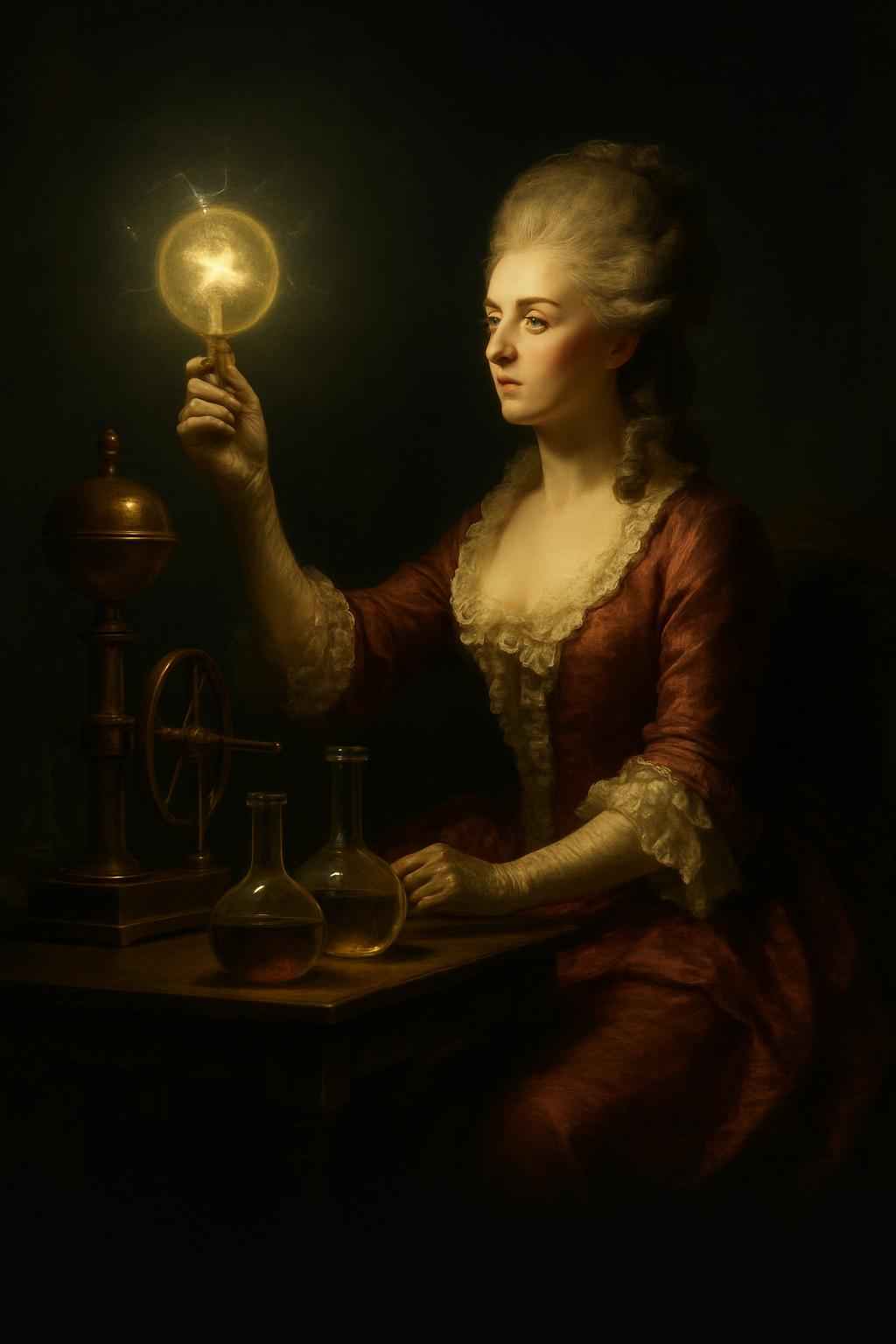
Women who hosted or supported these gatherings were not simply providing a backdrop for intellectual life. A well-connected patron could introduce an experimenter to potential backers, offer a place to demonstrate a device, or help an idea reach people with the means to promote it. Conversation mattered too: listeners questioned claims, compared explanations, and carried news of an invention beyond the gathering.
Why electricity fit the salon
Electrical experiments were especially suited to public display. They could produce visible effects, such as sparks, making an unfamiliar natural force something guests could witness and discuss. In an era when electricity was being investigated and debated, demonstrations made it possible to connect abstract explanations with a striking event in front of an audience.
That did not make a salon a laboratory. Experiments still depended on practical work and specialized equipment, while discussion and spectacle alone could not establish whether an explanation was sound. But a salon could supply something a workshop usually could not: a socially influential audience, gathered at once, with the power to spread an idea or support further work.
Influence without formal authority
Women’s routes into scientific and technical life were often shaped by social access rather than official positions. Hosting a salon offered a way to influence which projects received attention and who encountered them, even when women had limited access to formal institutions. The drawing room became part of the machinery of innovation—not because it replaced the workshop, but because it connected experimenters to money, reputation, and an audience.