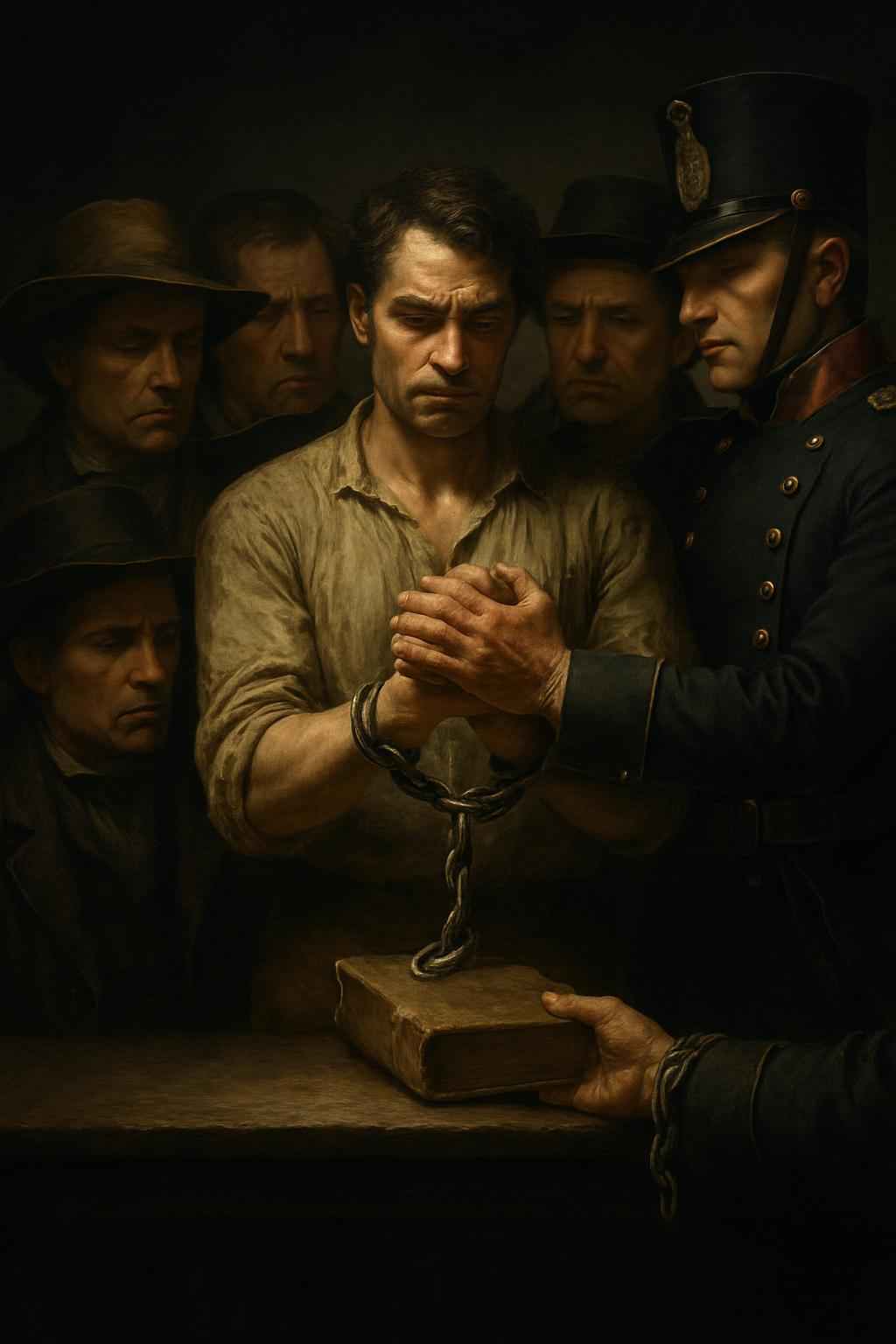
How suspicion became a paper trail
In revolutionary Paris, officials faced a practical problem: the government feared plots and disloyalty, but suspicion had to be turned into names that authorities could act on. The Law of Suspects, passed in September 1793, directed local surveillance committees to identify and monitor people considered dangerous to the Revolution. Committees gathered information, kept records, and could help set arrests in motion.
A list did not prove that someone had committed a crime. Its power was that it made a person visible to the state: officials could record an address, note a person’s connections, and pass information to other authorities. Paperwork helped convert scattered reports into a system that could be used to watch, summon, or detain people.
Neighbors supplied the leads
The committees did not rely only on formal records. Denunciations—reports or accusations made by other people—could point them toward a suspect. In crowded neighborhoods, residents might know who had left town, spoken against the new government, or maintained ties to figures regarded as enemies. Such claims varied in reliability, but once recorded, they could become leads for further inquiry.
That created a feedback loop: records made people easier to scrutinize, while accusations could add new names or details to the records. The machinery did not require every report to be true in order to expand surveillance; it required officials to treat reports as worth pursuing.
Identification could become coercion
The same administrative habits used to identify residents could therefore help enforce political control. A name on a list was not automatically a sentence, but it could bring a person under official attention at a moment when the definition of a suspect was broad and the government was intensely fearful of internal enemies. The unsettling consequence was that ordinary neighborhood knowledge—who lived where, and what others said about them—could travel into a state record and help trigger an arrest.