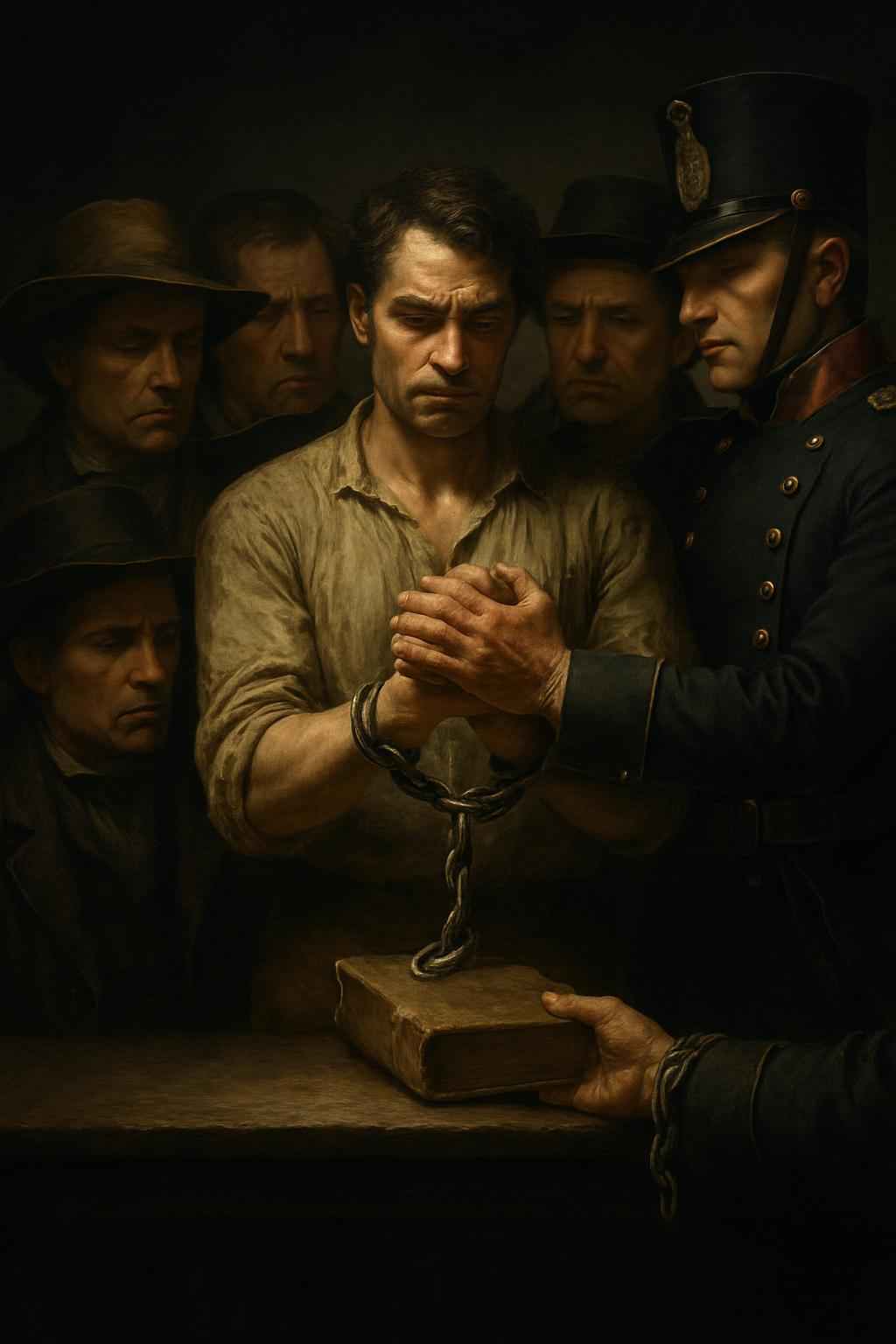
A wage dispute became a test of the law
In early-19th-century rural England, farm laborers had little leverage when employers cut wages. In Tolpuddle, Dorset, six men responded by organizing a Friendly Society of Agricultural Labourers—a mutual-aid group that also pressed for better pay. Because collective bargaining could invite retaliation, members pledged secrecy when they joined.
That oath gave authorities a way to prosecute them. The men were not convicted of assault or sabotage; prosecutors invoked a law against administering unlawful oaths. In effect, the promise intended to protect the association became the legal instrument used to punish it.
Why the punishment drew a national response
The six were sentenced to transportation: forced removal to a British penal colony, where they would serve years of hard labor. The severity of the sentence alarmed people far beyond Dorset. Supporters organized petitions and public meetings, turning the case into a visible dispute over whether workers could meet and organize without being treated as criminals.
The campaign helped secure pardons, and the men eventually returned to Britain. Their release did not immediately give agricultural laborers secure rights to organize, but it made the cost of suppressing a workers’ association harder to ignore.
The lasting consequence
The Tolpuddle case became a landmark in the history of British trade unionism—not because the six won their wage demand in court, but because their prosecution showed how authorities could use a rule about oaths to strike at collective action. Their punishment helped transform a local workplace dispute into a public argument about the right to organize.