Why Washington’s resignation mattered more than the rumor
The striking part of the story was not that Americans were seriously preparing to crown George Washington. It was that, after leading the army that won independence, he had the power and public standing to make the new government answer to him. In a country still struggling to establish authority, a victorious commander could have used the army’s loyalty to demand more influence—or simply refused to put it back under civilian control.
Instead, Washington resigned his military commission to Congress in December 1783. That act made a principle visible: the army belonged to the republic’s elected government, not to the general who commanded it. The distinction was fragile. Congress had limited power, and soldiers had grievances over pay, making the peaceful transfer especially consequential.
A king’s measure of greatness
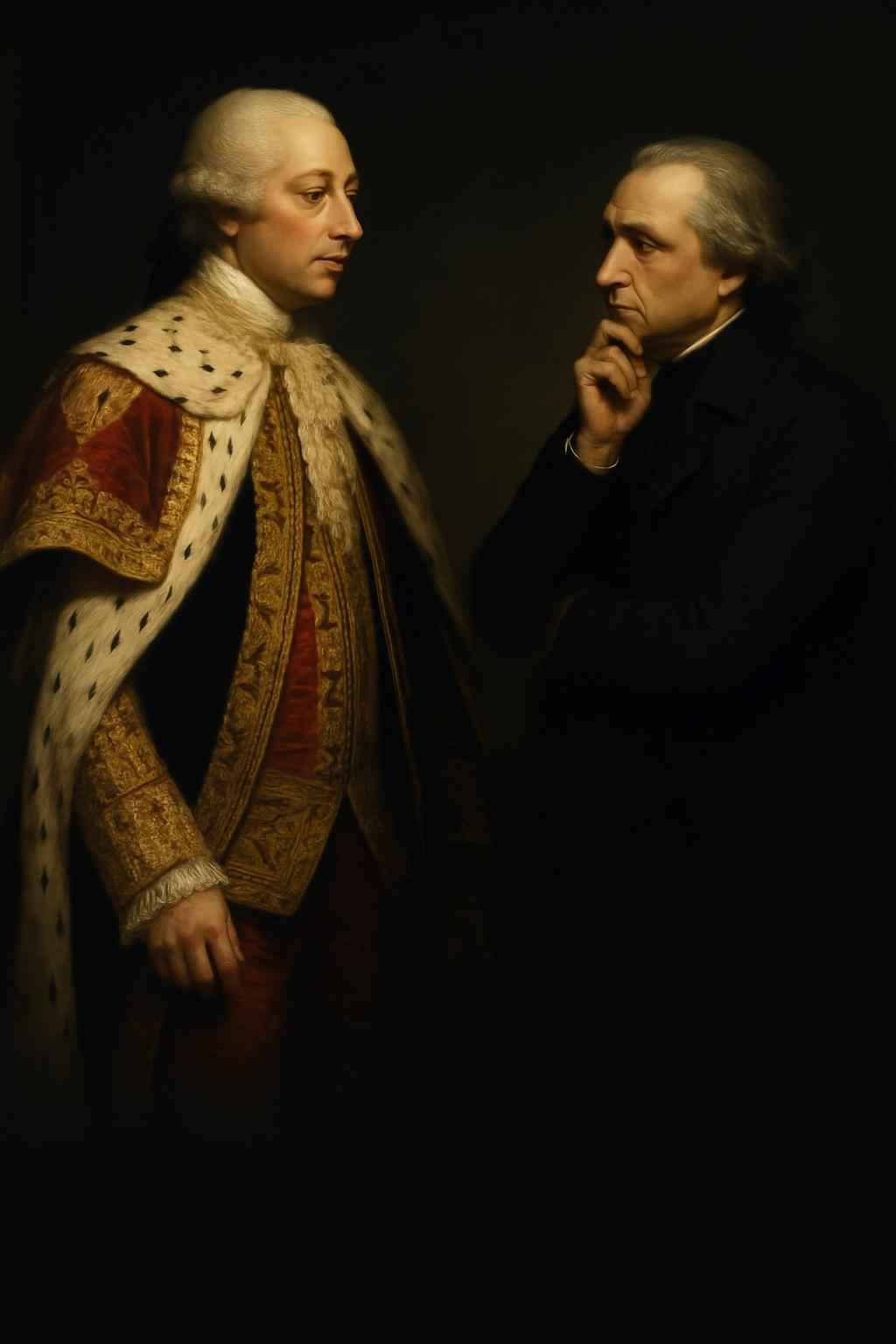
George III’s reported reaction reflects a monarch’s understanding of power: a leader who could take a crown but chose not to would be exceptional. Washington’s choice carried a different meaning in the United States. It suggested that independence would not merely replace a distant king with a homegrown ruler.
Washington returned to private life at Mount Vernon, but his withdrawal did not end his public role. He later agreed to preside over the Constitutional Convention and became the first president under the new Constitution. His earlier resignation gave those later offices an important precedent: national leadership could be accepted as a public duty, then relinquished rather than treated as personal possession. The rumor’s dramatic ending was imaginary; the real ending helped make peaceful limits on power imaginable.