A political execution brought into the bedroom
William Mons was a courtier in the household of Peter the Great’s wife, Catherine. After Peter learned of Catherine’s affair with Mons, he ordered Mons beheaded. The episode joined two kinds of power: the tsar’s authority to punish a courtier and his control over the private life of the imperial household.
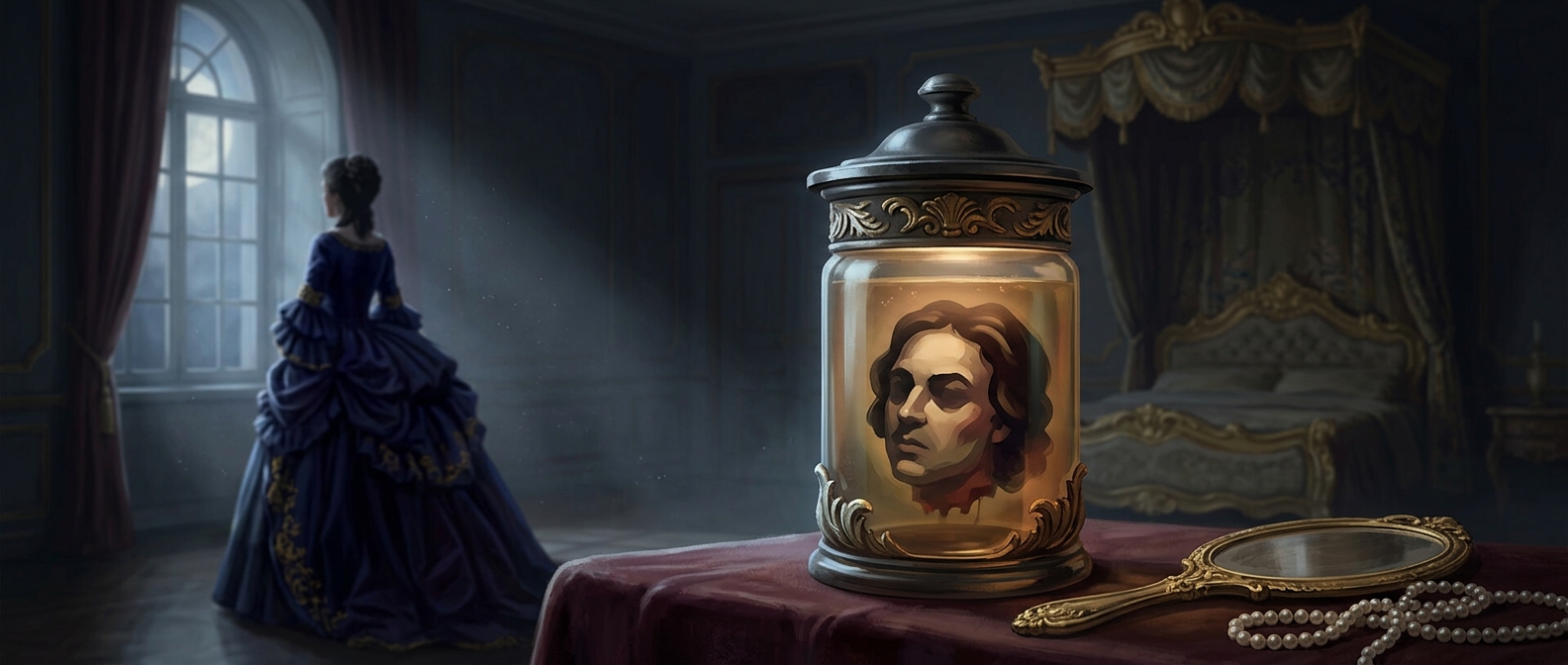
The preserved head made that punishment impossible to leave behind at the execution site. Kept in alcohol in a jar, it was reportedly placed on Catherine’s nightstand—the place where a spouse might expect privacy. The gruesome display turned an object associated with the affair into a continual reminder of what Peter could do to someone close to her.
Why the jar mattered
An execution could warn the wider court; the jar carried the warning into Catherine’s room. Its force came not just from horror, but from proximity: Catherine encountered the consequence in the space where she lived. The story is remembered as an especially stark example of how royal power could reach past public ceremony and into the most intimate surroundings.
The head was not simply evidence of a death. In the telling of the episode, it became part of the punishment itself—kept where Catherine would have to see it.