Why the crowd went to the Bastille
By July 1789, Paris was tense and short of reliable food, while rumors of a royal crackdown fed fears that troops might suppress the unrest. The Bastille mattered first as a military storehouse: the crowd wanted the gunpowder kept there, especially to supply muskets seized earlier from the Hôtel des Invalides. In a city where armed resistance seemed increasingly possible, powder was a practical necessity.
The fortress was also a prison, but not a crowded dungeon holding masses of political victims. When it fell, only seven prisoners were inside. Its importance to the crowd lay less in the number of people behind its walls than in its guns, ammunition, and association with royal authority.
How a tactical seizure became a revolution’s emblem
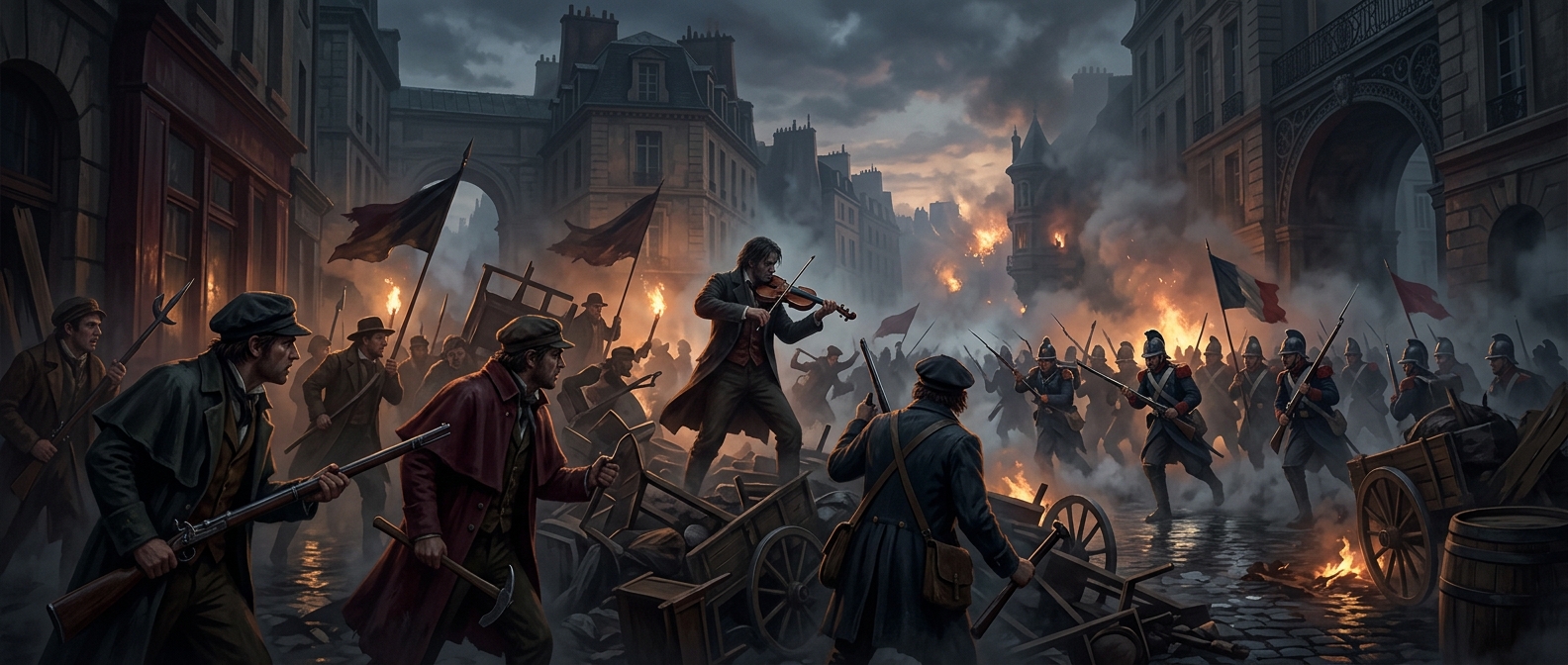
The attack was not a simple raid. Negotiations with the governor, Bernard-René de Launay, failed; fighting broke out, and the crowd suffered casualties before the fortress surrendered. The immediate result was access to the powder and weapons. The violence also showed that the king’s authority could be challenged by an armed Parisian crowd—and that soldiers might not reliably defend it.
That political consequence outlasted the storehouse’s military value. The Bastille was dismantled after its capture, but its fall gave the revolution a vivid, easily remembered scene: ordinary people breaching a fortress identified with royal power. The symbol did not have to match the practical aim of the attack to become meaningful. The need for ammunition helped bring the crowd to the gates; the image of those gates falling became shorthand for resistance to arbitrary rule.
The afterlife of July 14
Revolutionaries made the anniversary a public celebration, helping turn a confused, violent day into a defining national memory. In later retellings, the Bastille’s role as a prison often overshadowed the gunpowder that helped make it a target. The contrast is the story’s lasting twist: a fortress seized partly for supplies became a symbol large enough to stand for the revolution itself.