Why an apple could be more useful in a barrel
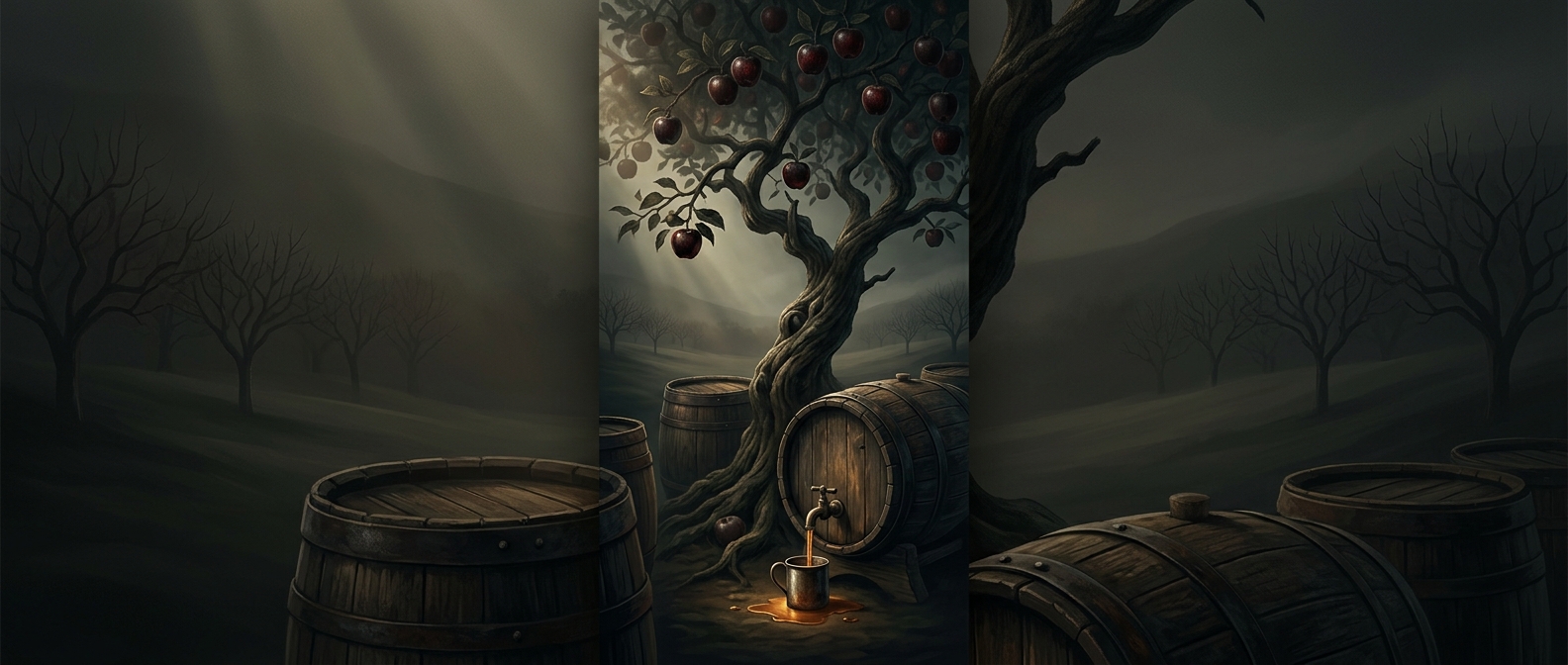
For many colonial households, an apple’s value depended less on whether it tasted good fresh than on what it could become after pressing. Apples that were tart, bitter, or otherwise unappealing could still yield juice. Fermentation—the process in which yeast turns some of that juice’s sugar into alcohol—made a drink that could be stored and served over time.
That mattered in a world without refrigeration. Fresh fruit was seasonal, but a barrel of cider could last beyond the harvest. Pressing also turned a large, perishable crop into something easier to keep and use. The orchard was therefore not simply a source of snacks; it was part of the household’s food-and-drink supply.
The water problem—and cider’s limits
In many places, people worried about drinking water from nearby sources, which could be contaminated. Fermented cider was often regarded as a safer choice, though that did not mean every batch was reliably safe or that all water was undrinkable. Cider’s alcohol content varied, and households could also make lower-alcohol drinks by diluting or reusing pressed fruit.
The practical advantage was that apples could be turned into a drink through familiar tools and seasonal labor. Pressing gathered the juice; fermentation helped preserve it. A crop with little appeal at the table could thus become a dependable part of daily life.
An orchard built for use
Colonial apple-growing reflected that purpose. Rather than selecting only fruit prized for eating raw, growers could value trees for abundant juice and cider-making qualities. The result was a landscape in which an apple harvest might be measured not by how many pieces of fruit people ate, but by how many barrels they could fill.