One wheel changes the trail problem
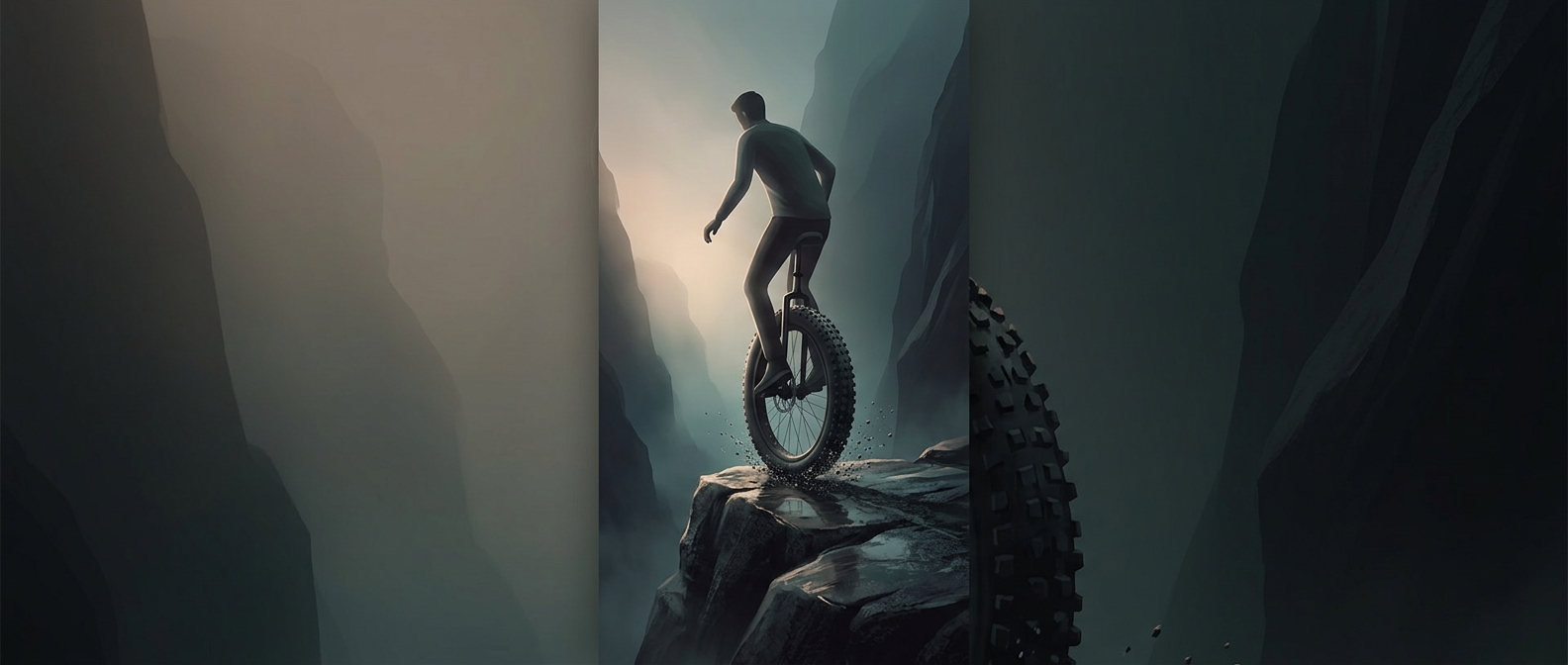
A mountain unicycle, often called a muni, trades the bicycle’s stable two-wheel track for a much narrower line through the terrain. With no second wheel or projecting frame parts to place around rocks and roots, the rider can aim the tire through tight gaps. But the machine does not steer like a small bike: the wheel sits directly beneath the rider, so turning and staying upright depend on constant adjustments to balance, body position, and pedal pressure.
That direct connection is also what makes rough ground demanding. The rider’s weight presses through one tire, and each pedal stroke can help lift or roll the wheel over an obstacle. If the tire stops abruptly, there is no front wheel to keep rolling or frame to support the rider; they must recover their balance or step off.
Control comes from the pedals
On most mountain unicycles, the pedals turn the wheel directly. There is no freewheeling: stop pedaling and the wheel stops, while pushing back against the pedals can slow it. Some models also use a hand-operated brake, particularly useful on long descents, where holding back the wheel with leg strength alone can be tiring.
This makes speed a choice made stroke by stroke. A rider can use slow, forceful turns to climb or negotiate a rock, then keep the wheel moving over easier ground. The narrow setup offers room to pick a precise path, but it does not make the trail safer or easier. It gives the rider fewer parts to maneuver around obstacles—and leaves balance, propulsion, and much of the braking to the same pair of legs.