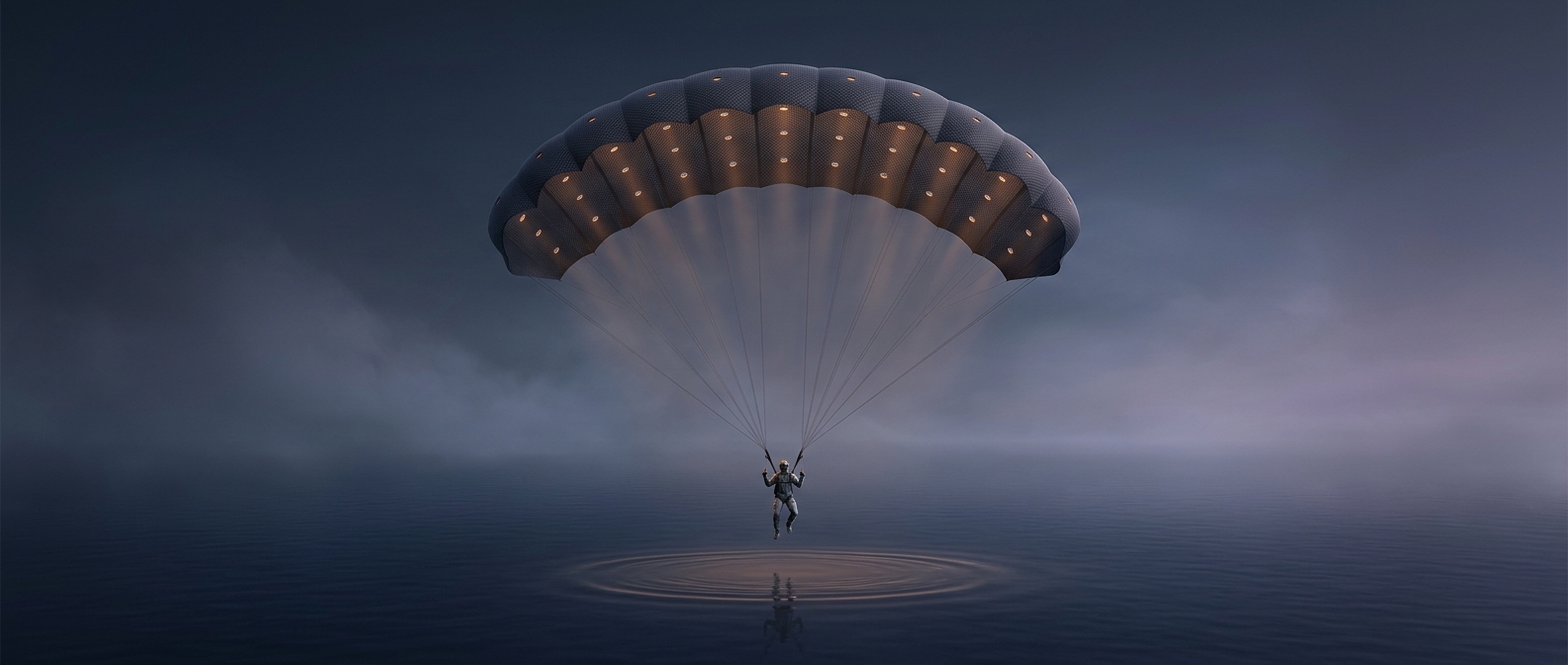
Why a parachute needs a controlled leak
A parachute works by catching air, but a canopy that trapped every bit of air would not necessarily descend smoothly. As the jumper falls, air rushes into the fabric and pressure builds beneath it. A small opening at the crown—the canopy’s highest point—gives some of that air a predictable way out.
How the opening steadies the descent
Without a top vent, air can spill unevenly around the canopy’s edges. A gust or slight change in the jumper’s position may make one side catch more air than the other, pushing the canopy off center. That shift can start a swing: the jumper moves beneath the canopy like a pendulum, and the canopy may tilt as it tries to recover.
The crown opening helps relieve pressure in the middle, making airflow less prone to sudden, uneven release around the rim. It does not eliminate movement—wind and steering still affect the descent—but it can make the canopy behave more steadily.
A tradeoff built into the design
The hole has to be sized and placed as part of the canopy’s overall design. Too much escaping air would reduce the force slowing the jumper; too little could leave the canopy more prone to instability. The aim is not to stop air from leaving, but to make its escape controlled—turning a potential source of wobble into part of the parachute’s stability.