How green eyes emerge from a narrow pigment range
Eye color depends largely on how much melanin—the brown pigment also found in skin and hair—is present in the iris, and where it sits. In green eyes, the iris has less melanin than a brown eye but typically more than a blue one. A yellowish pigment, often called lipochrome, can add warmth to that lighter background.
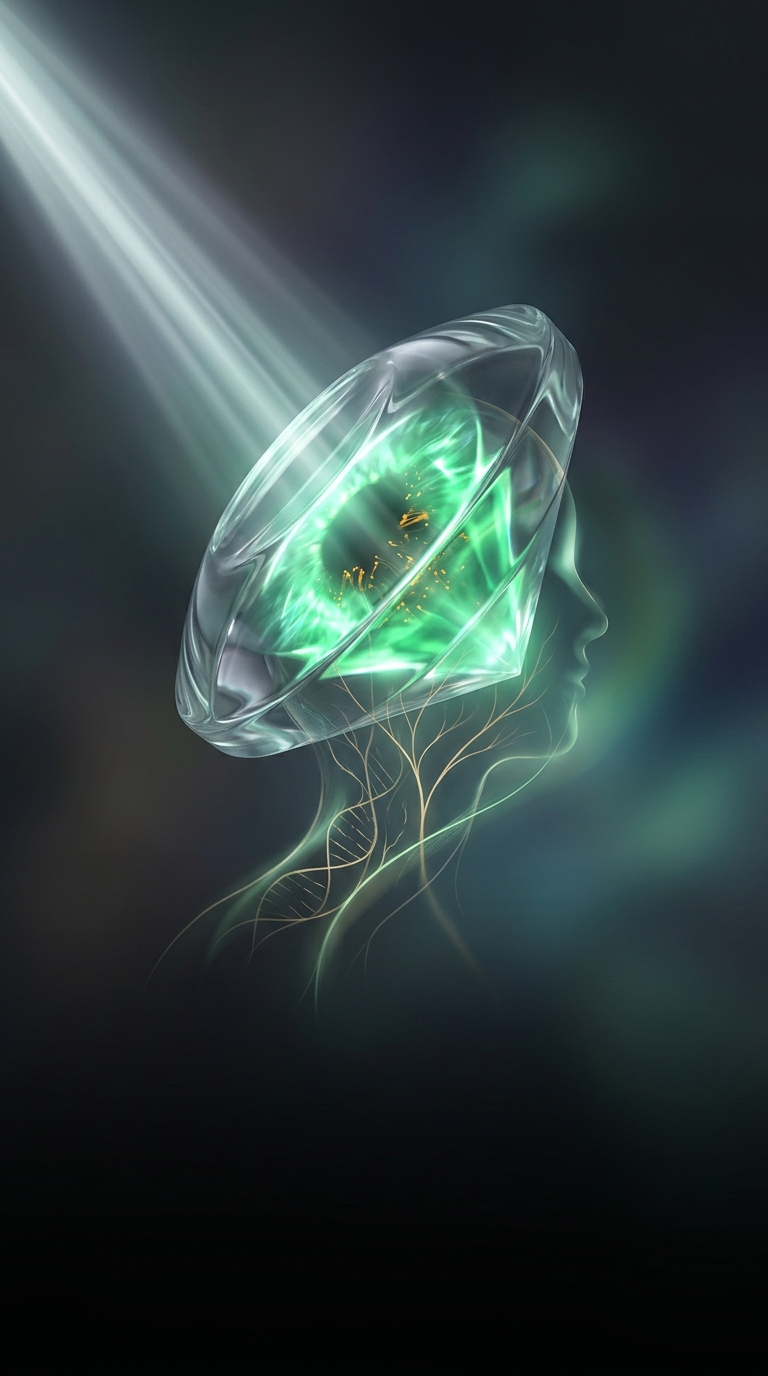
Light entering the iris is scattered by its tissue. With relatively little melanin to absorb it, some shorter-wavelength light is scattered back toward an observer; mixed with the iris’s yellowish tones, it can appear green. The color is produced by the combination, not by green pigment.
Why eye color runs in families but not predictably
Eye color is influenced by several genes that affect melanin production and distribution. Their effects combine, so a child’s eye color cannot be reliably predicted by a simple rule such as “brown-eyed parents have brown-eyed children.” Different genetic combinations can produce similar amounts of iris pigment, while small differences can shift the result toward blue, hazel, or brown.
That also helps explain why green is relatively uncommon: it depends on a particular balance of pigmentation and light scattering, rather than simply on having “less pigment.” The same iris may look more or less green under different lighting, because the light reaching and reflecting from it changes. Its underlying pigment has not changed; the conditions for seeing the optical mix have.