A Moving Predator Changes the Calculation
A gull looking for food in a busy amusement park is responding to a reliable opportunity: visitors drop snacks, leave food unattended, and often feed birds directly. Once gulls learn where meals appear, they can gather in large numbers and become persistent around queues, picnic areas, and outdoor dining.
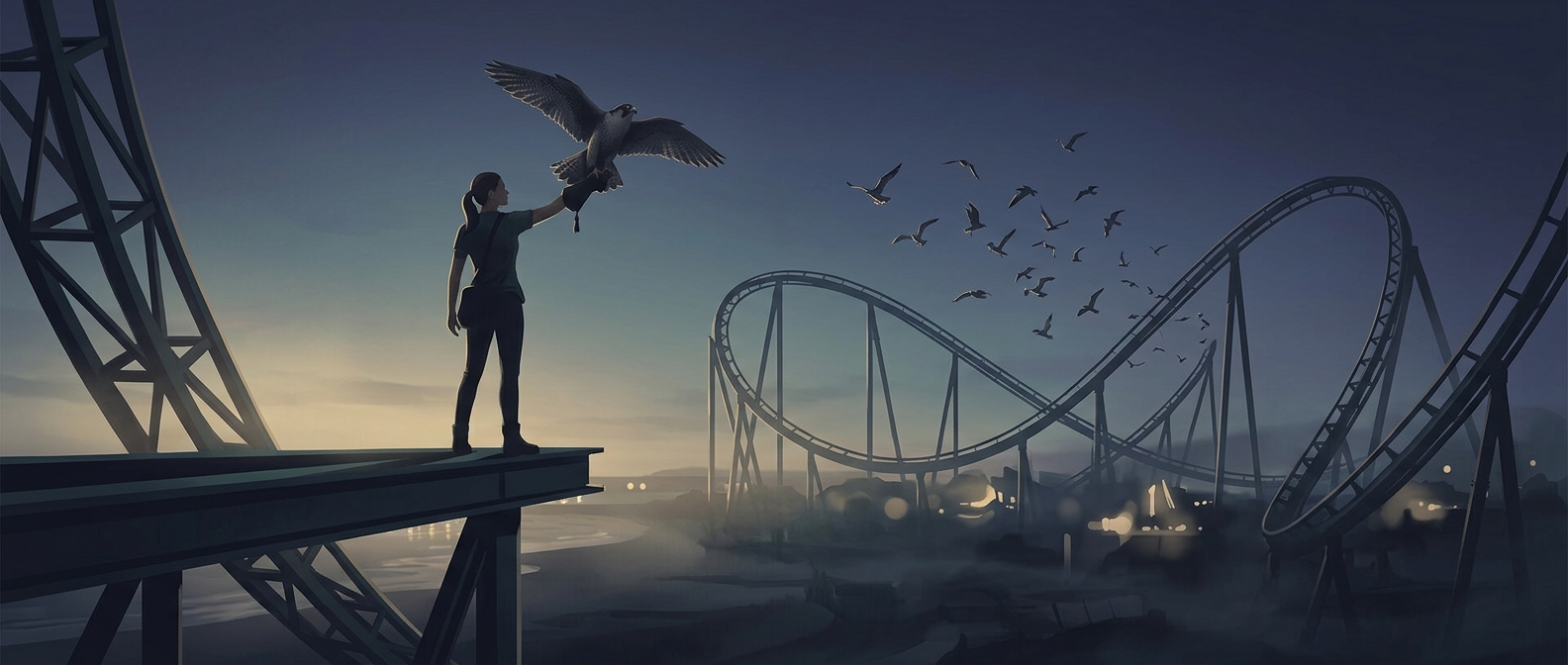
A falcon in flight introduces a different signal. Gulls recognize birds of prey as potential threats, so seeing one patrol overhead can make a feeding area feel risky. The aim is usually not to catch the gulls; it is to persuade them to move on before they settle into a routine around people and food.
Why a Real Falcon Can Work Better Than a Decoy
A plastic owl or other fixed scare device may startle birds at first, but gulls can learn that it never moves and poses no danger. A trained falcon is a living predator whose flight changes from one pass to the next. That unpredictability makes the warning harder to ignore.
Falconers guide the bird over targeted areas, using its presence to disrupt gulls’ attempts to land and feed. The effect depends on the gulls continuing to treat the falcon as a credible threat; if they become accustomed to it, the deterrent may lose force. That is why this approach is part of managing the birds’ behavior, not a permanent barrier.
The Food Supply Still Matters
Flying a falcon can shift gulls away from a busy spot, but it does not remove the reason they came. Dropped fries and accessible rubbish remain invitations, so keeping food and waste under control helps reduce the attraction. The practical goal is to make the park less rewarding to gulls while adding a moving threat that encourages them to feed elsewhere.