A holding cell designed to break the town’s appeal
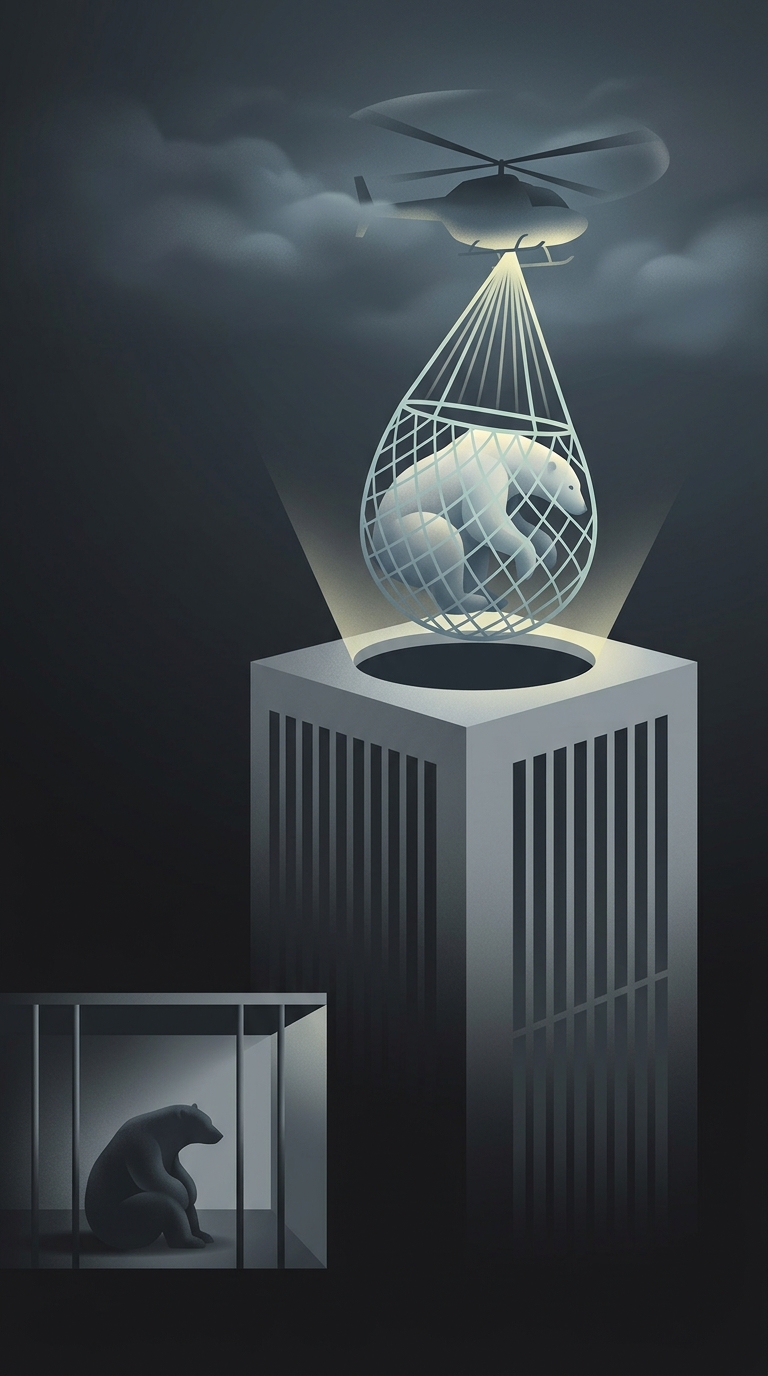
Churchill’s polar bear facility is part of a practical effort to keep bears and people apart. When a bear repeatedly approaches the settlement, wildlife officers can capture it and hold it rather than leave it free to keep searching around homes and buildings. The aim is not long-term captivity: it is to interrupt a dangerous pattern and give the bear a chance to move on from town.
The no-food policy matters because an easy meal could teach a bear that coming close to people pays off. Water keeps a confined bear hydrated, while withholding food avoids turning the facility into another source of reward. The hold can last as long as 30 days, though the point is to release the bear once conditions allow—not to keep it there for a set sentence.
Relocation changes the immediate risk, not the habitat
After release, bears are moved away from the settlement and back toward the tundra; some are transported by air. That distance reduces the chance of an immediate return, but it does not make the surrounding landscape bear-free. Churchill lies in polar-bear country, so the town’s safety depends on monitoring and responding when bears approach, not on a permanent barrier between people and wildlife.
The facility’s unusual nickname captures its role: it is a temporary interruption in a bear’s path through town, designed to prevent a search for food from becoming a learned habit.