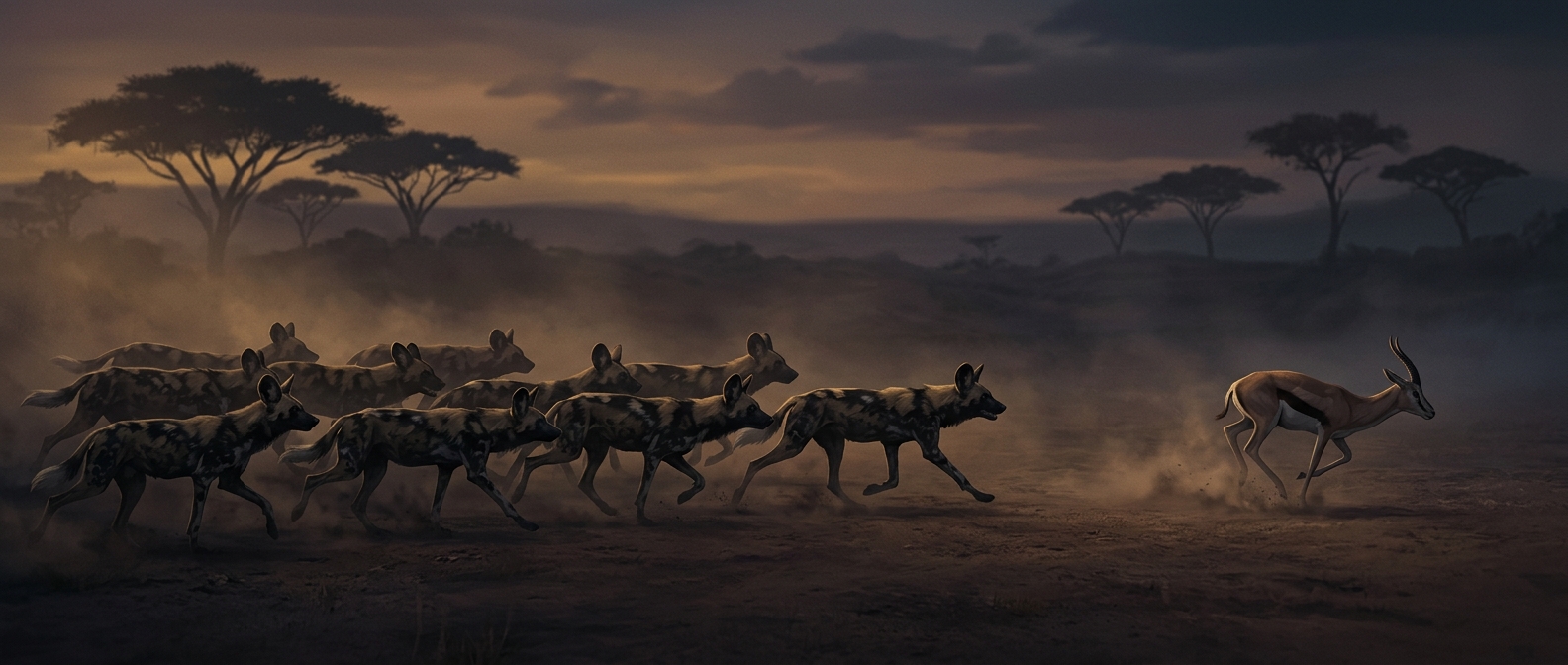
How African Wild Dogs Wear Down a Chase
On open African grasslands, speed alone does not decide every hunt. An antelope may sprint faster than a pursuing dog, but a long chase turns the contest into one of endurance: the prey must keep accelerating and changing direction while the pack keeps closing in.
African wild dogs hunt cooperatively. Several dogs can pursue the same animal, keeping pressure on it as the chase moves across the plains. The advantage is not that each dog outruns its prey in a short burst; it is that the pack can sustain the pursuit and make escape increasingly costly.
Why the Open Plains Matter
Grassland gives both hunters and prey room to move—and little cover for an animal trying to disappear. A fleeing animal must spend energy running while remaining alert to the pack’s position. If it slows, turns poorly, or falls behind, the dogs can reach it.
The chase is therefore a contest of cumulative effort. Each burst by the prey uses energy, and repeated bursts can leave it less able to respond. The dogs’ coordinated pursuit turns that gradual fatigue into an opportunity for the pack to catch up.
This strategy makes the landscape part of the hunt: across exposed ground, a prey animal may escape the first sprint, but it still has to survive every stretch that follows. The pack wins by making the chase last longer than its target can endure.