How a Centipede Keeps Its Footing
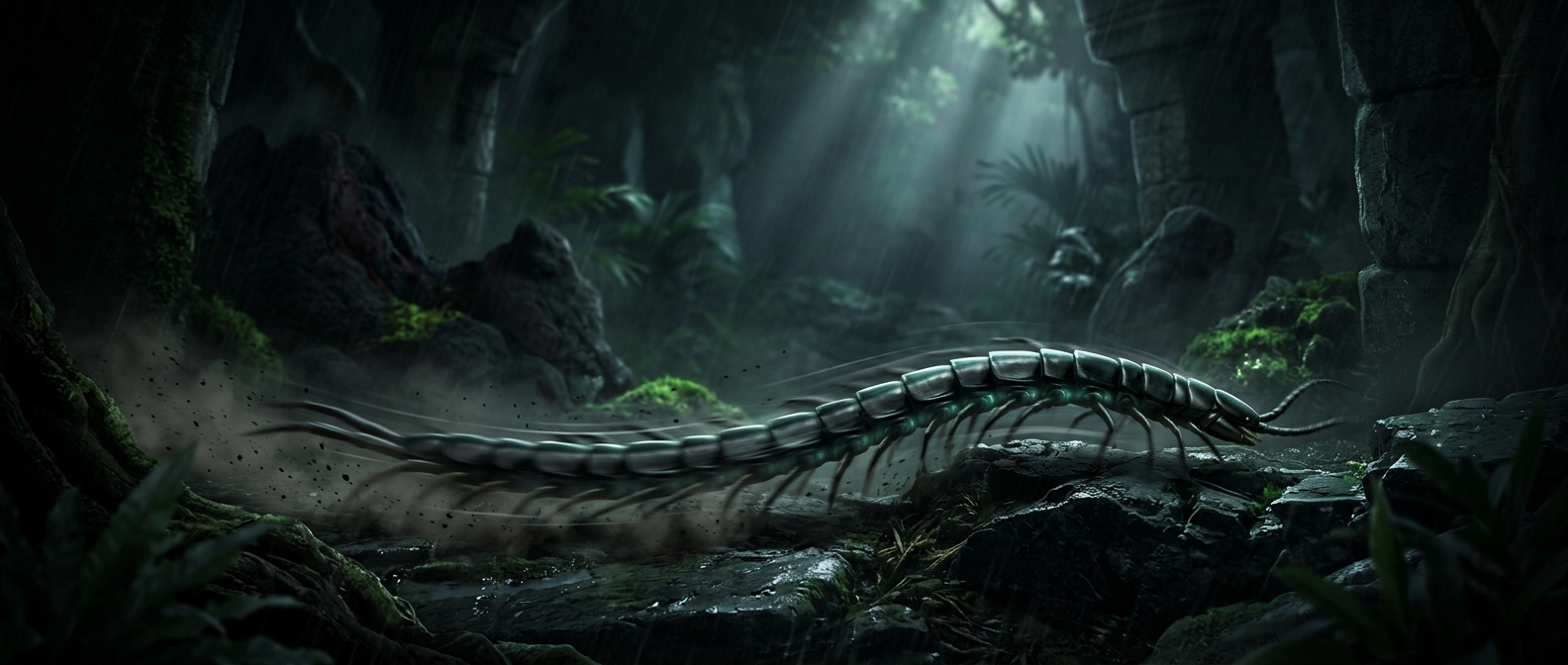
A centipede’s many legs do not all push off at once. Instead, neighboring pairs lift and land in sequence, sending a traveling wave of movement down the body. This staggered rhythm spreads the work across many points of contact: while some legs push backward to drive the animal forward, others reach ahead or brace against the ground.
That coordination matters on rough terrain. A single misplaced step is less likely to stop the whole animal when other legs are still gripping the surface. Its long, flexible body can also bend around obstacles while the legs keep moving. The result is a runner that can maintain forward motion over irregular ground rather than relying on one powerful leap.
From Sprint to Capture
Speed helps a centipede reach prey, but the legs are not what deliver the bite. Near the head, the first pair of limbs is modified into curved, venom-delivering claws, called forcipules. Once the centipede is close enough, it uses these to seize and subdue its target.
Centipedes vary in size and behavior, so not every species runs in the same way or at the same pace. But the basic design links movement to hunting: many coordinated legs help the animal cross cluttered ground, and specialized front limbs take over when it reaches its prey.