Why a cheetah’s burst cannot last
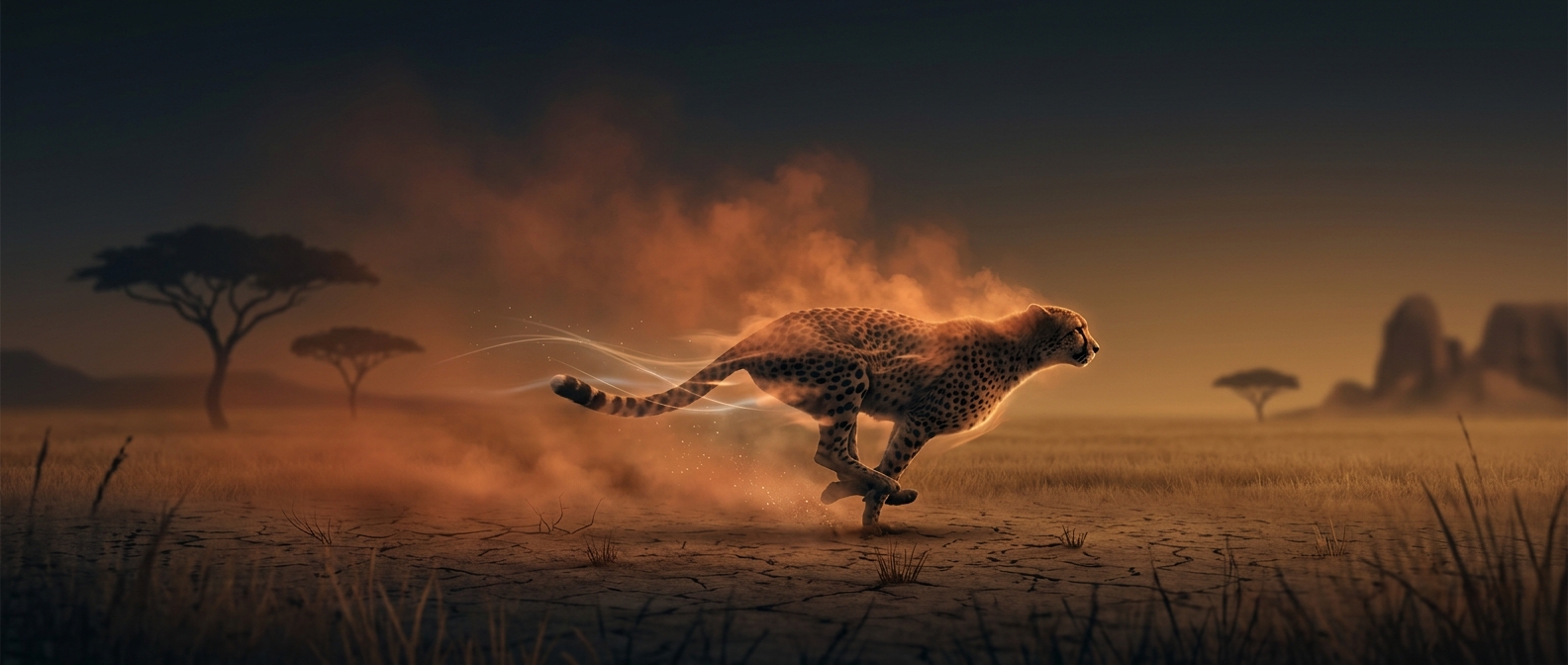
A sprint turns stored chemical energy into motion, but a muscle is not an efficient engine: much of that energy becomes heat. When a cheetah accelerates hard, its powerful leg and body muscles produce heat faster than the body can shed it. The faster the effort, the more quickly that thermal burden builds.
The cat can cool itself by breathing rapidly and releasing heat from its body, but those systems cannot instantly cancel the output of an all-out chase. It must also keep its muscles supplied with oxygen and fuel while its heart and lungs work at high intensity. Top speed is therefore a short-lived burst, not a pace the cheetah can sustain across a long pursuit.
The chase is a narrow window
That limit shapes the hunt. A cheetah relies on getting close enough to launch a sudden acceleration, then tries to catch its target before the sprint’s costs mount. If the prey escapes the first burst, continuing to chase at full effort risks overheating and exhaustion; the cheetah may have to stop and recover rather than press on.
Even a successful capture does not mean the effort is over. The cheetah needs time to recover from the exertion, and a hard chase can leave it vulnerable while it rests. Its speed is most useful when distance, timing, and a quick interception all line up.