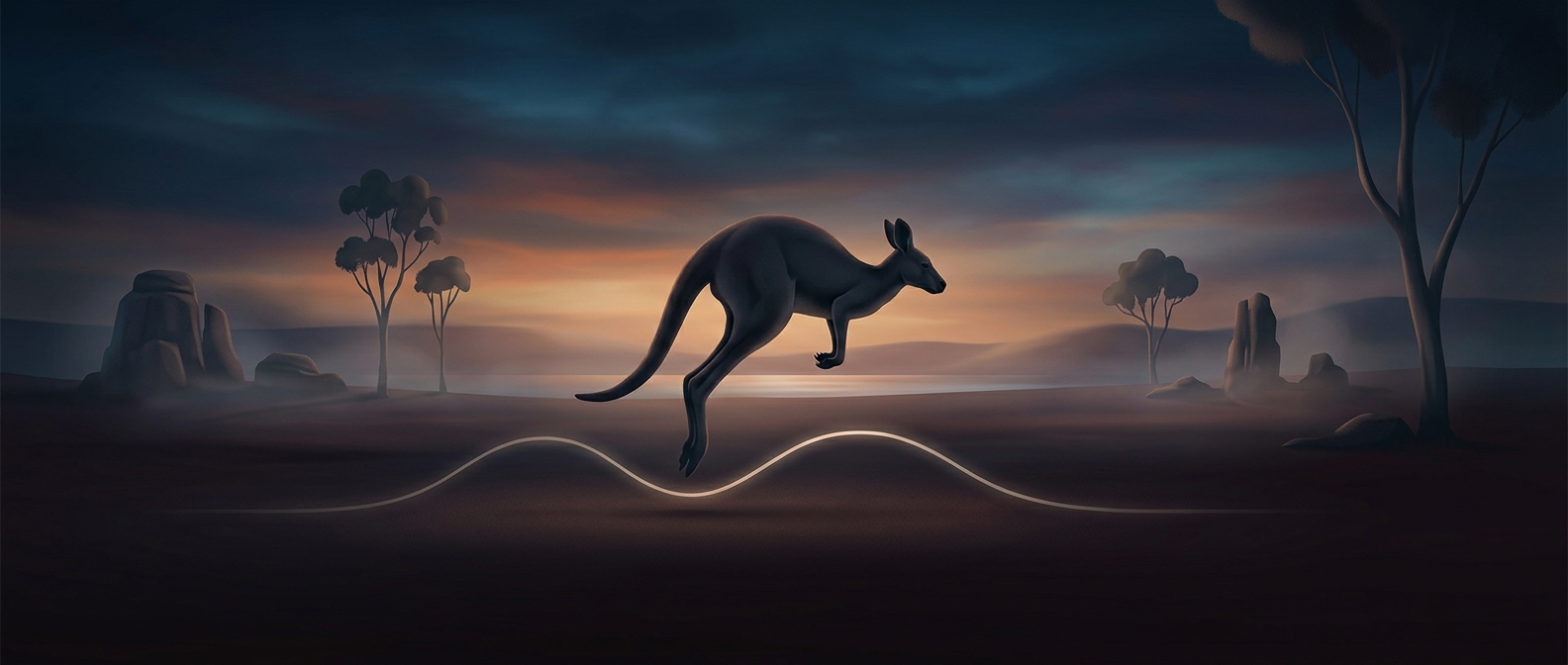
How a landing becomes the next push
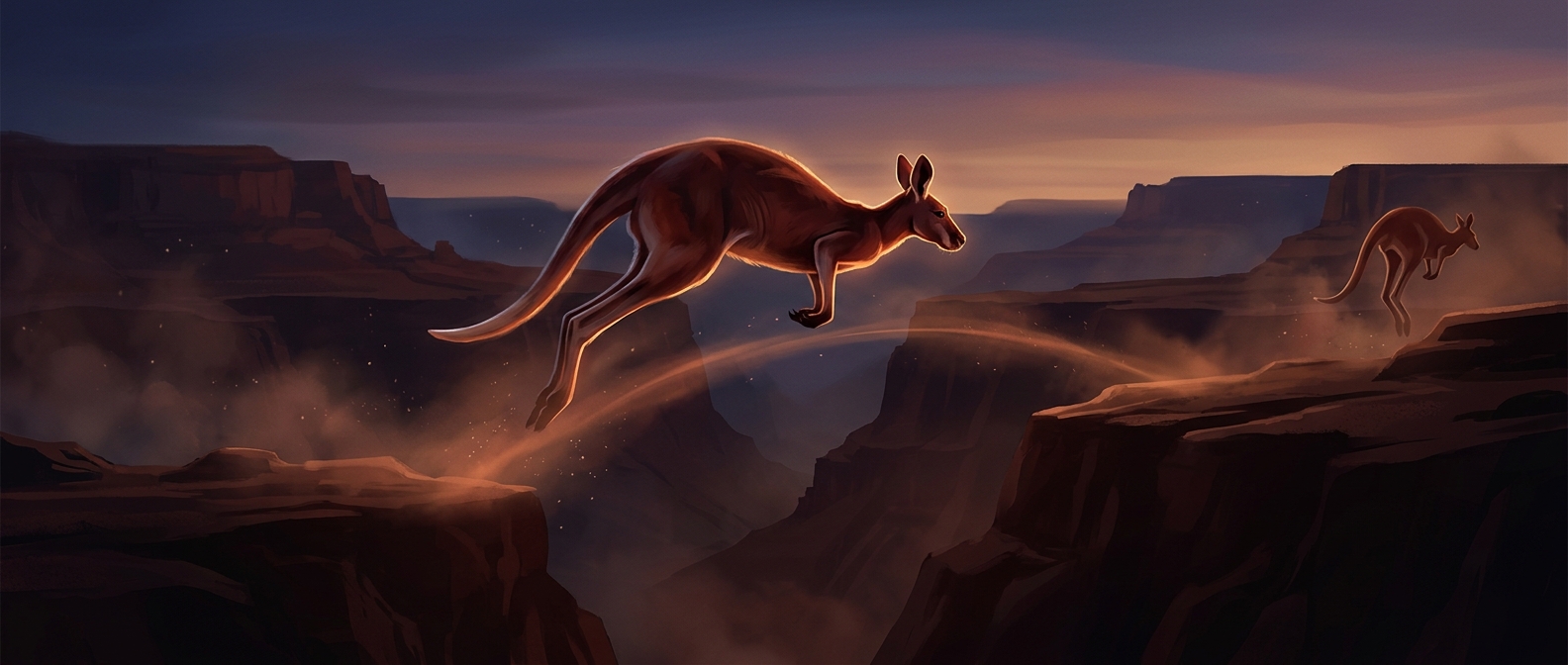
When a kangaroo comes down from a hop, its legs bend under the force of impact. That movement stretches strong tendons around the ankle, especially the long tendon at the back of the lower leg. Tendons connect muscle to bone; because they are elastic, they can briefly store some of the energy of a landing, much like a spring being compressed.
As the legs straighten, the tendons recoil and return part of that stored energy to the next takeoff. The muscles still have to generate force and control the movement, but they do not need to supply all the energy for every hop from scratch. This recycling is most useful during steady travel, when one landing flows directly into another.
Why hopping can pay off over distance
A kangaroo’s long, springy legs make this cycle practical: they can flex to absorb impact, then extend to send the animal forward. The more consistently the animal hops, the more each landing can help set up the next stride. That makes hopping an effective way to cover open ground without repeatedly lifting and placing each leg as a walking animal does.
The advantage is not that hopping costs no energy. It is that elastic tendons return some energy that would otherwise be lost as heat when the body hits the ground. A kangaroo’s bounce is partly a way of reusing the force of its previous landing.