How astronomers can tell Andromeda is approaching
Andromeda’s light is shifted toward the blue end of the spectrum. That shift reveals that the galaxy’s motion has a strong component toward the Milky Way: as Andromeda closes the gap, its light waves are squeezed slightly shorter, much like sound waves change pitch when a moving siren approaches.
The quoted speed describes that motion along our line of sight. It does not mean Andromeda is aimed at Earth like a projectile. The galaxy is millions of light-years away, and its path also has motion across our view of the sky.
Gravity turns an approach into a merger
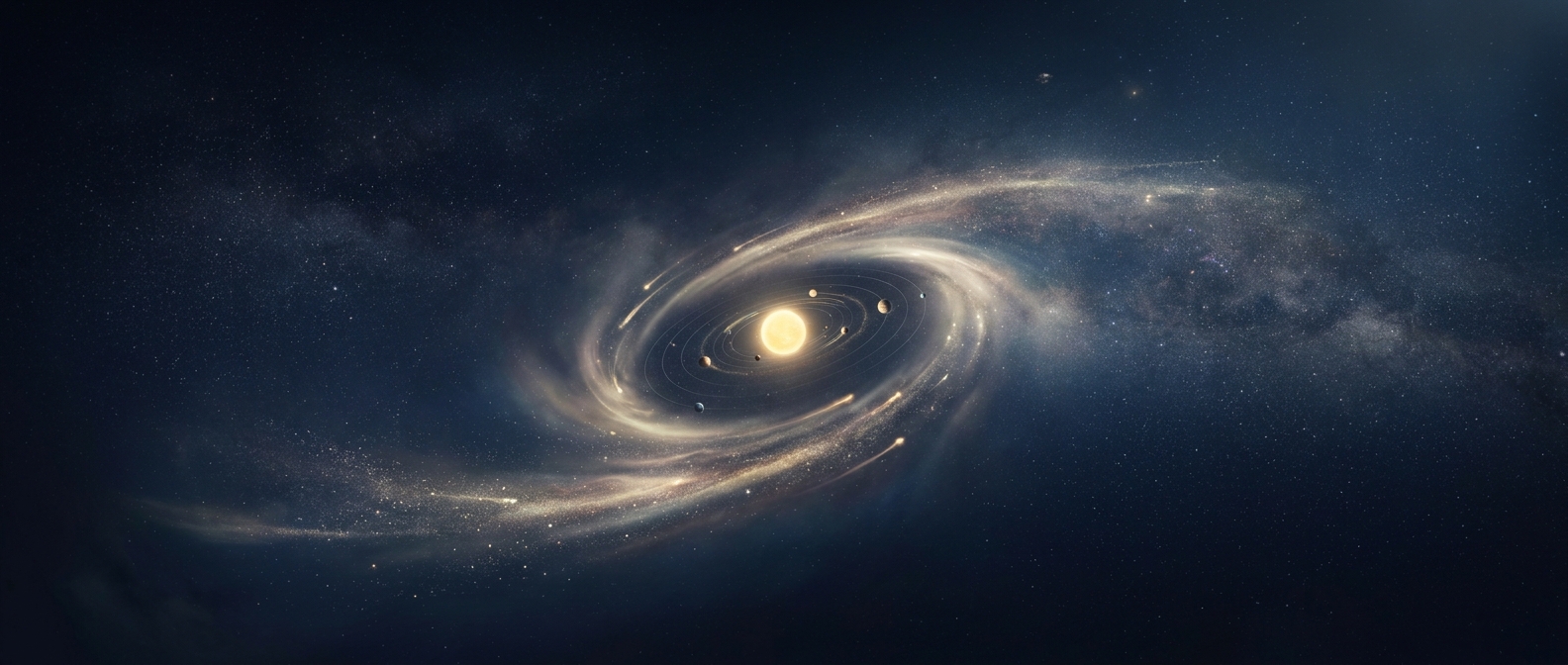
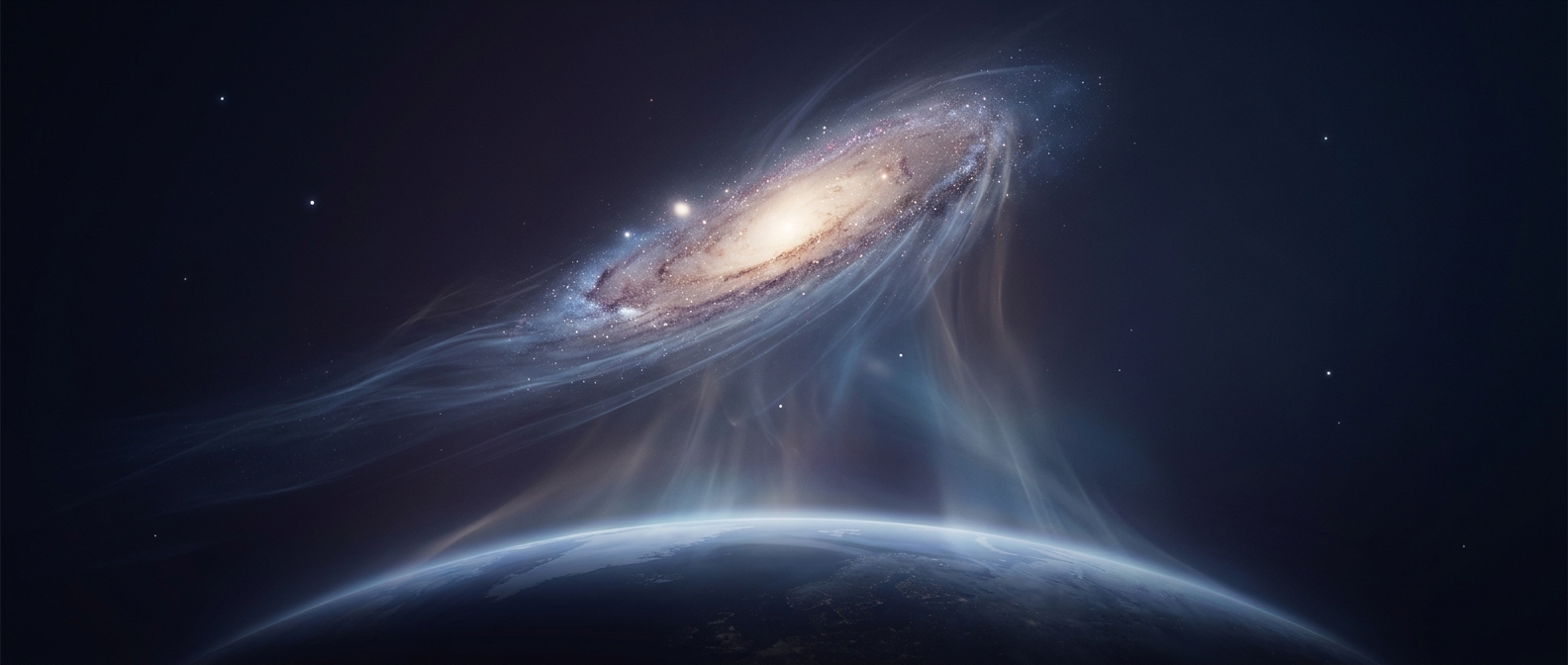
The Milky Way and Andromeda pull on each other through gravity. As they draw closer, their paths bend; over billions of years, the two galaxies are expected to pass through and merge. The encounter will rearrange their enormous disks of stars and gas rather than produce a single, sudden impact.
That distinction matters because galaxies are mostly empty space. Individual stars are so widely separated that direct star-on-star collisions are unlikely, even as the galaxies overlap. Their gravity, however, can tug stars into new orbits and disturb clouds of gas, changing the shape and appearance of the combined system.
A changing sky on a very long timetable
As Andromeda gets closer, it will appear larger and more prominent in the night sky. The transformation is real, but its timescale is measured in billions of years—not in human lifetimes. The remarkable part is not that another galaxy is rushing toward Earth, but that two vast star systems can meet, pass through one another, and emerge as a reshaped galaxy with relatively few stars ever touching.