The spring built into a kangaroo’s stride
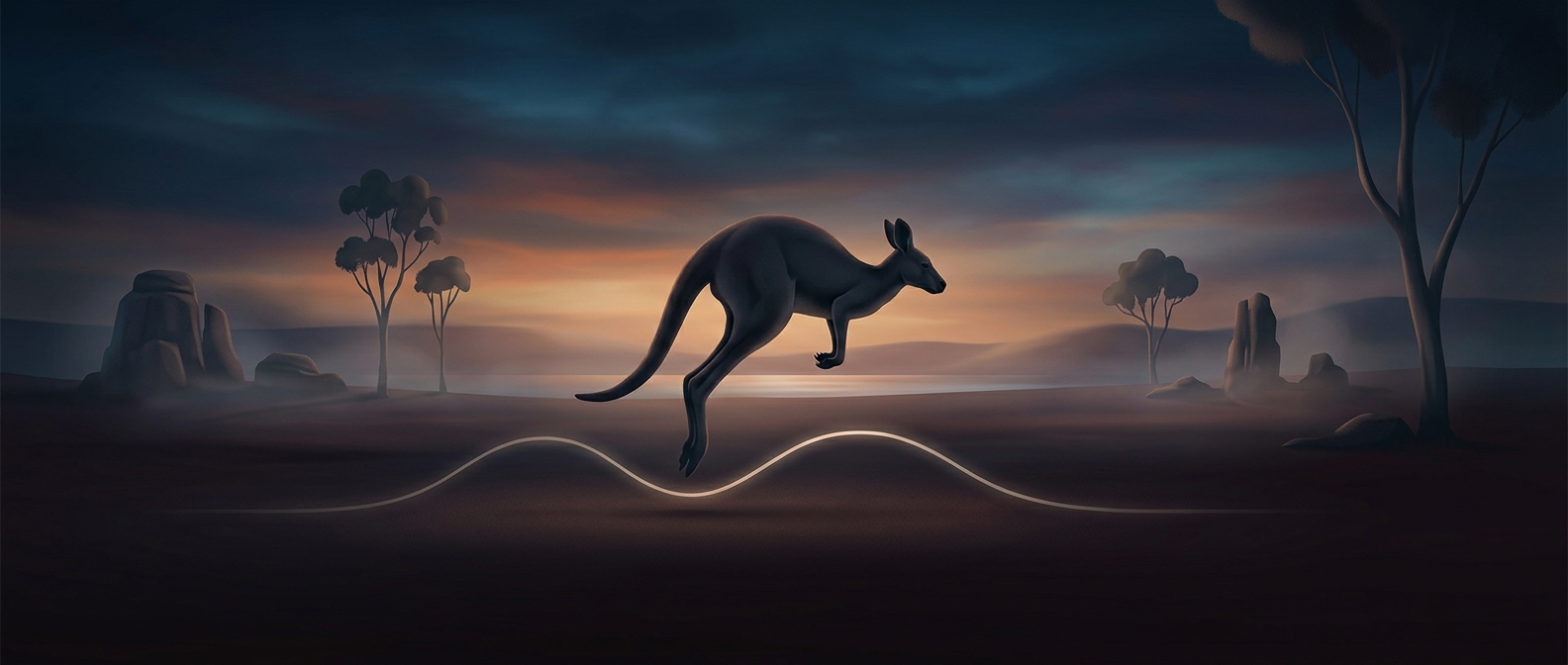
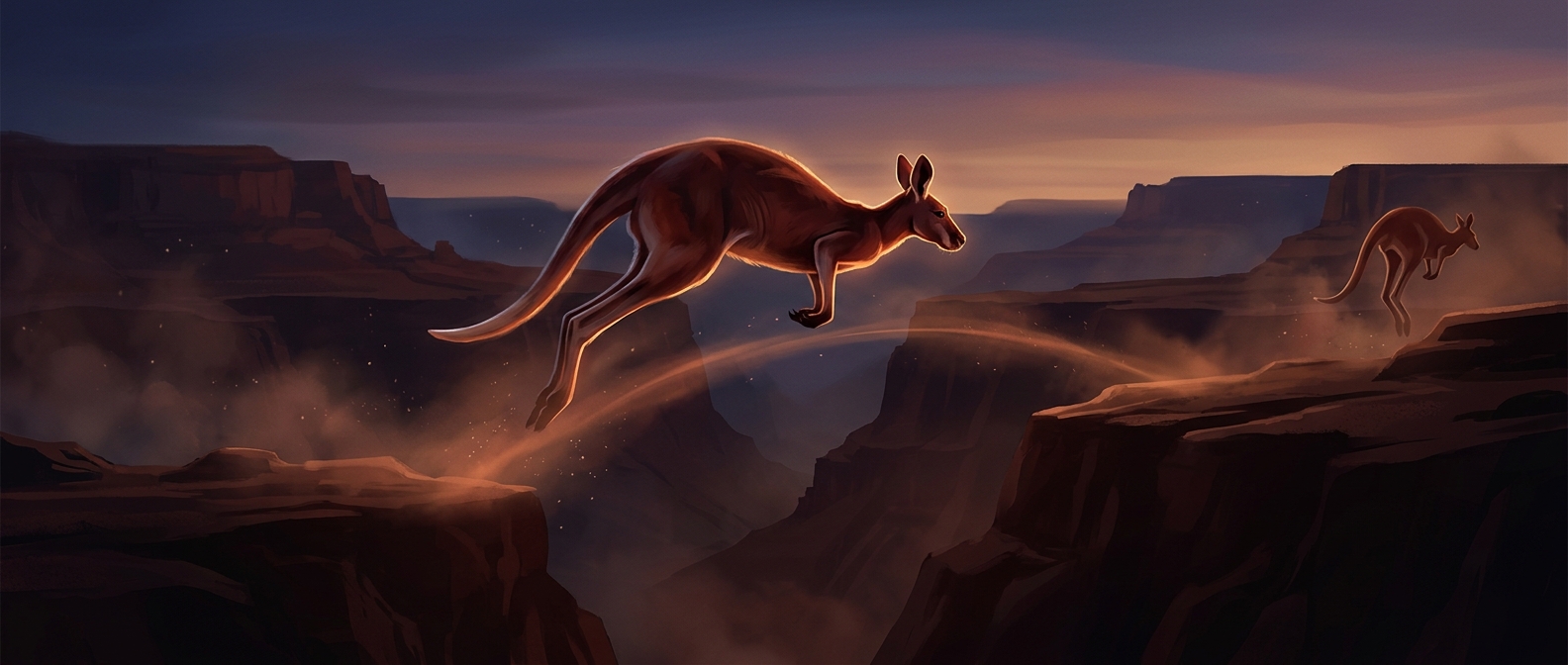
A red kangaroo’s long leap is powered less by a hard push from scratch than by a cycle of loading and release. As the animal lands, its powerful hind legs bend and stretch thick tendons, storing some of the impact energy. Those tendons then recoil as the legs straighten, helping launch the next bound. The kangaroo’s long feet and strong leg muscles add force, while its tail helps counterbalance the body in flight and during landing.
This spring-like action becomes especially useful at speed. Rather than taking a separate, energy-intensive running step with every stride, the kangaroo can recycle part of the energy from one landing into the next leap. The faster it travels, the more its hopping gait can take advantage of that rebound.
A leap shaped by open country
Red kangaroos live across much of Australia’s dry interior, where moving efficiently over long stretches matters. Their bounding gait lets them cover ground quickly without relying on a sequence of short steps. The impressive distance of a single bound is therefore part of a larger travel strategy: each landing is also preparation for the next takeoff.
That makes the leap a coordinated whole-body movement, not simply a pair of oversized legs doing all the work. The legs store and release energy; the tail steadies the body; and the forward motion carries the animal into its next landing.