Why Penguins Switch From Walking to Sliding
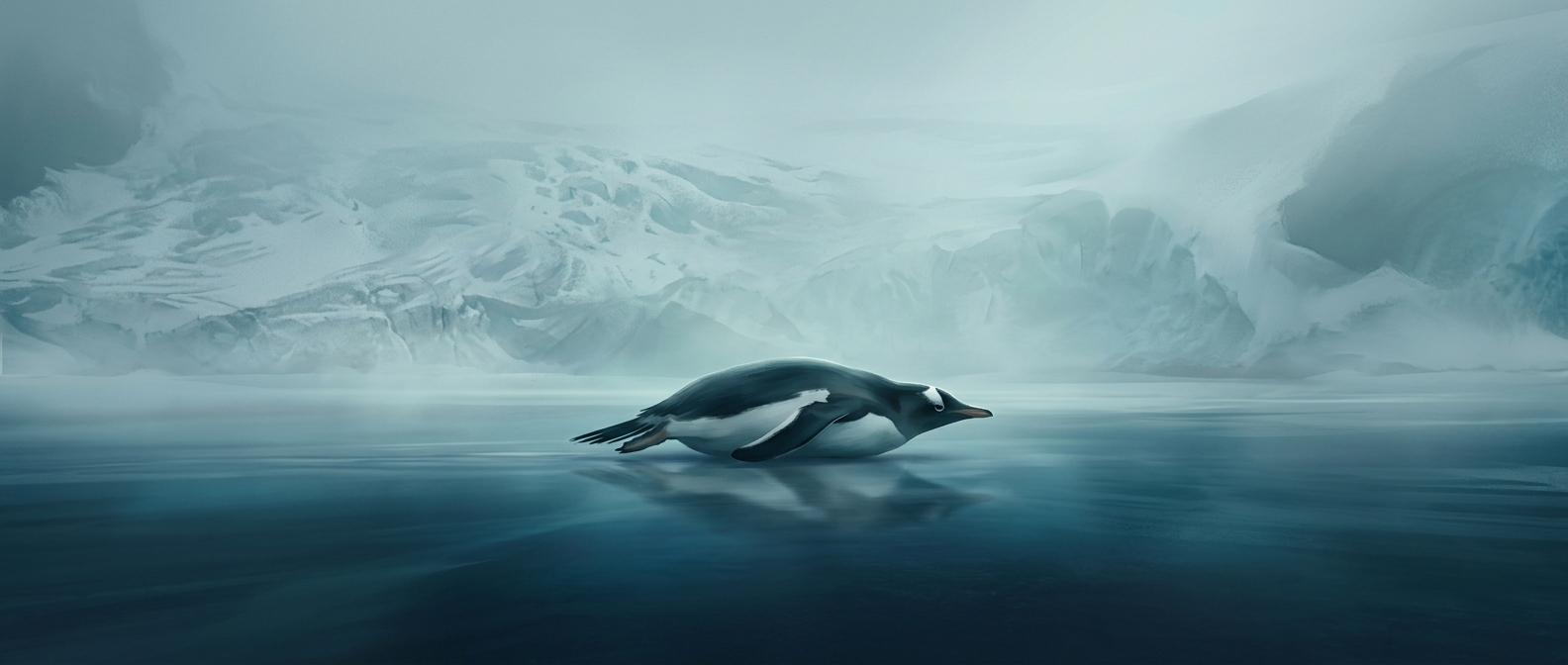
On a long stretch of snow, each waddling step requires a penguin to lift and move its body forward on short legs. Belly-sliding—often called tobogganing—changes the job: the bird lies on its front, pushes with its feet, and lets its body glide between kicks. Once moving, it can cover ground without lifting itself for every step.
The method is especially useful on broad, open routes between a colony and the sea. Penguins can use their feet to propel themselves and their flippers to help steer, turning a slow, upright walk into a low, sliding commute.
A Trade-Off, Not a Shortcut Everywhere
Sliding works best when the surface lets the body glide. On rough or uneven ground, or where a penguin needs to maneuver carefully, walking may be more practical. The bird also has to spend effort getting into position and pushing off; the advantage comes from letting momentum carry it farther between pushes.
That is why a penguin’s belly-slide is more than a comical pose: it is a way to trade repeated steps for a glide across suitable terrain. On a clear icy plain, the ground itself helps do some of the traveling.