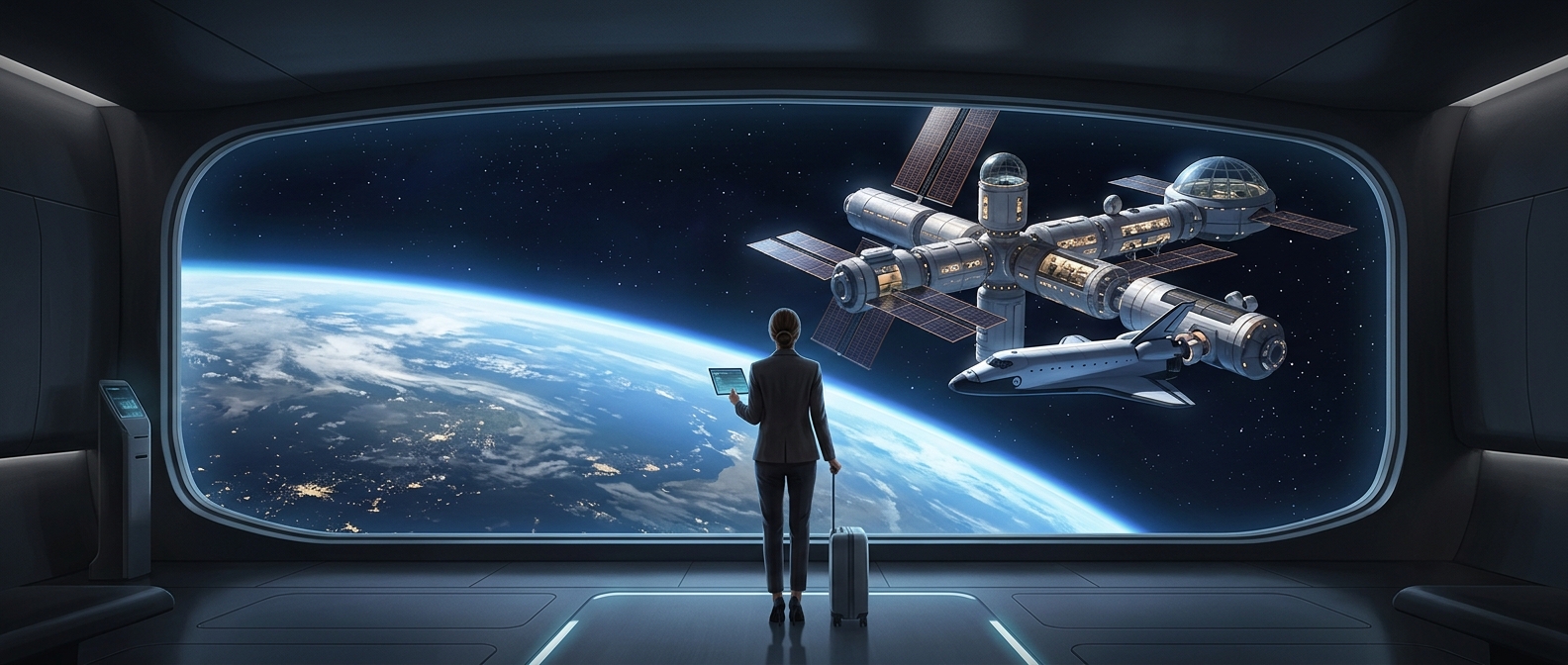
A room in orbit begins as a place on a station
An orbital hotel cannot work like a remote resort with a runway nearby. Guests would need to reach orbit aboard a spacecraft, then transfer to a pressurized habitat—a sealed, air-filled module that protects people from the vacuum outside. Inside, life-support equipment must keep air breathable and manage water, waste, temperature, and fire risks. The “room” is therefore part of a working spacecraft, not simply a hotel suite moved off Earth.
The stay depends on a chain of launches and rendezvous
A visit would involve more than booking a bed. A launch vehicle would carry guests upward; their spacecraft would then match the station’s orbit and approach it carefully to dock. After the stay, another departure and return through Earth’s atmosphere would bring them home. Each leg depends on vehicles, station systems, trained operations, and schedules working together. A delay in one part can affect the whole trip.
That makes a reservation an early step in a travel system still being built. A deposit can signal that customers are willing to pay for the experience, while the eventual trip depends on a habitable destination and transportation being ready. The unusual attraction is also the practical constraint: in microgravity, travelers float rather than walk, so ordinary routines—and the design of sleeping, eating, and moving around—have to be adapted.
What the booking is really buying
For a traveler, the promise is not just a view of Earth. It is a short stay in a place where the planet curves across the window and every movement follows different rules. Until the habitat and transportation are operating, however, the reservation represents a planned journey, not access to a room that can be checked into today.