A landscape that moves underfoot
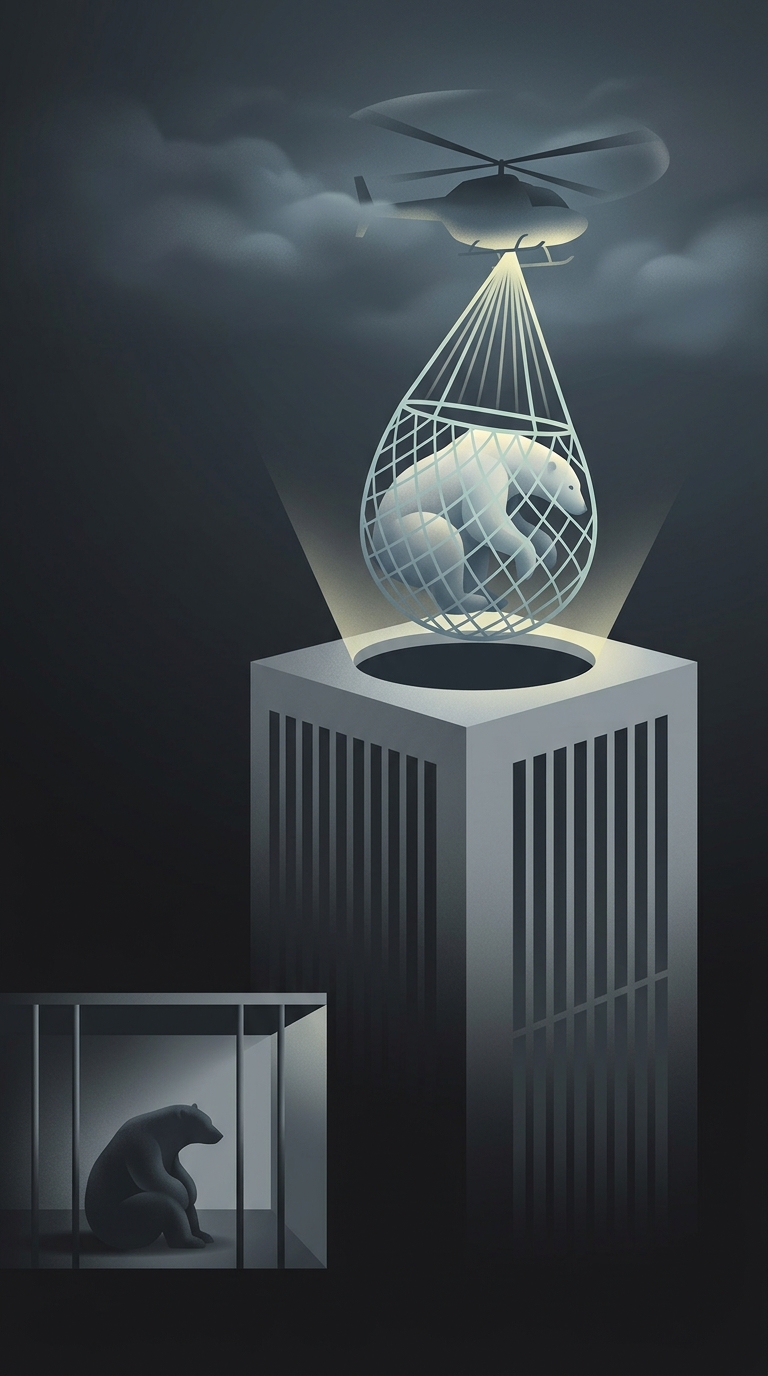
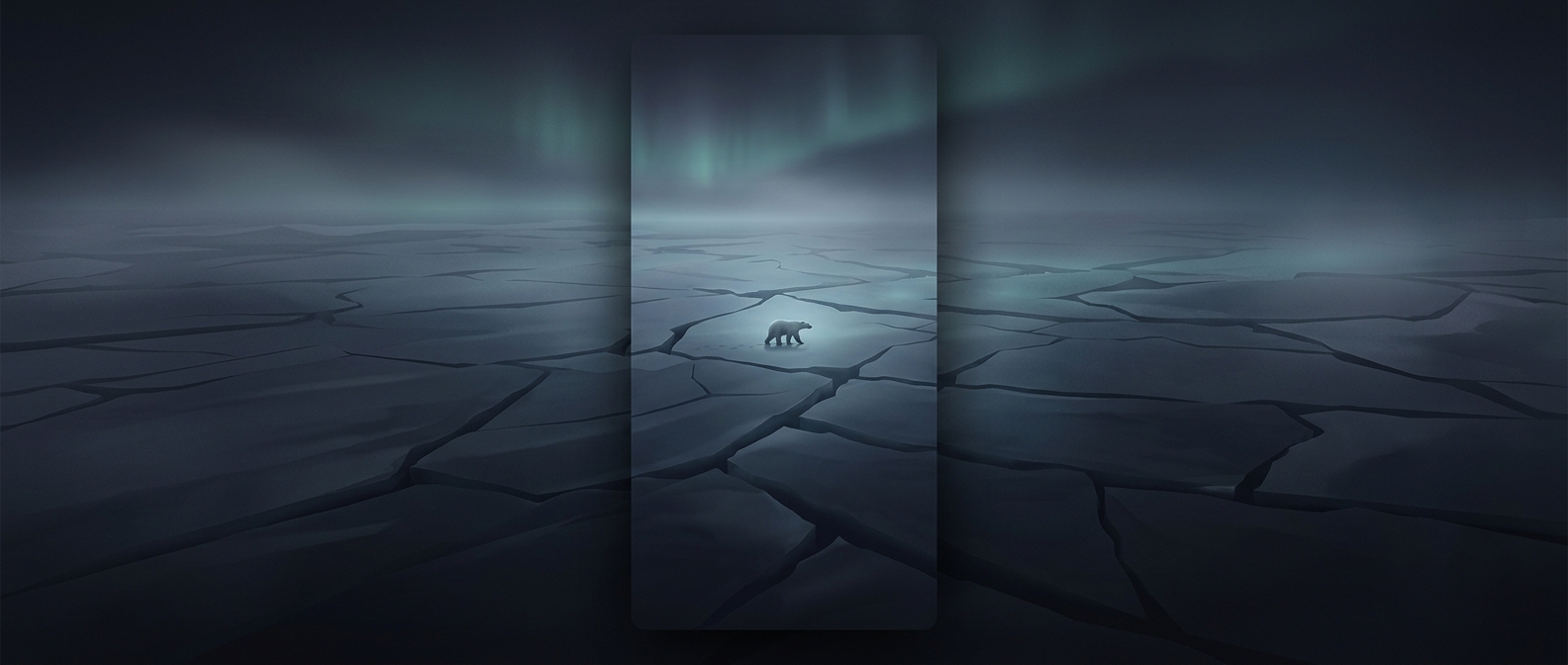
For a polar bear, the Arctic is not a fixed map of land and shoreline. Sea ice forms, breaks apart, and drifts with winds and currents. A bear traveling across it may find familiar routes altered—or a broad stretch of ice carried away from where it was the day before.
That shifting surface is also where bears hunt. Seals use openings in the ice to breathe and haul out, and bears search near those openings for a chance to catch them. The ice therefore functions as both travel ground and hunting territory; its arrangement can matter as much as its total area.
Following the seasonal edge
As winter cold builds sea ice outward, bears can use it to reach hunting areas. When warmer seasons shrink and fragment the ice, the useful routes and hunting grounds change. Bears may have to travel farther between suitable patches, or spend more time on land, where finding food is different and often less reliable.
A bear’s route is shaped by this moving boundary, not by a plan to cover a set distance. Wind and currents can carry the ice, while the bear chooses where to go across it. The animal is navigating a habitat that changes both location and shape.
Why the route matters
Following ice is a practical response to where hunting opportunities are available. When the ice breaks into scattered pieces, a route that once connected broad hunting areas can become a series of costly crossings. The annual journey is thus more than wandering across a vast wilderness: it traces the shifting geography of a hunting platform, one that can carry the bear—and its food supply—far from the coastline.