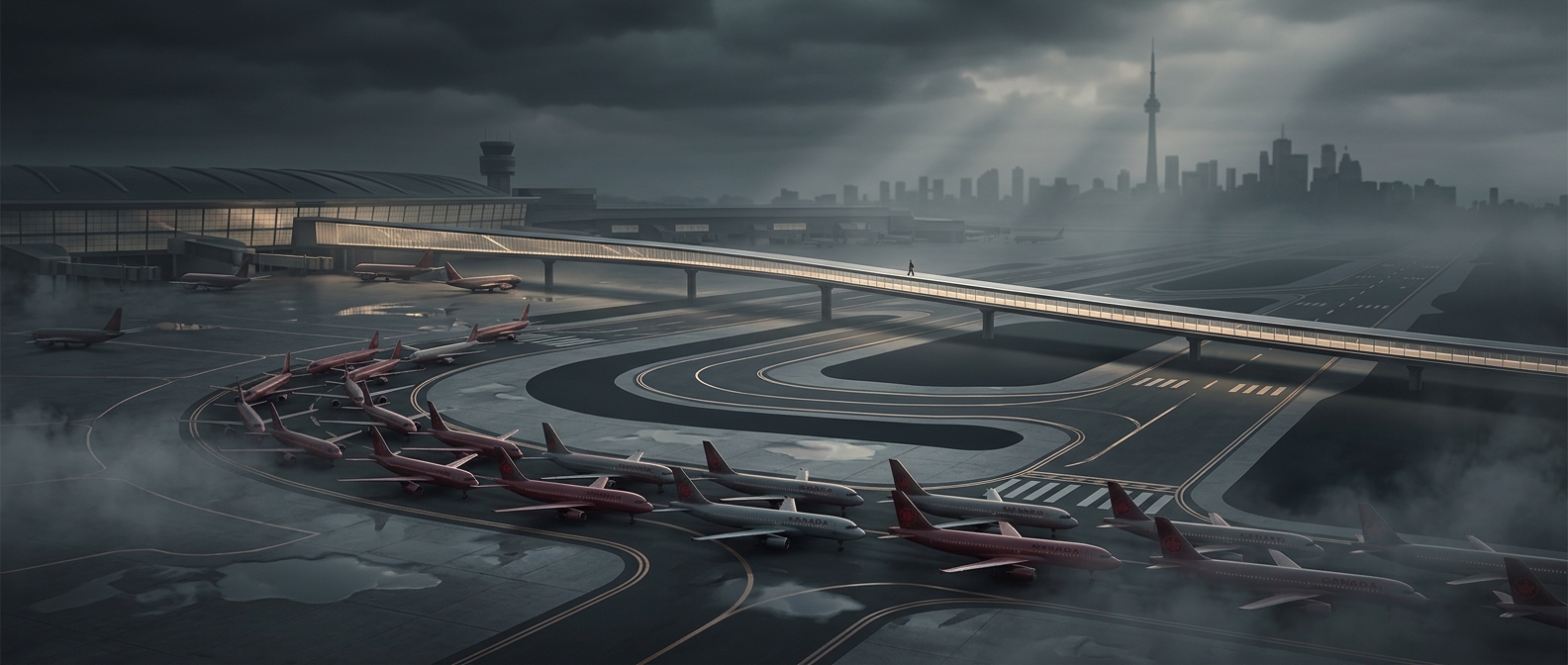
Why delays can spread quickly at Toronto Pearson
Pearson is a major connecting hub: flights arrive carrying passengers who need to transfer, then aircraft and crews turn around to operate more flights. That tightly linked schedule makes the airport efficient when everything runs on time—but leaves little room to absorb disruption. If an incoming plane is late, its next departure may be late too, and passengers may miss connections.
Weather can reduce the airport’s pace
Summer thunderstorms are a particular challenge for busy airports. When storms affect routes into Toronto or the airport itself, air traffic controllers may need to space aircraft farther apart, reroute them, or pause operations temporarily. Those precautions reduce how many planes can arrive or depart in a given period. Even after a storm passes, aircraft waiting to land or take off can take time to clear.
A small slowdown becomes a network problem
Pearson’s traffic shares runways, gates, taxiways, and airspace. When one part gets congested, planes may wait for a gate, sit longer before takeoff, or arrive behind schedule. The effects can then travel beyond Toronto: an aircraft delayed at Pearson may be scheduled to fly elsewhere next, carrying the delay with it.
That is why a high share of delayed flights does not necessarily point to one persistent failure. At a heavily used hub, weather or a brief capacity squeeze can ripple through many tightly connected flights, turning a local interruption into a day of knock-on delays.