A flame has a reach beyond its visible edge
A stage flame is not a flat picture of fire. Hot gases rise from the burner in a moving plume, and heat can spread beyond the bright part an audience sees. A performer who steps closer than planned—or leans into that plume—may expose hair or skin to heat even without touching the flame.
Hair can singe before a performer suffers a serious burn. Fine strands and extensions have little mass, so they can heat quickly; eyebrows are especially exposed because they sit at the edge of the face. A brief encounter may scorch or curl hairs, while longer or closer exposure can injure skin as well.
Safety marks define a working boundary
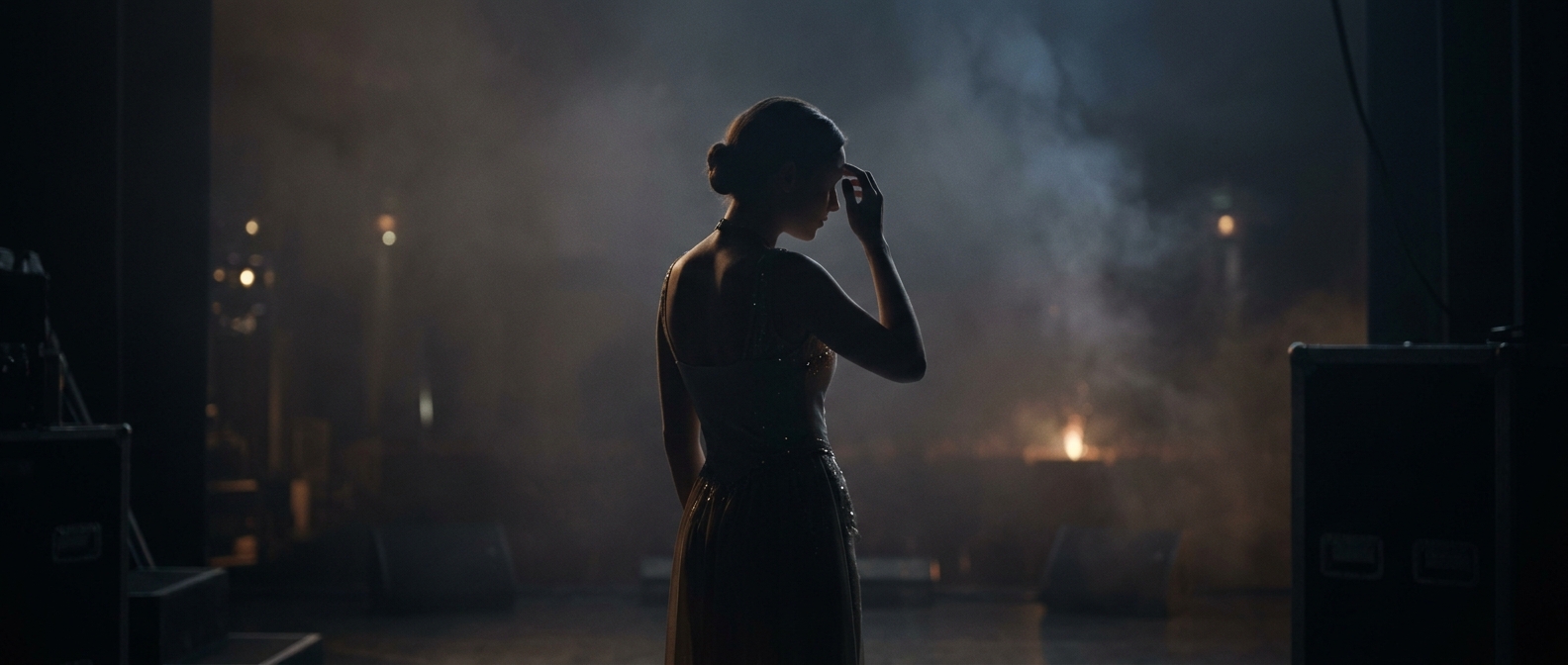
Marks on the stage give performers repeatable positions relative to flame effects. They help keep bodies clear of the equipment’s intended danger zone while preserving the choreography and sightlines. The cue is planned around those positions: a step, turn, or kneel that looks small from the audience can bring someone much nearer to the heat source.
The boundary matters because a flame effect is affected by its surroundings. Air movement can shift or distort the plume, and performers may move differently from one show to the next. Marks and rehearsed timing reduce risk, but they only work if performers stay within the planned spacing and the effect is operated as designed.
That is why a singed eyebrow can be more than a cosmetic mishap: it may be a visible sign that a performer crossed too close to a carefully choreographed heat zone.