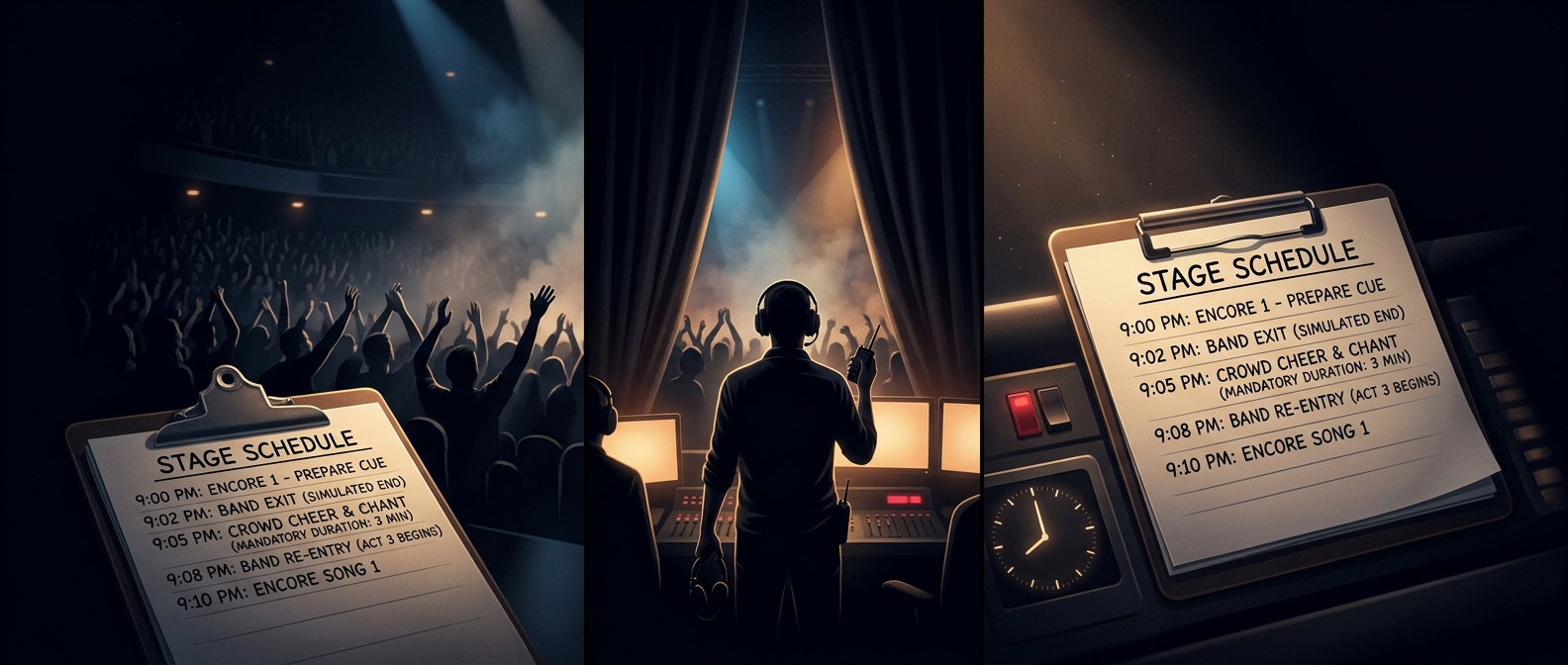
The encore is a second ending—with a cue sheet
A concert encore can feel spontaneous because it follows a familiar bit of theater: the band finishes, leaves the stage, and waits while the crowd calls them back. But the apparent pause is also a practical window for the crew to prepare the next section of the show. The musicians may return to songs already chosen and rehearsed, rather than decide what to play in the moment.
Why plan the “extra” songs?
A live show is coordinated across more than the performers. The lighting operator needs to know which looks and transitions to call; the audio crew may prepare instrument changes or microphone settings; and the musicians need a shared order for their return. A setlist—the running order of songs—gives everyone the same plan. Programming the cues in advance makes the encore feel seamless instead of requiring the crew to improvise under pressure.
Planning also helps fit the performance into its allotted time. A band can choose an encore that provides a satisfying finish while accounting for the rest of the set and the practical limits of the evening. The songs may be rehearsed, but that does not mean every detail is fixed: performers can still alter the order or respond to the room.
The ritual still depends on the crowd
The audience’s call-and-response is part of the show’s design, even when the return is expected. The pause lets applause build and gives the crowd a moment to feel that it has asked for one more song. The plan supplies the technical structure; the audience supplies the occasion for the ritual. That is why a prepared encore can still feel earned: the songs may be ready, but the moment they arrive belongs to the room.