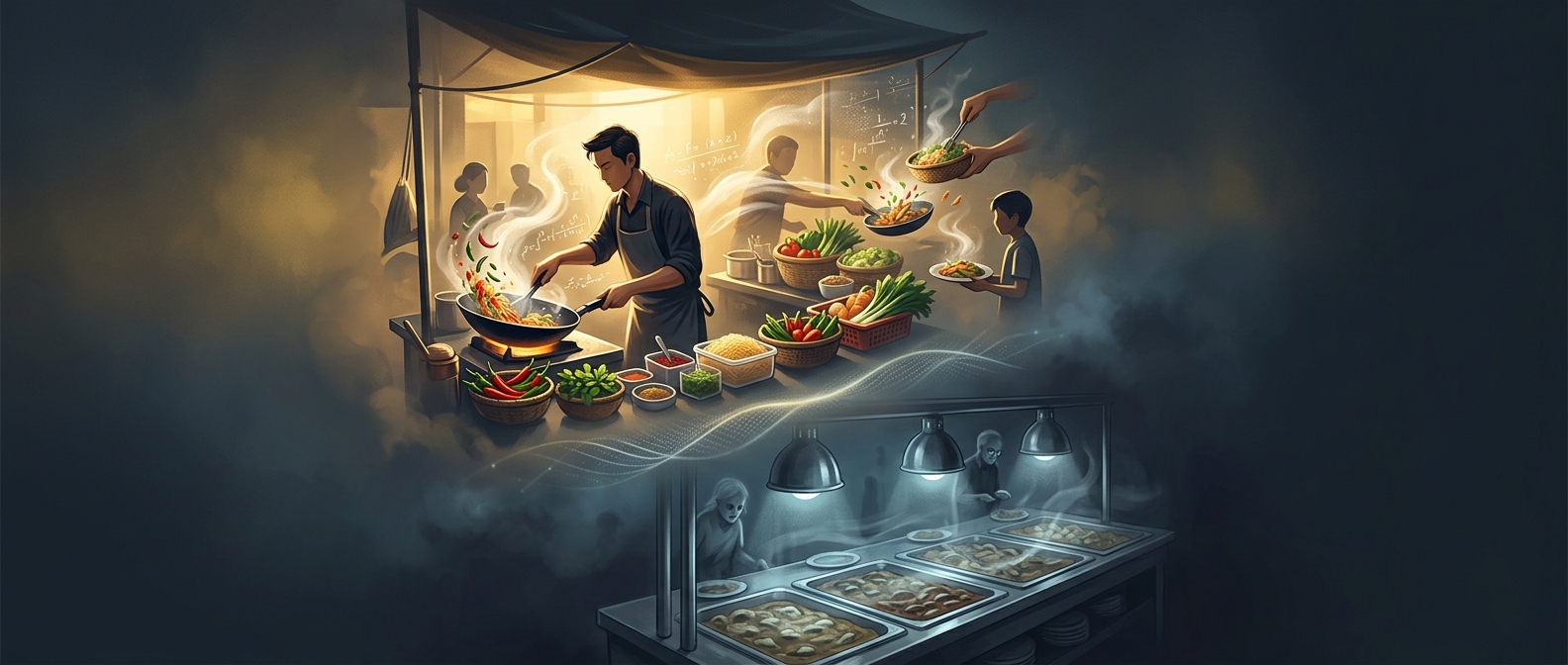
Why a Busy Bangkok Cart Can Have a Freshness Advantage
A crowded street cart often runs on a short cycle: ingredients are prepared, cooked in small batches, and served quickly because customers keep arriving. That rapid turnover can leave less time for cooked food to sit around before someone eats it. For dishes cooked to order, the heat also kills many microbes that may have been present on raw ingredients.
The key is not that street food is automatically safer. It is that time between cooking and eating matters—and a busy stall may keep that interval short.
What Happens When Food Sits Warm
Cooked food can become risky if it spends too long at temperatures where bacteria multiply readily. A buffet is designed to keep many dishes available at once, so pans may remain on display while diners arrive in waves. If hot food is not kept hot enough, or cold food is not kept cold, the time on display can give microbes an opportunity to grow.
A busy buffet that maintains proper temperatures and replaces dishes promptly can manage that risk. The same principle applies to a street stall: a high customer count helps only when food is handled and stored safely.
The Useful Clue Is Turnover, Not the Setting
In Bangkok, a line of customers can be a practical clue that a cart’s food is moving quickly. Watching a dish being cooked fresh and served hot may offer a clearer picture of its recent handling than choosing a pan that has been sitting out. But cleanliness, safe water, and careful handling still matter; cooking cannot undo every problem caused by contaminated ingredients or poor storage.
So the comparison is less “street food versus hotel” than freshly cooked and quickly served versus food held for later. A busy cart may have the advantage when its ingredients are handled well and each batch moves straight from the pan to the plate.