How scientists read a genome from broken DNA
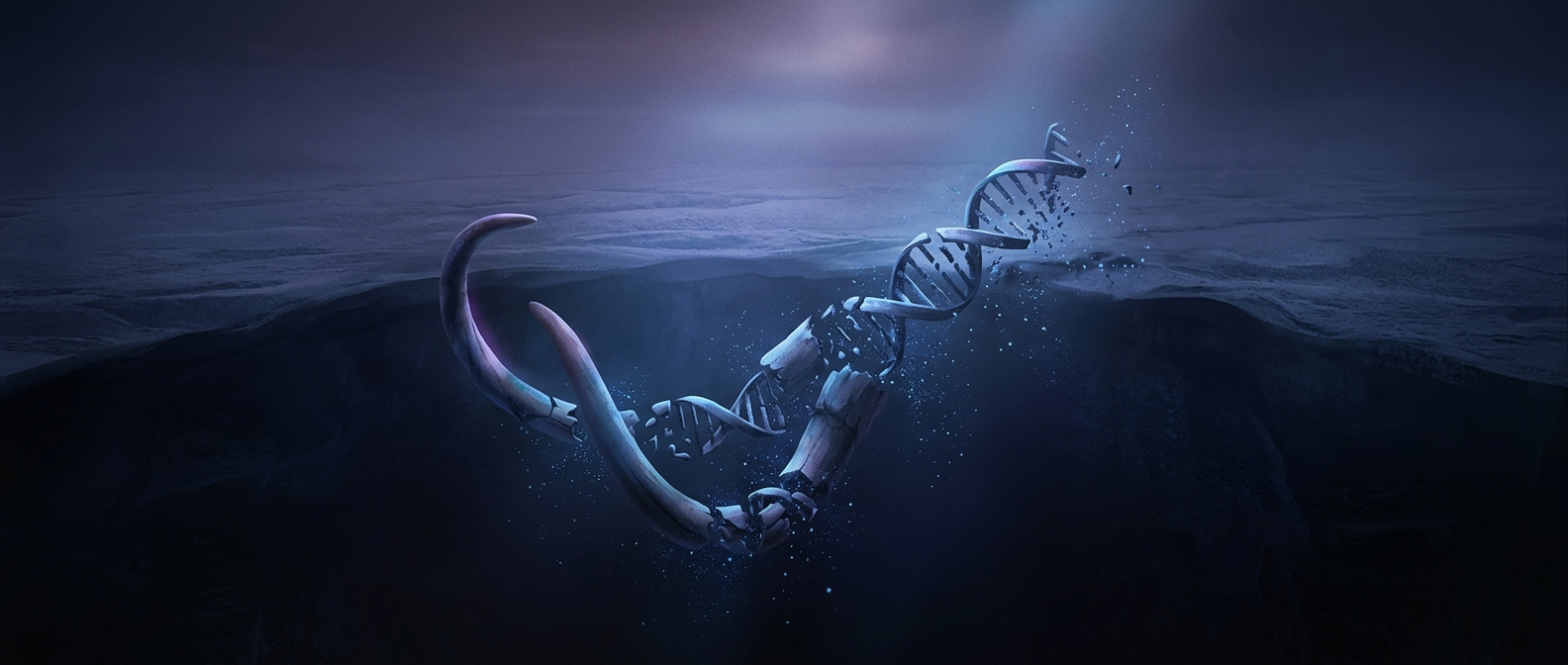
Cold does not freeze time at the molecular level. Even in permafrost, water and naturally occurring chemical reactions can alter DNA’s bonds. The molecule also suffers physical damage as its surroundings shift. Given enough time, the result is not a neatly preserved genetic blueprint but many short, damaged pieces.
That changes the task from reading one intact strand to reconstructing a sequence from fragments. Researchers extract ancient DNA from a sample and determine the order of the chemical “letters” in each surviving piece. A piece that overlaps another can help show how their sequences fit together. Repeated overlaps build longer stretches, much as shared words can help place torn scraps of a sentence.
The reconstruction is an inference, not a recovered strand
The fragments do not arrive labeled with their original positions. To assemble them, researchers compare the pieces with one another and, where useful, with genomes from related animals. A close match can help place a fragment; gaps and mismatches make the reconstruction less certain. The genome produced this way is therefore a computational model assembled from evidence, not a single ancient molecule brought back intact.
That distinction matters especially when the DNA is extremely old: the shorter and more damaged the surviving pieces are, the harder it is to tell which fragments belong together. Permafrost can preserve enough clues to make a genome legible, but its preservation is a matter of degree. The striking result is that a long genetic record can be recovered from material whose original strands have long since fallen apart.