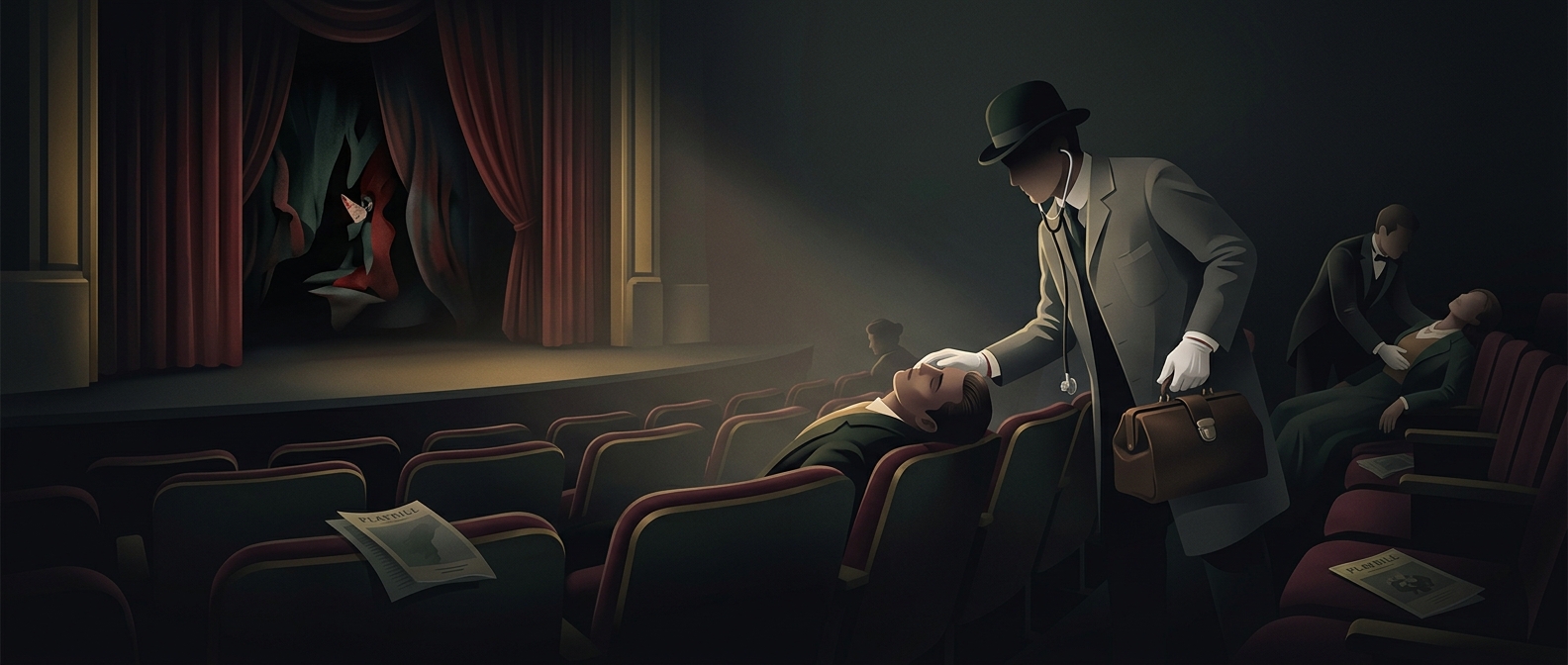
When a stage effect became a medical problem
A convincing wound can do more than make an audience recoil. In a theater built around realistic gore, the sight of blood and injury could trigger a physical response in some spectators: nausea, dizziness, or fainting. That reaction is called a vasovagal response. In plain terms, the nervous system briefly lowers heart rate and blood pressure, reducing blood flow to the brain. It can happen even when a person knows the danger is make-believe.
Hiring a doctor turned that risk into something management could handle. A fainting guest needed attention, and other spectators needed to know that help was available. The doctor was both a practical safeguard and part of the theater’s public image.
The spectacle sold itself
The same incidents that created extra work also offered a vivid demonstration of the show’s power. Advertising the doctor invited a prospective ticket buyer to imagine a performance so disturbing that people might collapse. The theater did not have to explain how realistic its effects were; the promise of medical help made the claim tangible.
That was a useful theatrical feedback loop: more convincing horror could provoke stronger reactions, and those reactions could become publicity for the horror. The doctor’s presence therefore sat at the intersection of care and promotion—not proof that every audience member fainted, but a striking way to turn the possibility into part of the attraction.