A temporary fix for empty seats
TKTS was created to connect theatergoers looking for a deal with Broadway performances that still had seats to fill. A show cannot easily store an unsold seat and sell it later: once the performance begins, that chance is gone. Discounting some tickets close to showtime gave participating productions a way to bring in more audience members and earn revenue from seats that might otherwise remain empty.
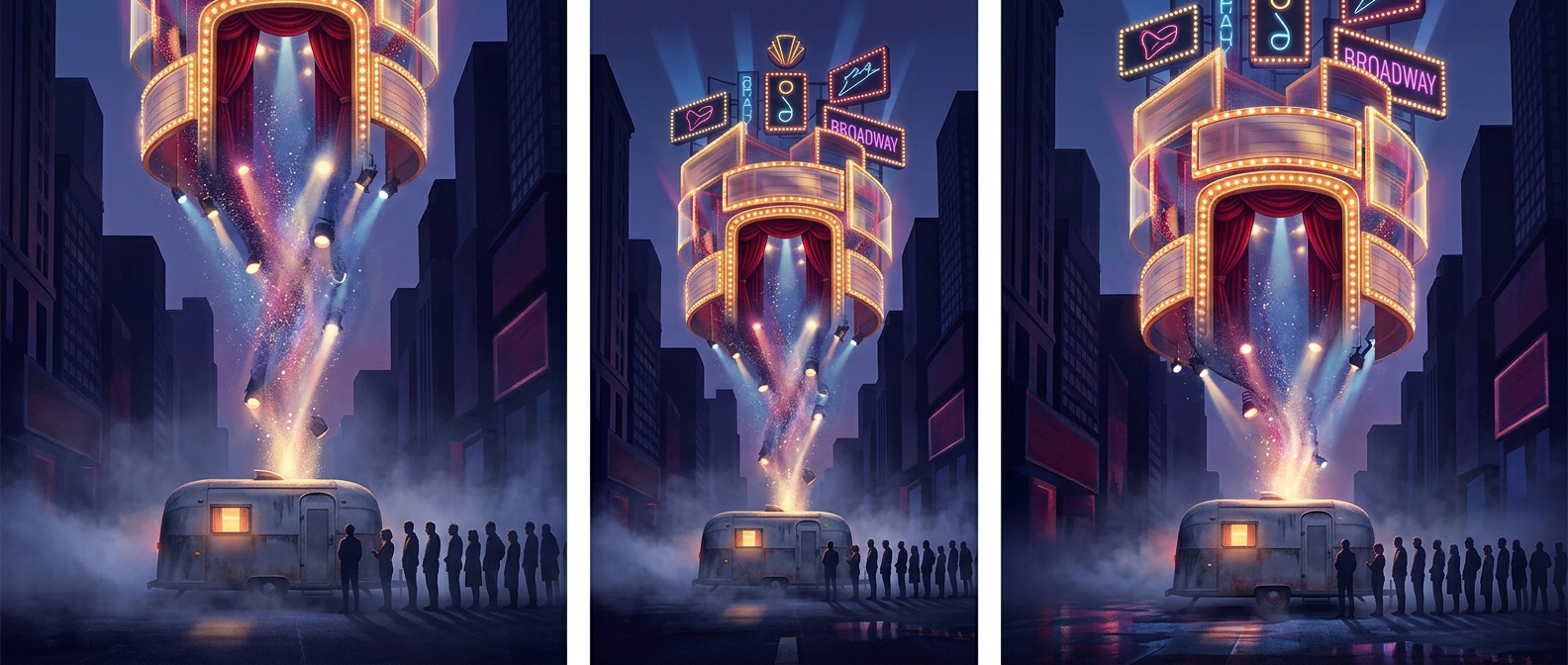
The trailer suited that practical, early role. Rather than begin with a permanent landmark, the operation could serve people right in Times Square, close to the theaters and the crowds already passing through. Its modest setup was a place to handle a time-sensitive transaction: check what performances had discounted availability, choose a show, and buy a ticket.
From ticket counter to city landmark
Discount booths also had to balance two interests. Buyers wanted lower prices; producers did not want every ticket to be sold at a discount, which could undermine the value of full-price sales. Making discounts available for selected seats near showtime helped keep the offer limited rather than turning it into the only way to buy a ticket.
The later booth, recognizable by its red steps, made the service itself a destination. But the trailer captures the original logic more plainly: TKTS began as a practical bridge between seats a show had not sold and people ready to see a performance.