The “eye” that follows a production backstage
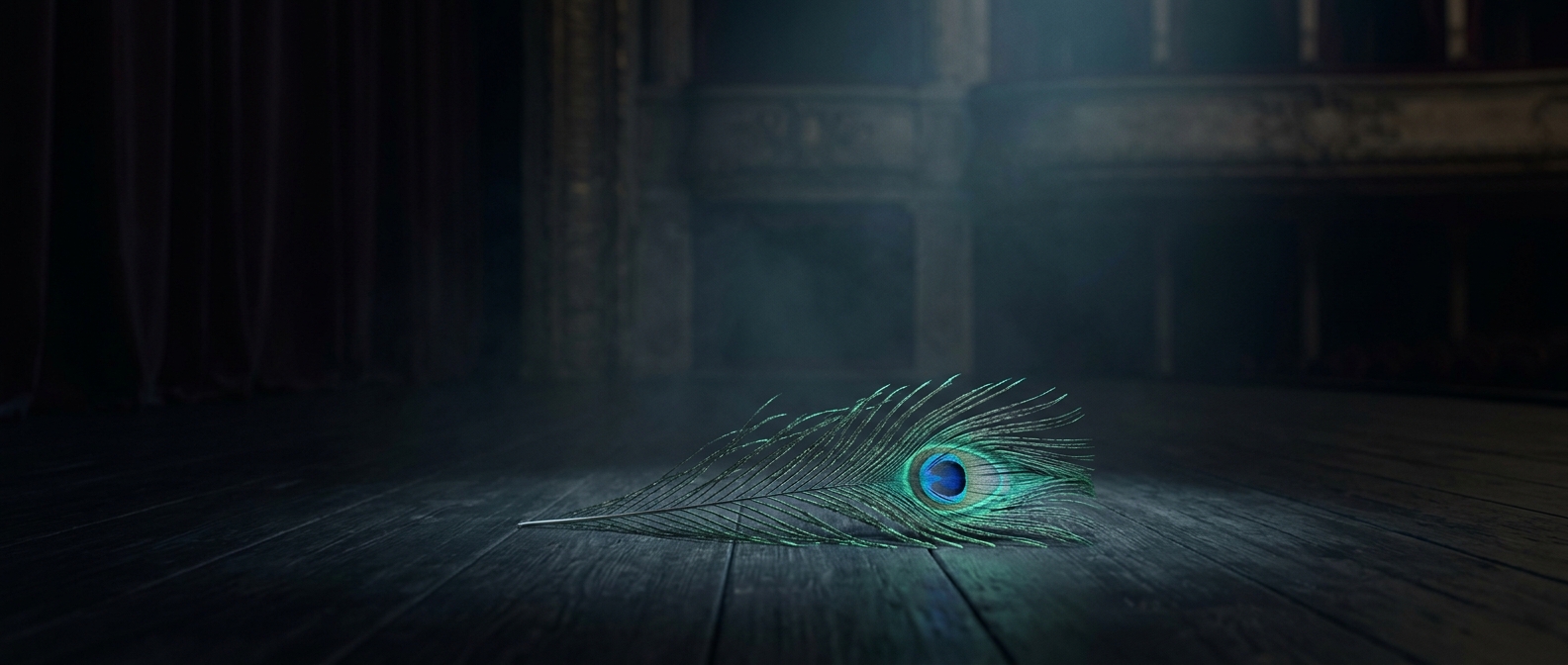
A peacock feather’s distinctive pattern resembles an open eye: a dark center surrounded by rings of color. In theater superstition, that resemblance gave the feather an ominous meaning. The mark was associated with the evil eye, a traditional belief that a gaze could bring misfortune, and carrying the feather backstage was thought to invite a curse on the production.
How a symbol becomes a stage taboo
Backstage is a place where performers and crew work amid fragile props, tight schedules, and many chances for something to go wrong. A warning about one object can become part of theater lore: people avoid it not because the feather has a demonstrable effect, but because breaking the taboo itself feels like tempting bad luck. The belief can be passed along as a practical rule—leave the feather out—without everyone sharing the same explanation for it.
That is why the feather can seem strikingly out of place in a theater, even though its markings are natural and decorative. The taboo turns an ordinary prop or ornament into a reminder that, in performance, symbols can carry their own backstage power.