How a mark acquires numerical meaning
A written numeral works because the mind has learned a chain of associations. It recognizes a visual pattern, connects that pattern to a number word, and links the word to an idea of quantity. With practice, these steps become quick enough to feel immediate—but the ink itself does not carry the meaning.
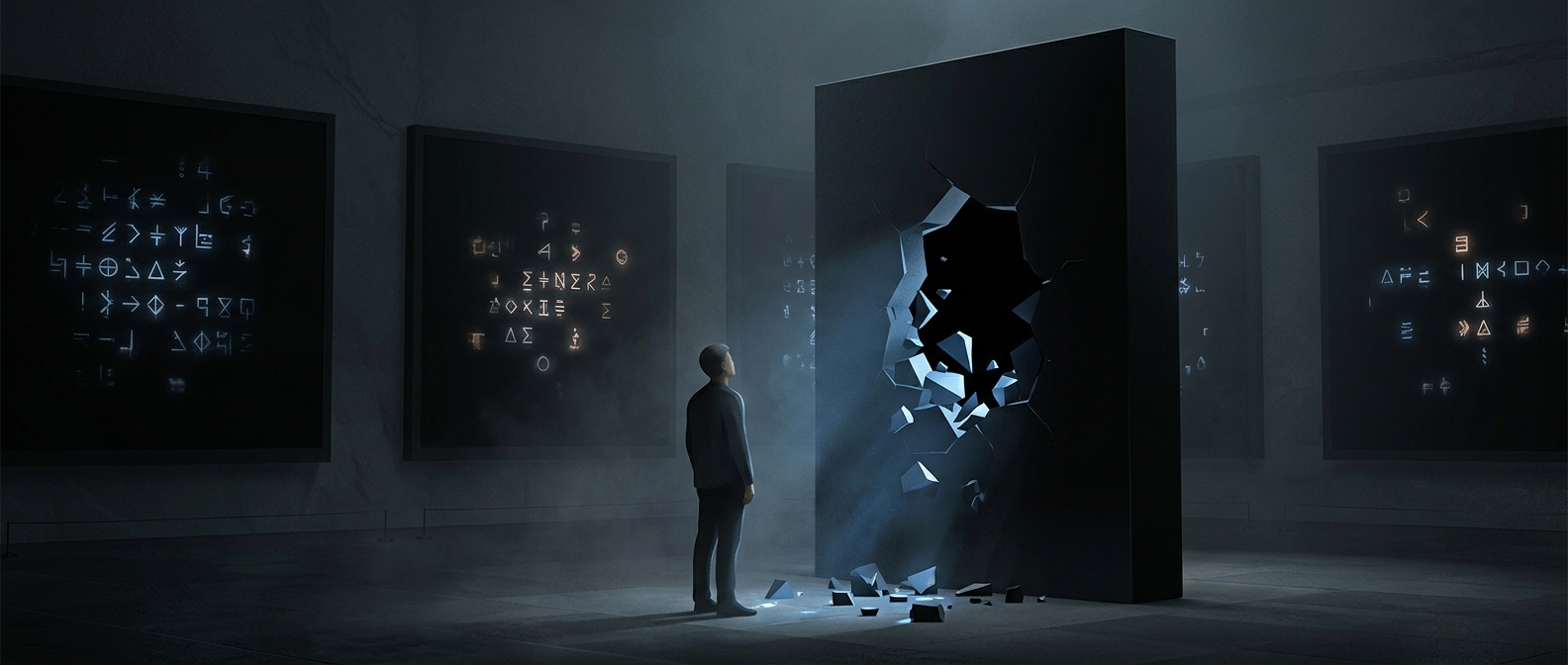
That chain is learned, not automatic. A child may recognize the shape of “8” before reliably connecting it to eight objects or using it in arithmetic. Someone unfamiliar with a numeral system may see the same shape as a decorative mark, just as a reader of one writing system may not recognize another system’s characters.
Recognition is not the same as understanding
Knowing what a symbol is called is only part of knowing what it means. To use a numeral, a person must also connect it to quantity and to its role in a particular expression. The “8” in a price, a measurement, or a sum is the same written character, but surrounding symbols and experience help determine how to interpret it.
This is why a familiar number can seem obvious while an unfamiliar notation looks like a collection of strokes. Once the associations are learned, the mind can move from shape to meaning without consciously spelling out every step. What feels like meaning inside the mark is really a learned connection between the mark and what it represents.