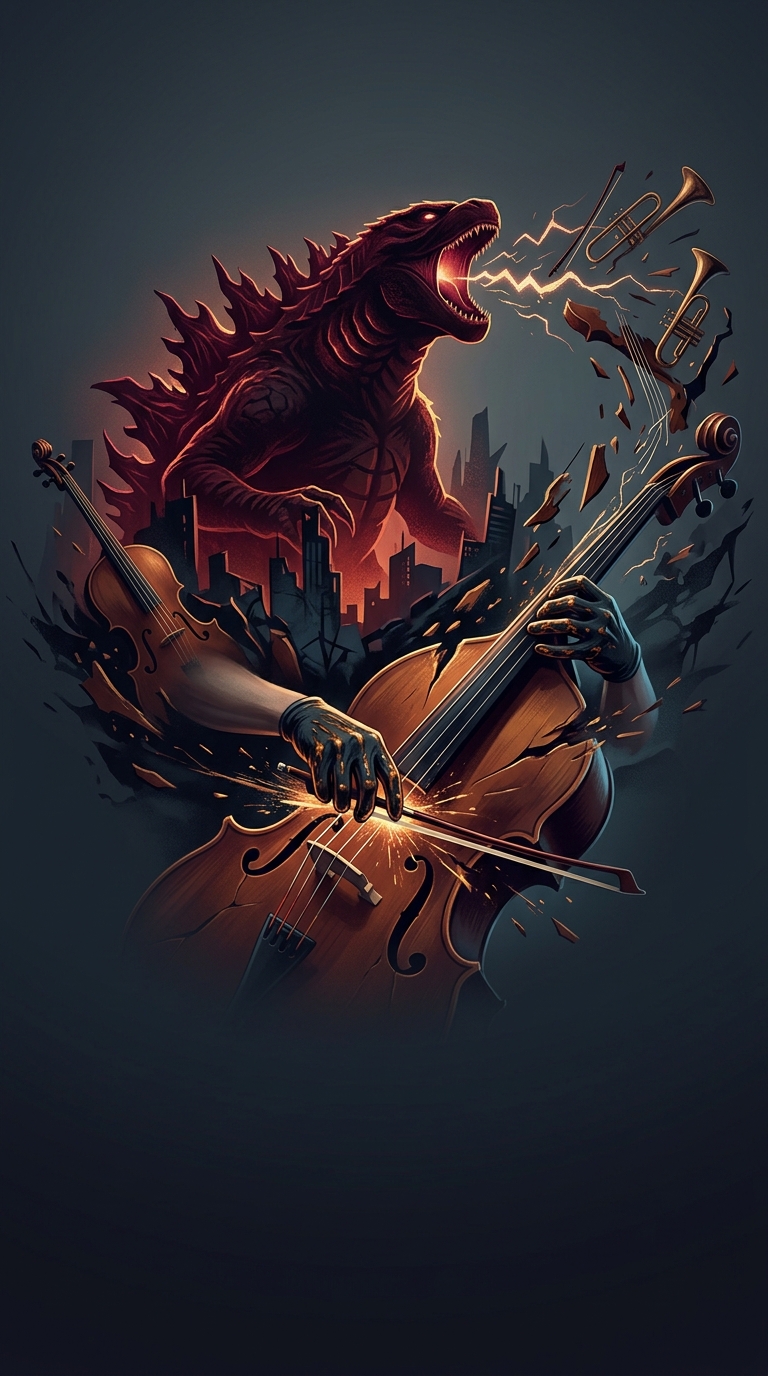
How a double bass became Godzilla’s voice
Godzilla’s roar did not come from an animal recording. It was made by drawing a rough, resin-coated leather glove across the strings of a contrabass, a very large bowed string instrument. The friction made the strings vibrate irregularly, producing a harsh, scraping sound unlike a conventional musical note. Recording and adjusting that sound helped turn the raw scrape into a creature’s roar.
The trick worked because it combined recognizable physical texture with an unfamiliar result. Listeners can hear the string’s rasp, but its distorted, enlarged quality does not point neatly to a dog, a lion, or another real animal. That ambiguity makes the sound feel less like a voice copied from nature and more like something with its own scale and presence.
A roar is not the same as a score
Composer Akira Ifukube is closely associated with Godzilla’s music, but the roar itself is a designed sound effect, not simply a musical theme. The distinction matters: the score can build tension and give the monster a recurring musical identity, while the roar has to suggest a body making noise in the film’s world. Its rough metallic edge makes the creature seem physically imposing even before its size is fully understood.
The sound also had to work alongside images of destruction. A familiar animal call might make the monster feel like a recognizable beast; the contrabass scrape instead gives it a voice that seems difficult to place. A simple studio experiment supplied the film with a sound that audiences could recognize as Godzilla, even without seeing him.