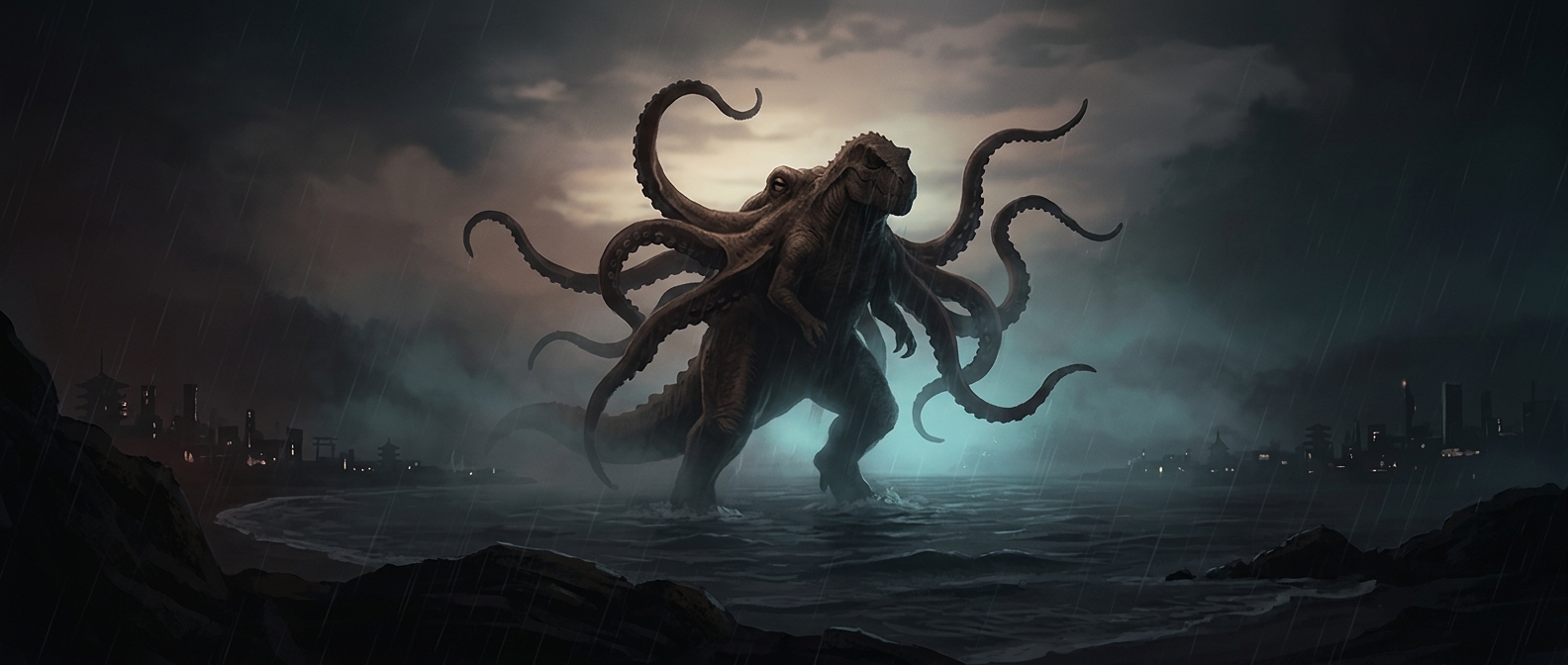
The monster could have had tentacles
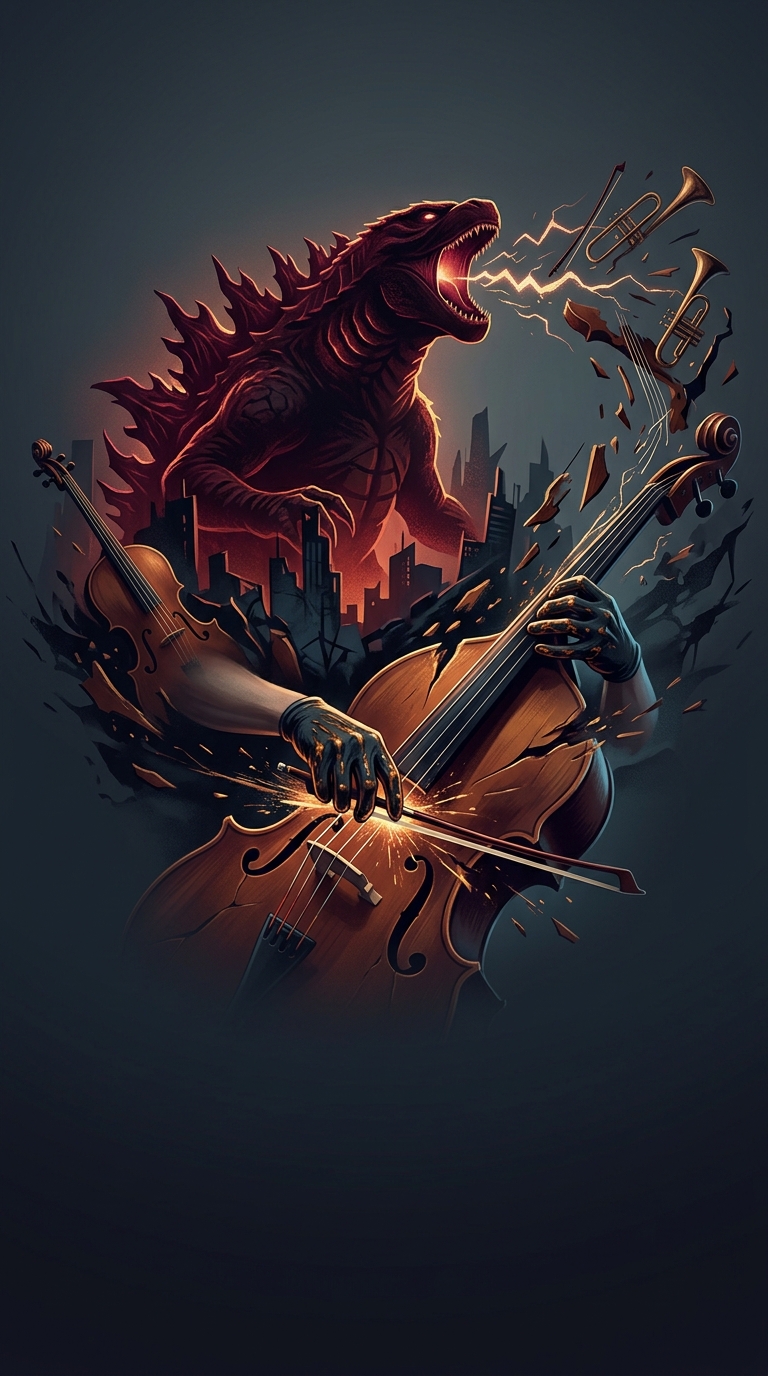
During early development of the 1954 film, special-effects director Eiji Tsuburaya proposed an irradiated giant octopus. Producers chose another direction: a creature combining features associated with apes, whales, and dinosaurs. The change was more than a swap in anatomy. Each design offered a different visual identity for the threat at the center of the story.
An octopus would have made the monster’s tentacles its defining feature. The selected design instead gave Godzilla a massive, upright body and a recognizable outline. That silhouette could read clearly as a single, towering creature—even before viewers made out its details—and helped distinguish it from an ordinary animal enlarged by radiation.
A choice that shaped the icon
The rejected idea shows that Godzilla’s familiar appearance was not inevitable from the start. The filmmakers considered radically different ways to make a radiation-born monster feel frightening, then settled on a hybrid that was neither simply a dinosaur nor a person in a monster costume. The enduring image came from that specific design decision: a creature whose body suggested familiar animals but whose scale and presence made it something else.