Why the wheel arch needs a soft surface
A tire does more than roll: its tread repeatedly strikes the pavement, while tiny stones and grit are flung outward at speed. The wheel arch is a hollow space close to the body of the car, so those impacts can make the surrounding panels vibrate and send noise through the vehicle structure.
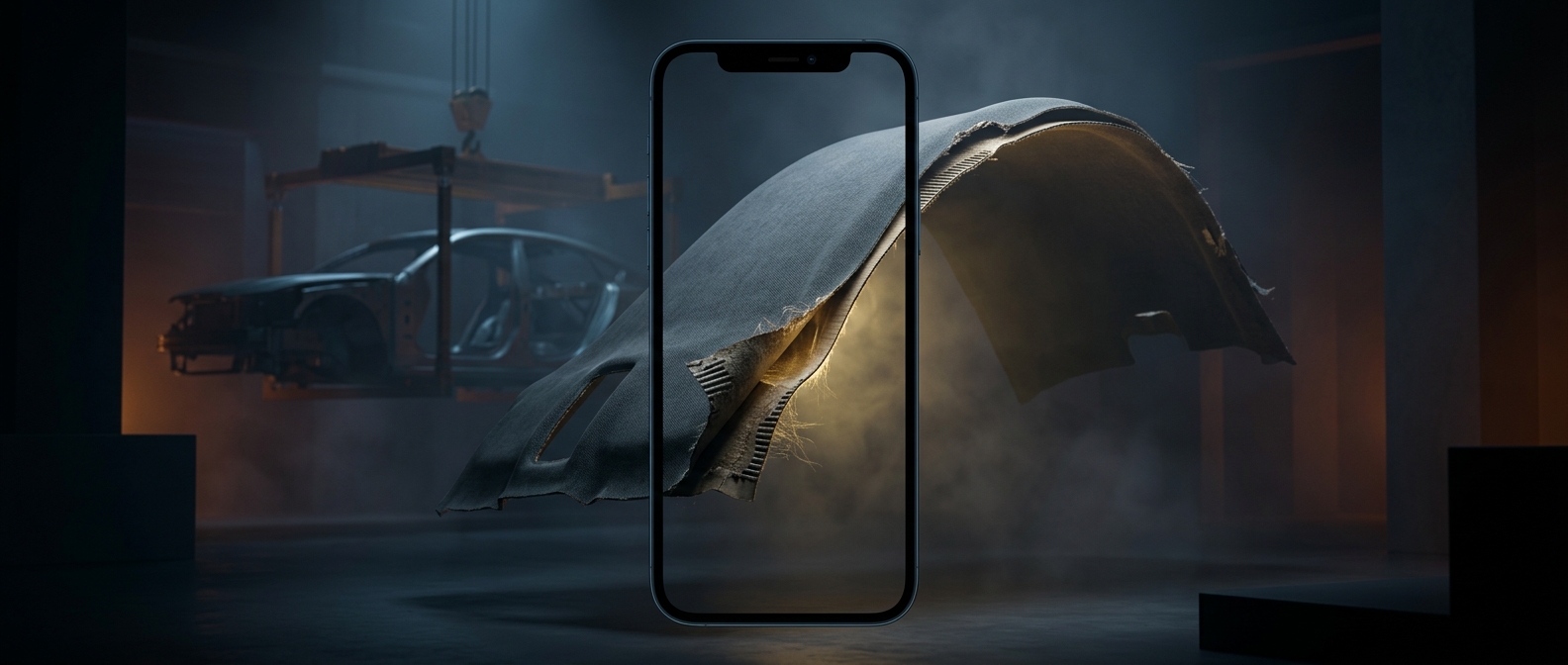
A felt-like liner changes what happens inside that space. Its tangled fibers create many small pockets that absorb some sound energy instead of letting it bounce repeatedly between the tire and the bodywork. The material does not silence the tire; it helps reduce the sharp, hollow quality of the noise that can otherwise reach the cabin.
A liner has to take a beating
The same panel also stands between the wheel and vulnerable parts of the car. It intercepts much of the spray, grit, and small debris thrown off the tire, helping protect bodywork and nearby components from repeated impacts and grime. Depending on the vehicle, wheel-arch liners may be made from molded plastic, fibrous material, or a combination of the two.
That location makes the choice a balancing act. The liner must be light and flexible enough to fit around the wheel, yet tough enough to endure abrasion, water, temperature changes, and the occasional stone strike. Its shape matters too: it has to clear the tire as the suspension moves and the wheels turn, while still covering the areas most exposed to spray and debris.
Why the texture matters
A smooth, hard surface can reflect sound; a porous, fibrous one can dissipate some of it within its structure. That is why the soft-looking material is useful even though it is not a thick wall or a complete sound barrier. The wheel-well liner works by managing a noisy, debris-filled space right beside the car’s body.