A cell’s interior is not an open room
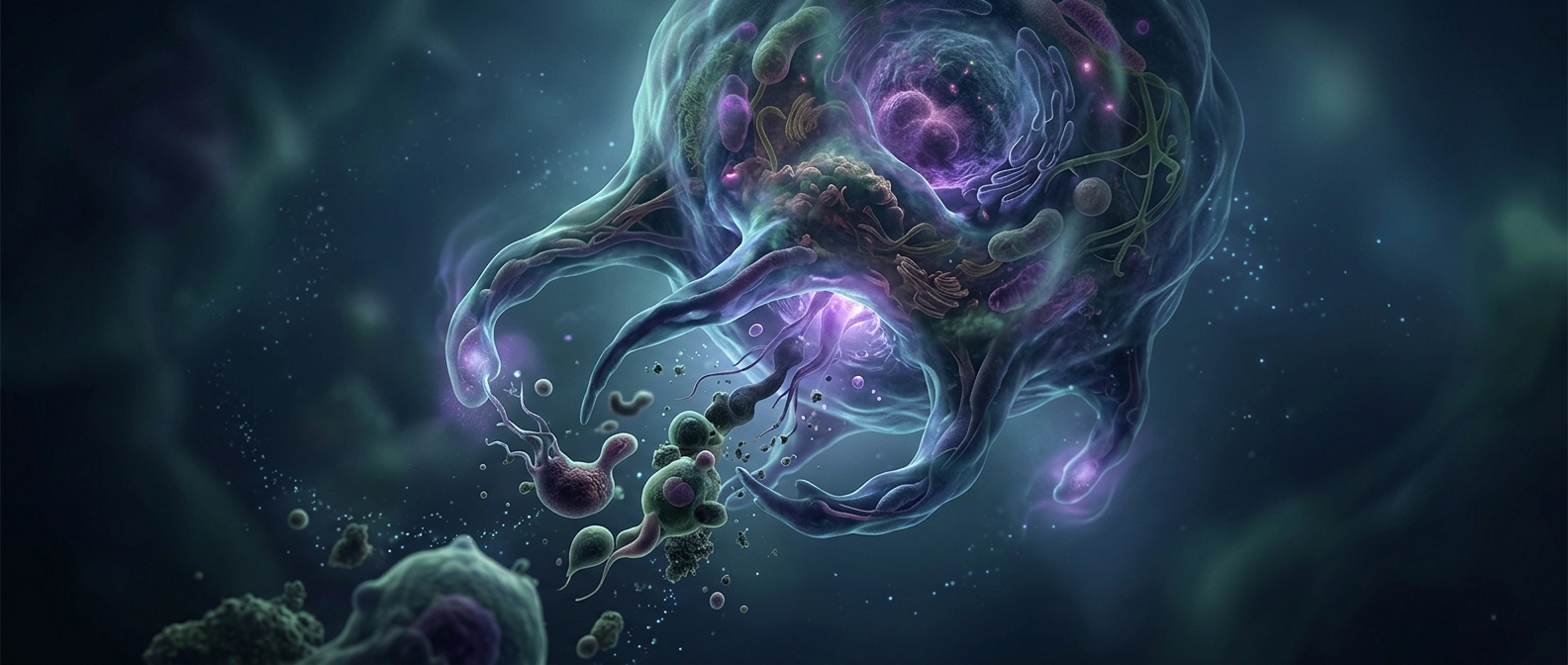
A virus entering a cell may have a long trip ahead. Some must reach the nucleus, where the cell stores its DNA; others need to get to a different part of the cell to copy their genetic material. Diffusion—random drifting through fluid—can be too slow or unreliable over those distances, especially in a large cell.
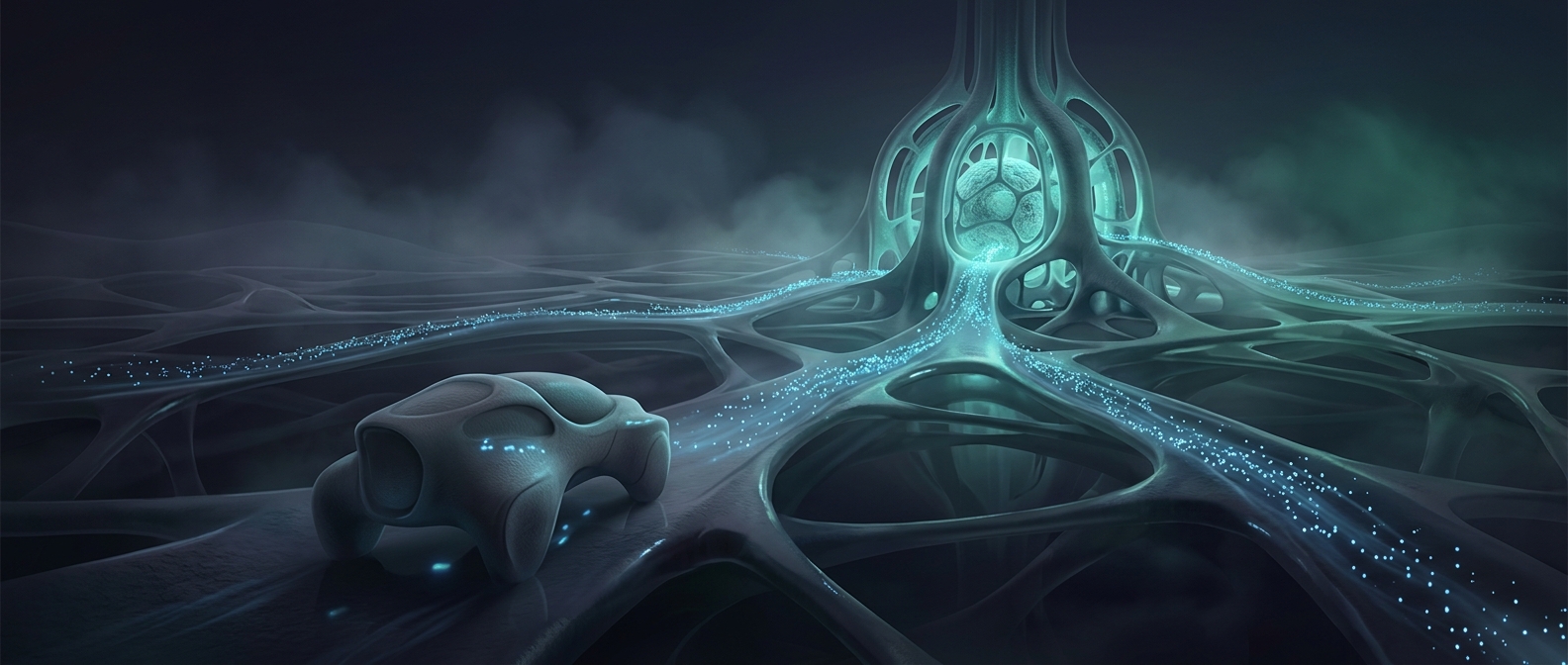
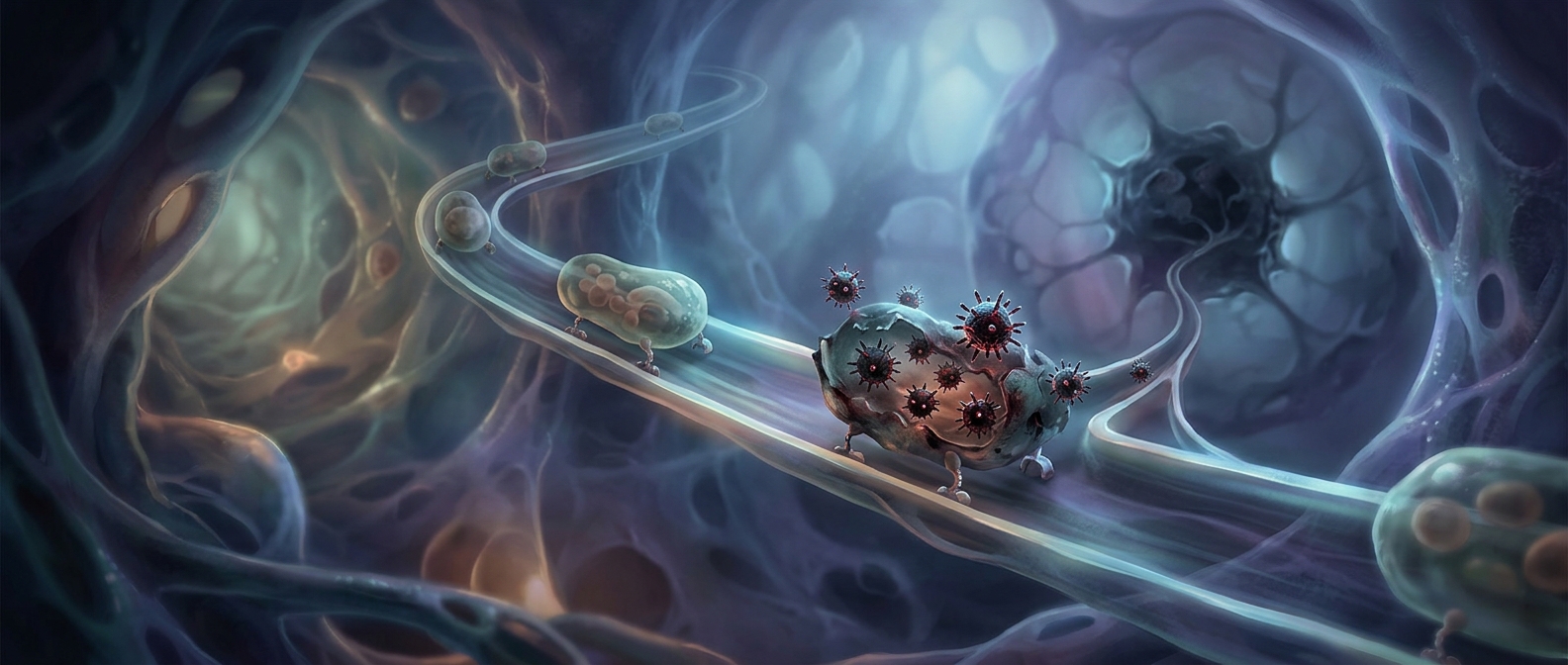
Cells solve their own delivery problem with microtubules, thin protein tracks that span the interior. Motor proteins carry cargo along them, using chemical energy to move in particular directions. Dynein generally travels toward the cell’s center, while kinesin generally moves toward its outer edge.
Turning a delivery route into a viral route
After entering a cell, some viruses attach to this transport system, directly or through other cell proteins. Their small size makes the cell’s existing motors useful: instead of crossing the interior by chance, viral particles or their genetic material can be carried toward a destination. A virus that needs access to the nucleus, for example, may benefit from inward transport.
The ride is only one stage of infection. Once the viral genome reaches a suitable location, it can use the cell’s machinery to produce viral components. Those components are assembled into new virus particles, which may then use cellular transport again as they move toward sites where they can leave the cell or spread to other cells.
The cell keeps doing its own work
This is not usually a matter of a virus taking conscious control of a single “delivery system.” The details differ among viruses: they can interact with different motors, cellular adaptors, or transport routes, and not every virus follows the same path. The broader advantage is consistent, though: a virus can exploit a transport network the cell built for its own cargo.
That dependence also creates a potential vulnerability. If a virus cannot reach the right place, its replication may be disrupted. But the tracks and motors are essential to the cell too, so interfering with them can damage normal transport as well. The takeover works precisely because the virus is borrowing machinery the cell still needs.